



 Google reviews

Behind the Station Way shopfronts
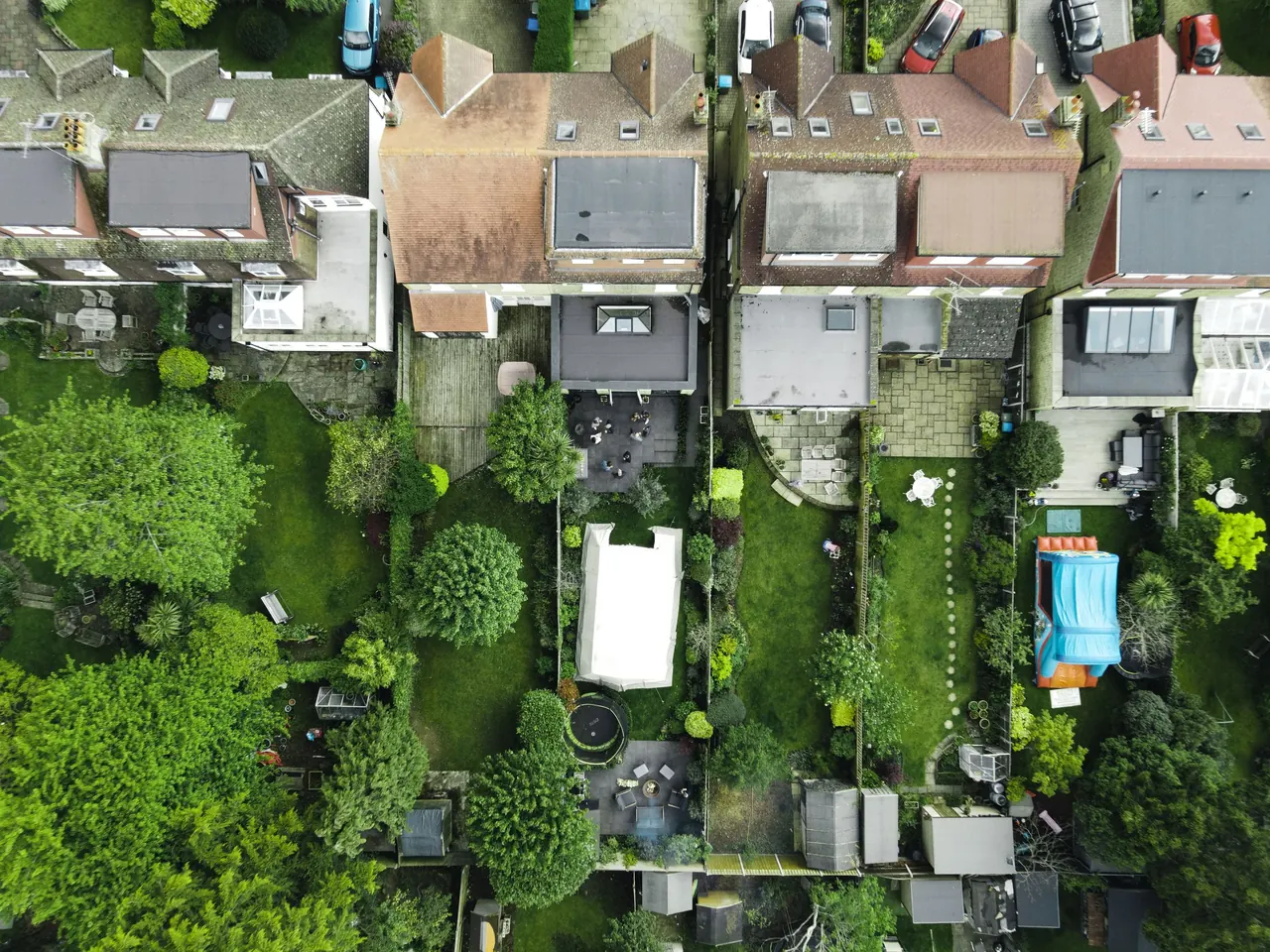
On the east side of Station Way, Nos 7 to 19 and 25 to 31 started life as pairs of Victorian semis. Sutton Council's appraisal notes that they have had many alterations and additions, with shops on the ground floor and homes above. Houses turned into shops tend to grow at the back: a store, a kitchen, a toilet block, each added when it was needed. Additions like these are often flat-roofed, and an old one may be on its second or third covering.
The same pattern runs behind the High Street and The Broadway, and behind the late Victorian cottages on Malden Road north of the library, a significant number of which the appraisal notes have been extended. On none of these can you see the roof from the pavement, so the first sign of trouble is usually a stain on a stockroom ceiling or water down an inside wall.
The faults are familiar ones. Felt cracks and blisters with age and sun. The deck sags and water ponds where it used to run off. The upstand where the new roof meets the old Victorian wall pulls away, because old brick is rarely true. And the outlet, often a single small hole into a hopper, gets blocked and the roof fills like a tray. Our article on water pooling on a flat roof explains when ponding is a warning sign.
Garages and terraces on Springclose Lane and The Leeways
The village's post-war housing brings a different set of flat roofs. The appraisal records a 1960s terrace on Springclose Lane, built in the grounds of Church Farmhouse, and The Leeways on Park Road, a 1960s terrace where the attached garages are a prominent part of the design. Garage and porch roofs on houses of that age were commonly flat felt, and any still on an early covering are well past their expected life.
Because these roofs are hard to see, a drone survey is a quick way to check the whole surface, the edges and the outlet without a ladder. If the covering is sound apart from one area, we patch it. If it is failing in several places or the deck is soft underfoot, we strip it, replace rotten decking, set a proper fall to the outlet and re-cover. We lay GRP fibreglass, EPDM rubber and torch-on felt, and recommend whichever suits the size and shape of the roof.
Small roofs with awkward upstands cost more per metre than big open ones. For a national benchmark, Checkatrade's flat roof guide puts a new EPDM rubber roof at £80 to £100 per square metre.
Where a flat roof drains into a gutter, we look at the gutters and downpipes too, because a failed outlet often gets blamed on the covering.
Flat dormer tops on listed roofs
A few small flat roofs in the village sit on listed buildings, usually as the tops of dormers. The Old Rectory at 15 Malden Road is the best-known example: its list entry records a large mansard old tile roof with three flat-topped sashed dormers. Flat dormer tops on houses of that age were often covered in lead, and if yours are, the repair should be in lead too.
Swapping lead for GRP or EPDM on a listed building changes its character and would need listed building consent. So on roofs like these we check what the covering actually is before saying anything about it, repair leadwork in lead, and suggest you speak to Sutton Council before any change of material.
If you are planning a new extension rather than fixing an old roof, our page on new roofs in the village covers the conservation area angle. GRP, EPDM and felt are compared on the flat roofing service page.
Frequently asked questions
The flat roof over our stockroom on Station Way drains into a hopper that keeps overflowing. Is the roof at fault?
Often it is the outlet, not the covering. A small outlet into an old hopper blocks easily, the roof fills, and water finds the weakest upstand. We clear and check the outlet first, then look at the covering.
Is it worth re-covering a 1960s garage roof on The Leeways, or should we patch it?
If the deck is firm and the leak is in one place, a patch is fine. If the deck flexes when walked on or the covering is cracked all over, a full re-cover is better value. We tell you which after looking at it.
The flat top of a dormer on our listed Malden Road house is leaking. Can it be re-covered in GRP?
If it is lead now, not without listed building consent, and the council is likely to want lead kept. We first check what the covering is, then repair it in the same material.
Water sits on our flat garage roof for days after rain. Does that matter?
A thin film that dries within a day or two is common on an old felt roof. Deep puddles that stay longer usually mean the deck has sagged or the outlet is too high, and that wears the covering out faster. We check the fall before deciding whether a patch will do.





