



 Google reviews

Grouped stacks on Parkside
Parkside was laid out in the 1920s on the former grounds of Cheam House. Sutton Council's conservation area appraisal picks out the prominent grouped chimney stacks on its Arts and Crafts villas.
A grouped stack is several flues gathered into one block of brickwork, which means more pots, more flaunching and a long run of flashing where it meets a steep roof. After about a century, the weak points are predictable:
- Flaunching, the mortar bed round the pots, cracks and lets water straight down a flue.
- Pointing erodes on the weather side first, and the brickwork soaks up rain.
- Lead flashings and soakers lift or split where a steep slope meets the stack, and old cement fillets crack away.
- Pots work loose, which on a tall stack above a front garden or a pavement is a safety issue as well as a leak.
Because a grouped stack sits high on a steep roof, the faults are rarely visible from the street. We start with drone photos of every face so you can see the flaunching, the pots and the flashing before anyone quotes for scaffold.
Big stacks on the oldest houses
The listed buildings in the village have stacks of a different order. The appraisal describes the Old Farm House on Church Road, from the 15th or early 16th century with later extensions, as having a large sloping red tile roof with a huge chimney. The list entry for 17 and 19 Park Lane records a hipped old tile roof with a central stack on the ridge.
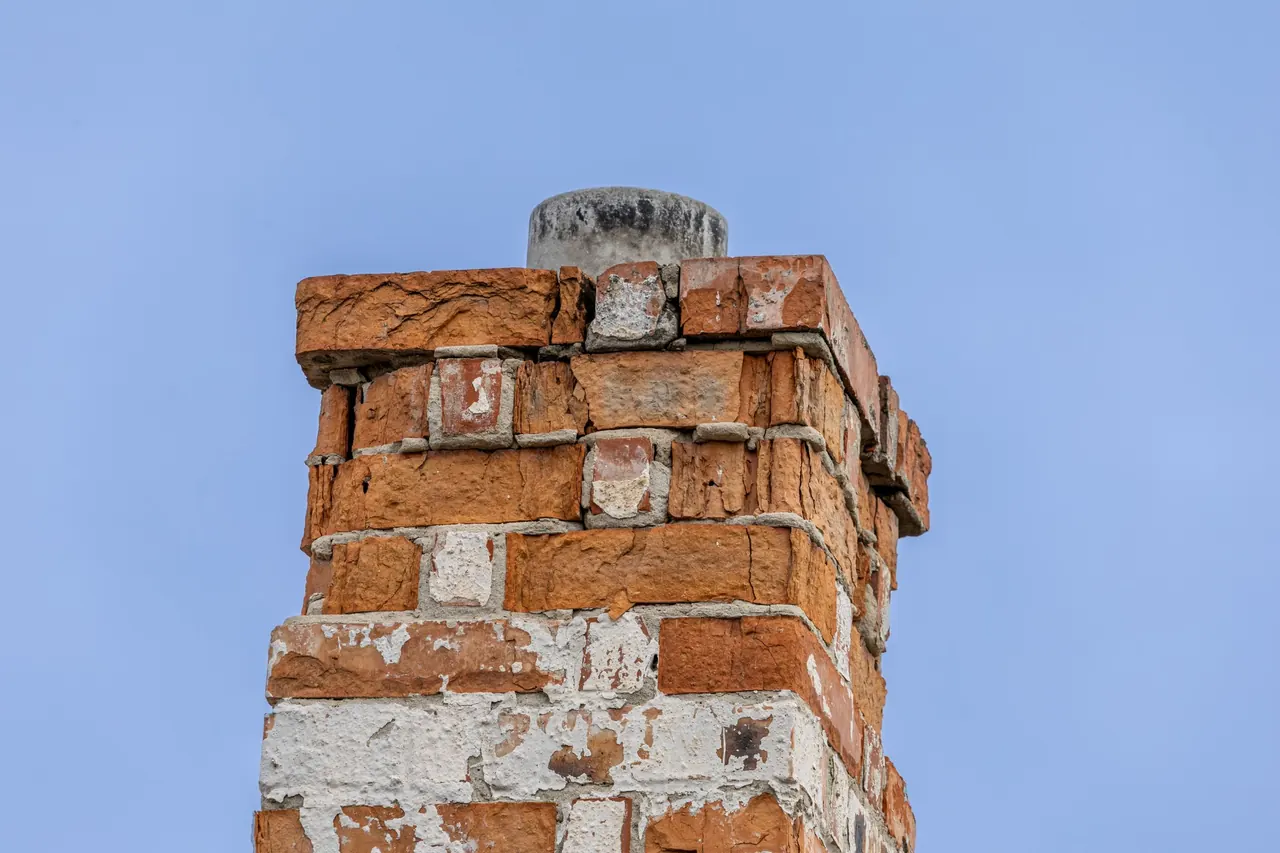
On stacks this old the brick is often soft and was usually laid in lime mortar. A hard cement repointing can trap moisture in that kind of brick and speed up its decay, so repairs should use a mortar that matches what is there. A slow leak at the base of the stack also matters more on a timber-framed or weatherboarded house, because water can reach the frame long before a stain shows indoors.
On a listed building the stack is part of what is protected. Repairs in matching brick and mortar, with new lead dressed the same way as the old, keep it as it was. Taking a stack down, rebuilding it to a different design or removing pots is an alteration that needs listed building consent. If we think a job crosses that line, we say so before starting.
Reaching stacks above the parades
Chimneys over the shops on The Broadway and the High Street bring an access problem as much as a repair one. A short length of flashing or a single pot can often be dealt with from roof ladders with proper safety equipment. Full re-leading, full repointing or rebuilding the top courses needs a scaffold round the stack, and above a shop that means planning the pavement side carefully and agreeing times with the shop and the flats.
A patch repair to chimney flashing is the cheap end of the job: £150 to £250 across the UK in MyJobQuote's leadwork guide, with full re-leading and scaffold costing considerably more. If the tiles or valley around the stack are part of the leak, our roof repairs in the village can be done on the same visit. Our chimney maintenance guide covers what to check each year, and flaunching, cowls and repointing are explained under chimney repairs.
Frequently asked questions
There is a crack running up one side of the grouped stack on our Parkside villa. Is it safe?
A hairline crack in the pointing is common. A crack through the bricks, a lean or loose pots is more serious. Drone photos tell us which you have, and if the stack is unsafe we deal with the top first.
What mortar should go on a listed stack on Park Lane?
One that matches the original. Old soft brick was usually laid in lime mortar, and a hard cement repair can trap water in it, so the mix should follow what is already in the joints. We look at those before quoting.
Do you need to come through the shop to reach a chimney above The Broadway?
Not usually. Most stacks above the parade are reached by scaffold from the street or from the rear, and we agree the route with the shop and the flat above before we arrive.





