



 Google reviews

A stack the guidance asks you to keep
Plenty of houses on The Avenue, Shirley Avenue, Golf Side and Downs Side have not used an open fire in decades, but the stacks are still there, and the local guidance wants them to stay. The Burton Estates character appraisal names the removal of chimneys among the changes that can harm the look of South Cheam, and asks for existing chimneys to be kept when a roof is refurbished, replaced or extended.
A chimney that is kept has to be maintained. It is the tallest, most exposed part of the house, and on an interwar roof it is one of the commonest places for a leak to begin. The work on this page is about keeping a stack dry and safe for decades more, not about bringing a fire back. Most Burton houses are detached, so the stack is usually yours alone and the repair can be planned without waiting on next door.
The back gutter on a sloping stack
Where a stack sits on the ridge, water runs off both sides of it. On a hipped roof, though, a stack can rise through a slope instead. Its uphill face then has a back gutter, a small lead tray that turns the water round the stack. Under garden trees that tray fills with leaves and moss, overflows, and sends water under the tiles and down the face of the chimney breast inside. A stain on the ceiling beside the breast after heavy rain is often the first sign, and it is easy to blame the flashing at the sides when the tray behind is the cause.
Clearing the tray buys a season. If it is too narrow for the slope above it, or the lead has split along a fold, it needs re-forming. That is lead work done with the tiles above lifted, then relaid in matching clay. If the roof around the stack needs work too, our roof repairs in Cheam can be done on the same visit.
The rest of the stack collects the usual faults of its age: side flashing that has lifted where the mortar holding it into the brick has crumbled, pointing washed out of the joints, cracked flaunching around the pots, and open pots on unused flues letting rain straight in. A ventilated cap or cowl stops the rain on a flue that is no longer used, and a working flue gets one made for it, so we check how each flue is used first.
Rebuilding the top to the same outline
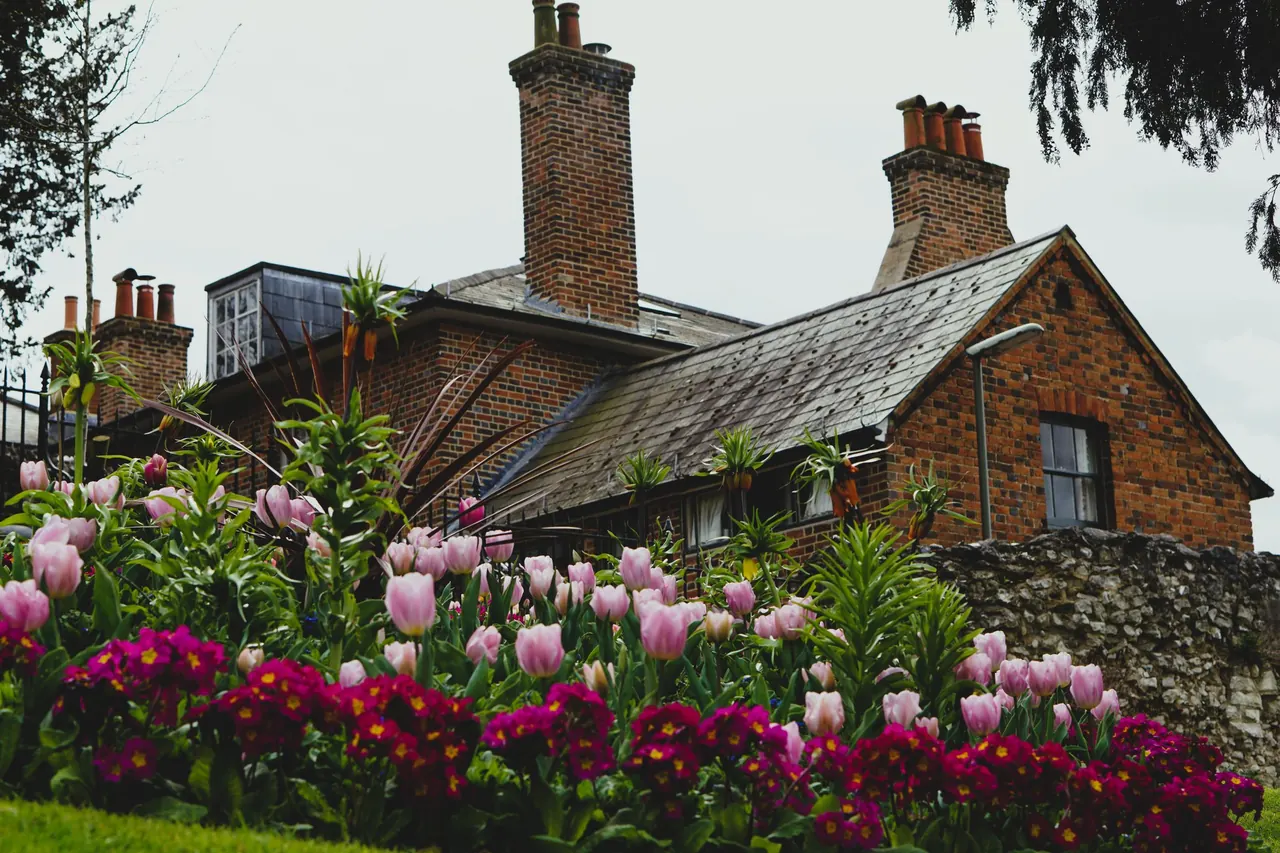
Where the top courses have loosened, the stack is taken down to sound brick and rebuilt. On these roads the aim is a stack that looks exactly as it did from the street: sound bricks and pots are set aside and reused, new brick is matched to the old, and the pots go back in their places. A drone look at the stack first tells you whether that is needed, or whether repointing and new lead will do.
A stack set back from the eaves on a tall detached house usually needs a chimney scaffold for a rebuild or full re-leading, though small jobs can often be done from roof ladders. For flashing alone, MyJobQuote's chimney leadwork guide gives £150 to £250 nationally for a patch repair without scaffolding. Our main chimney repairs page has more.
Frequently asked questions
The back gutter behind my chimney on Downs Side keeps overflowing. Why?
Leaves collect in the lead tray on the uphill side of the stack, and once it is full the water goes under the tiles. If the tray is too narrow or the lead has split, we re-form it so it can cope with the slope above.
Does the Burton Estates guidance affect a repair to my Golf Side chimney?
Not for a like-for-like repair, which needs no permission. The guidance matters if you want to remove or reshape the stack, because it asks for chimneys to be kept. Repairing it to the same outline keeps you clear of that question.
Can the pots on my Shirley Avenue stack be kept if the top is rebuilt?
Yes, if they are sound. We take them down carefully, set them aside and bed them back on new flaunching, so the stack keeps its outline from the street.





