



 Google reviews

Stacks along the Belmont Road and Kings Road terraces
The terraces on Belmont Road carry the dates 1884 and 1888, and Inman's 1865 estate plan set Kings Road aside for terraces too. Terraces of that age commonly have a main stack at the party wall and a smaller one on the back addition, and where a stack serves both houses, work above the roofline is normally agreed with next door first.
The signs indoors are a damp patch on the chimney breast in an upstairs room, staining on the timbers around the stack in the roof space, or crumbs of mortar or brick in an unused fireplace. Outside, look for a pot that is no longer upright, gaps in the pointing you can see from the pavement, and lead that has lifted at the edges.
What 140 years of weather does to the mortar
Bricks in a chimney usually outlast the mortar between them. Rain soaks into the joints, frost opens them up, and over time the joints wash out until the stack is held together by less than it looks. On stacks that burned coal for decades, the mortar can also be weakened from the inside by the flue gases, which is one reason old stacks sometimes start to lean.
At the top, the flaunching, the mortar bed that holds the pots, cracks and lets water into the top of the stack. At the bottom, the lead flashing that seals the stack to the roof works loose as its mortar joint crumbles, and rain runs straight down the brickwork into the roof space. Old repairs done with sealant or mastic instead of lead look fine from the road and fail in the first hard rain. The usual causes are set out in our article on chimney flashing problems.
The repair follows what has failed: repointing, new flaunching with the pots reset, new lead flashing dressed into the joints, a cowl on an unused flue, or rebuilding the top courses where a stack has started to lean badly. On a two-storey terrace much of this can be done from roof ladders; larger stacks or rebuilding usually need a scaffold around the chimney. As a published guide, MyJobQuote puts a patch repair to chimney flashing at £150 to £250 and replacing all the leadwork at £350 to £460, both without scaffolding. The full range of work is on our main chimney repairs page.
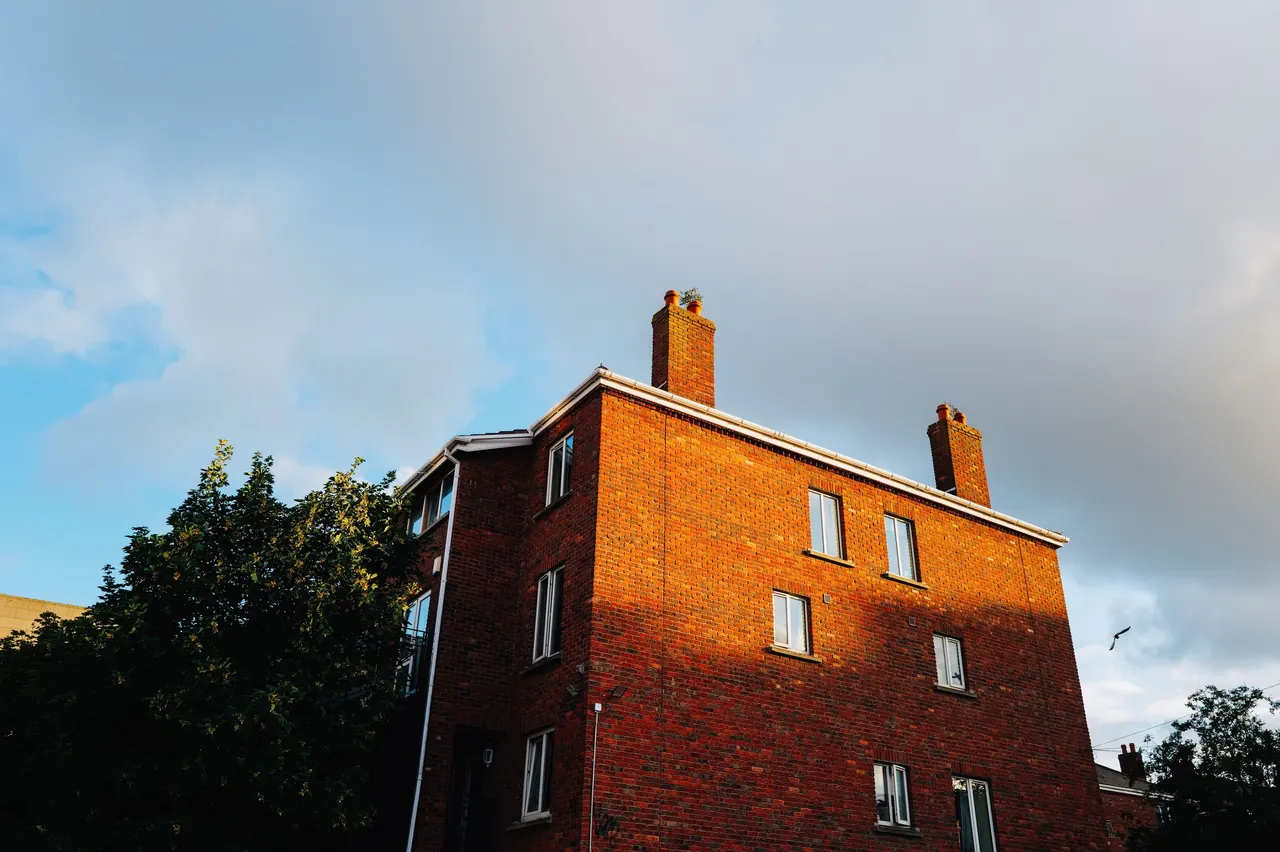
Hartopp's cottages on Downs Road
Some of Belmont's oldest cottage stacks are on Downs Road. The residents' association history records that houses were built beyond the Downs Road chalk pits from around 1875, and that the six cottages on the south side followed in 1888, built for Sir John Hartopp's servants. On a small cottage roof the stack is a large share of the whole roof, so a fault in it is a fault in the roof, and the slates or tiles around it often need attention at the same visit through our Belmont roof repairs.
Older still is Sutton Lodge on Brighton Road, a Grade II listed mid-18th-century house. Work on a listed stack beyond like-for-like repair should be checked with Sutton's conservation officer first.
Frequently asked questions
The stack on our Downs Road cottage sits in the middle of a small roof. Will it need a scaffold?
Not always. On a low cottage roof, repointing the top, renewing the flaunching or new lead can often be done from roof ladders with proper safety equipment. If the brickwork needs rebuilding, a scaffold around the stack is the safer way, and we say which when we quote.
The chimney on our Belmont Road terrace leans slightly. Is it dangerous?
A lean means the stack has moved, and it should be looked at soon. A slight lean on a sound stack can sometimes be stabilised. A lean that is getting worse, or bricks that are loose at the top, means taking the top courses down and rebuilding them before they fall.
Our Kings Road stack has a TV aerial strapped to it. Can that cause damage?
It can. An aerial acts as a lever in high winds, and the straps and brackets can crack the pointing or pull at the brickwork over the years. If you no longer use it, have it taken down before the stack is repaired, so the new pointing is not strained the same way.





