



 Google reviews

Built in stages: the main ages of Belmont's roofline
Belmont was filled in over a century, and its eaves show it. The terraces on Belmont Road and Kings Road date from the 1880s. The semis at the lower end of The Crescent went up from around 1900. Interwar semis and detached houses followed, filling the land towards Sutton. Shanklin Village's deck-access blocks came in the late 1960s, and some of the newest homes are on the old hospital land around Homeland Drive.
Houses of the first three stages were built with painted timber at the roof edge. Some will still have it, and others will have been replaced or capped in uPVC since. On later houses the boards may be timber or uPVC, depending on when they were built and what has been done since, so the first question on any Belmont job is what the board is made of and what is behind it. Timber fascias rot from behind where water gets past the gutter. uPVC boards rarely rot, but panels drop, joints open and fixings work loose.
Soft timber on the 1880s terraces
On the terraces, the eaves run unbroken from house to house. A rotten section on one house sits next to a sound board next door, and gutter brackets on the soft section start to tip, so water spills behind the gutter and down the brick. Our article on water getting behind a gutter explains that pattern.
Where timber is sound, uPVC capping over it is a cheaper option. Where it is soft, capping only hides the rot, so the boards come off, we check the rafter ends behind, and fit new uPVC fascias and soffits. The gutters come down to replace a fascia, so it usually makes sense to fit new Belmont gutters at the same time.
Where street trees overhang the roofs on The Crescent and Northdown Road, the fascias have another enemy. Gutters that overflow every autumn wet the top edge of the board over and over, and the rot starts there. Regular gutter clearing on the tree-lined roads is the cheapest way to make the boards last.
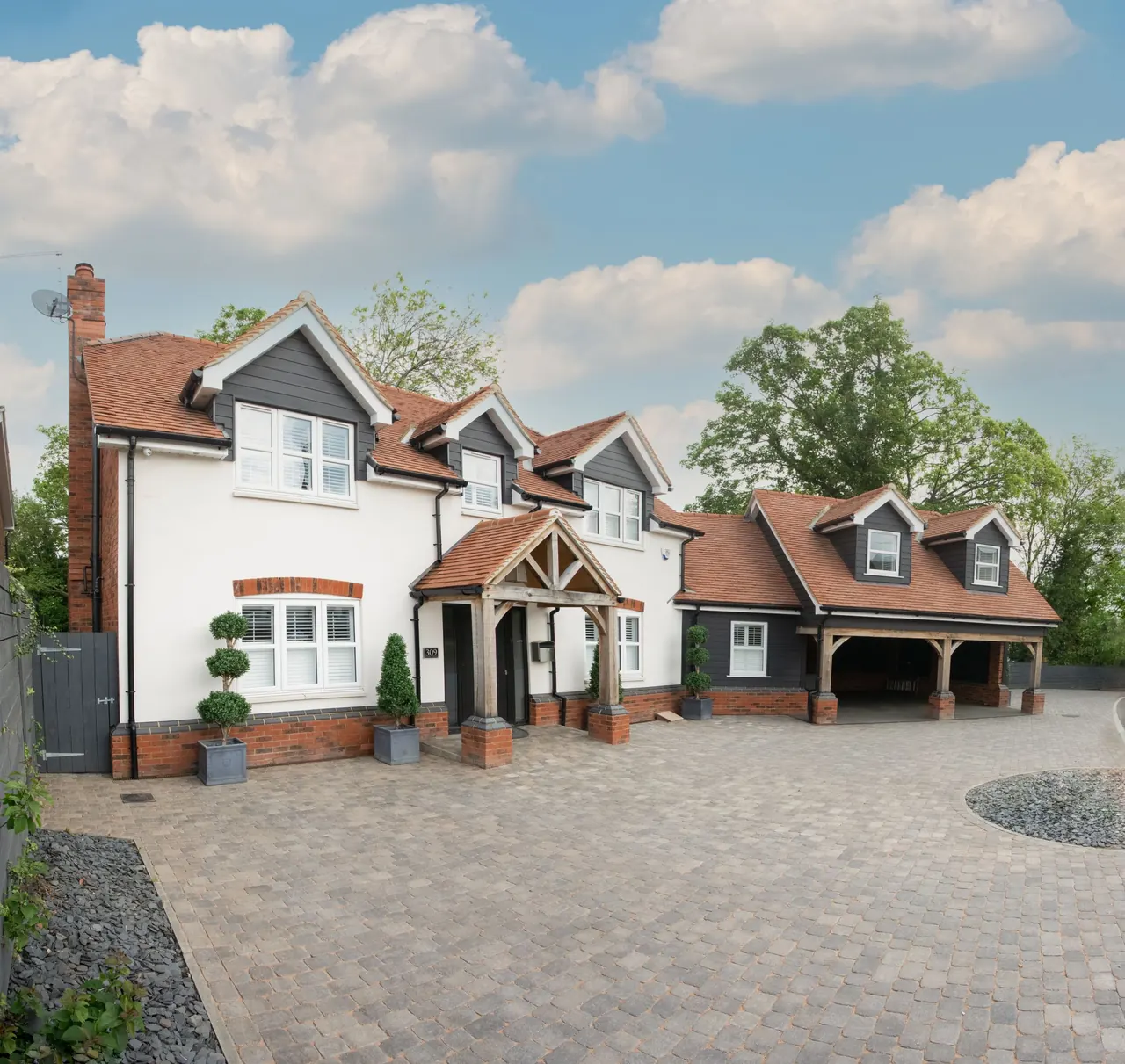
Homeland Drive and the old hospital site
The land around Homeland Drive has a longer history than its houses suggest. According to a history of the hospital, Belmont Hospital began as an orphanage on Brighton Road in 1853. Its main blocks were demolished in the 1980s, and the site was redeveloped for housing, now known as Belmont Heights.
Where the boards on newer houses are uPVC, the common problems after a few decades are a soffit panel that has dropped at one end, an end cap missing at a gable, a joint trim that has slipped, and white plastic that has yellowed or chalked. These are mostly small repairs: refixing, replacing a single board or panel, or fitting new trims. A full replacement only makes sense if the boards are brittle or badly discoloured all round, or the gutters are being replaced anyway. Gaps at the eaves are also how birds and wasps get into the roof space, so we close any we find and check that soffit ventilation is still clear.
Bargeboards and finishes on period gables
Where a house has a gable, the bargeboard running up each side of it is the most exposed piece of timber on the house: rain on the face, sun on the paint and wind under the edge, with no gutter to protect it. On many period houses it is the first board to split. New uPVC comes in white, black, grey and woodgrain, and woodgrain or a dark finish often sits better on an Edwardian gable than bright white. Checkatrade's published guide puts fascia and soffit replacement at £90 to £170 per linear metre across the UK, and our main fascia and soffit page has more detail.
Frequently asked questions
A soffit panel is hanging down on our house off Homeland Drive. Is that a big job?
Usually not. If the panel and the fascia above it are sound, it can be refixed or replaced on its own, with new trims where needed. We check the rest of the eaves on the same visit, since panels often drop for the same reason in more than one place.
Our Belmont Road terrace shares one long run of boards with next door. Where does our section end?
At the party wall line. We cut back to that point, replace your length and finish the join so it meets your neighbour's board neatly. If their board is rotten too, we tell you, so you can talk to them.
The fascias on our Northdown Road house were capped in plastic years ago. How do we know the timber underneath is sound?
From the outside you often cannot. Signs that it is not include a gutter that has started to tip, capping that has bowed or come away at a joint, and staining on the wall below. We lift a section where it looks suspect and check before recommending anything.





