



 Google reviews

Thirty metres of climb to the Downs
Belmont rises steadily from north to south. Postcode data gives Belmont Rise about 74 metres above sea level and Overton Road about 75 metres. A point on Brighton Road is about 92 metres, and Queens Road is about 102 metres. Beyond the last gardens is Banstead Downs, open chalk grassland now used mostly for golf.
It is not a big hill, but it is enough to matter. Higher, more exposed roofs near the Downs take stronger gusts than roofs sheltered among other buildings lower down, so ridges, hips and verges at the top of the village are more at risk when a gale comes through.
Ridges, hips and verges on the top roads
The roads at the top of the old Belmont Estate were planned for detached houses: Queens Road, the southern end of The Crescent and Burdon Lane. Detached houses expose all four sides to the weather, and their roofs carry long ridges, hips and gable verges. On many older roofs those parts are held by mortar bedding rather than mechanical fixings, and once the mortar has cracked, a strong gust can lift a run of ridge tiles at once.
Other weak points in a gale are lead flashing that has worked loose around a stack, flat roof coverings on garages and extensions that the wind can get under at the edge, and verge tiles at the end of a gable. A section of covering that has started to lift will keep peeling as long as the wind blows, so the sooner it is held down the less there is to replace.
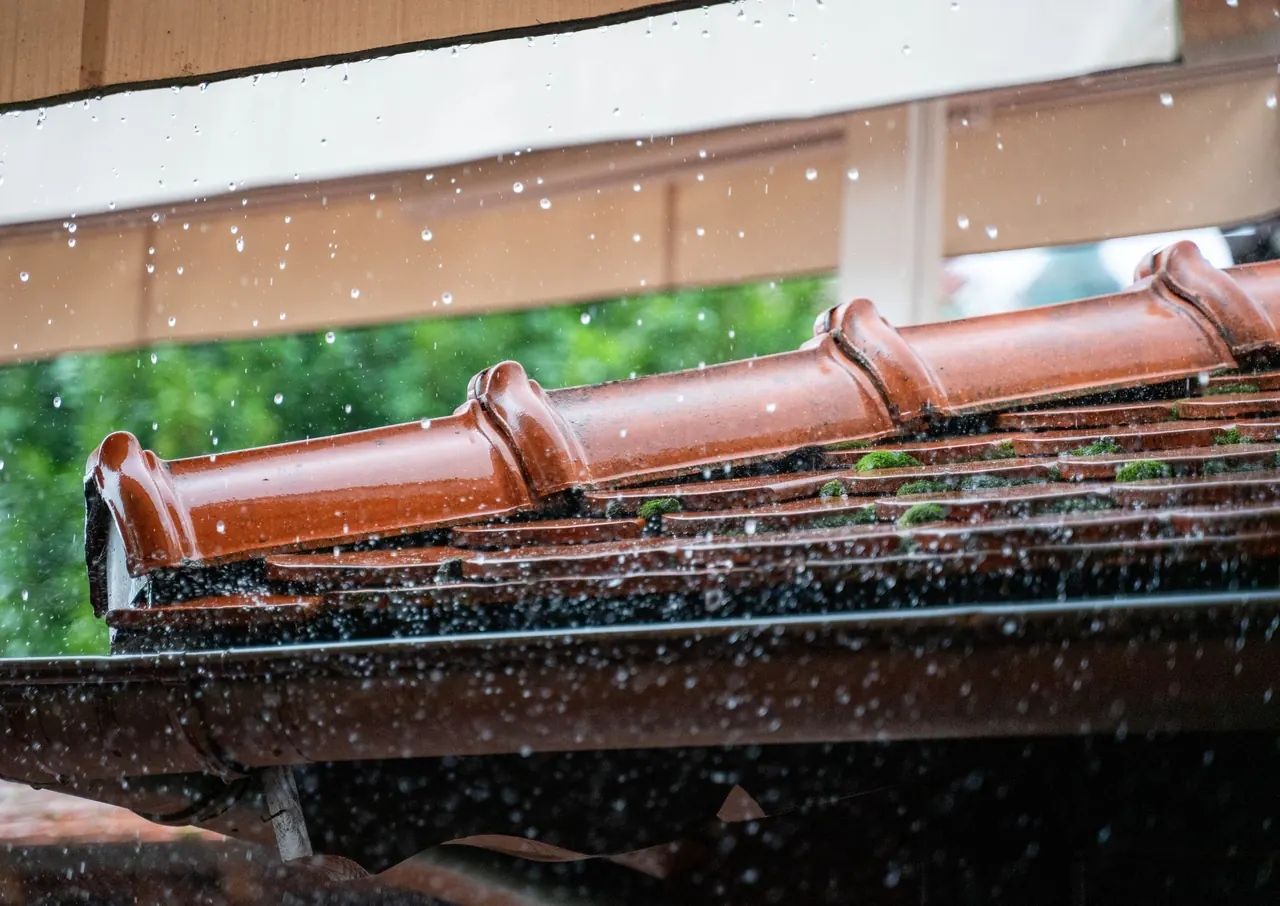
Anything loose above Belmont Rise or Brighton Road
Belmont Rise carries the A217, and Brighton Road is the other main route through the village. A ridge tile or a loose slate that falls into a back garden is a repair. One that could land on a busy footway or roadside is a hazard to people who have nothing to do with the house. If something is hanging loose over the front of a house on either road, keep people clear of that stretch of pavement and ring.
The same goes for the shop roofs on Station Road and The Parade, where the front of the building is the pavement. If you are unsure whether it can wait, the test is simple: water getting into a room, part of the covering missing or moving, or something that could fall onto a path, a pavement or next door's garden. A single slipped tile on a still, dry day can be booked as a normal roof repair in Belmont.
When it is too windy to go up
We answer the phone at any hour on 0330 133 4111. On the phone we ask what you can see, where the water is, and whether anything is loose above a path or a road, so the right materials come with us.
If it is safe to work at height, we refix or replace lost ridge and hip tiles, re-secure loose tiles and slates, dress back lifted lead, or put a temporary cover over a gap in the covering until the permanent repair. If it is not safe to go up, we do what can be done from inside and from the ground, and get onto the roof as soon as the gusts drop. Storm-damaged stacks often lead on to chimney repairs on the same house, and insurance claims are covered on our main emergency roof repair page.
Frequently asked questions
Lead has peeled back from the stack on our Downs Road cottage and is flapping. Can that wait until morning?
If no water is coming in and the lead cannot fall onto anyone, it can usually wait until it is light and calmer. If it is flapping over a path or is close to coming off altogether, ring us now.
The storm has damaged the roof over our Shanklin Village maisonette. Who do we call?
If you rent from the council or a housing association, ring your landlord's emergency repairs line, because the block's roof is theirs to fix. If you own a house on the estate with its own roof, or you are the freeholder, ring us.
Is it safe for anyone to go up on a Queens Road roof while the wind is still strong?
Sometimes not. If the gusts make work at height unsafe, we make the house as safe as we can from inside and from the ground, and go up as soon as conditions allow. We will tell you on the phone which it is likely to be.





