


A roof that leaks only in heavy rain almost always has a small weak point that copes with light showers but is overwhelmed when the rain is heavy or driven by wind. The usual culprits are a slipped or cracked tile, tired chimney flashing, a blocked gutter or valley, or a failing joint on a flat roof extension. The leak stopping when the rain stops does not mean it has fixed itself, so find and repair the entry point before the next downpour.
This guide is written for homeowners in Wimbledon and the surrounding SW19 and SW20 streets. It covers why heavy rain finds weak spots, the five most common causes, what you can safely check yourself, and when a leak needs an emergency visit.
Why a roof leaks in heavy rain but stays dry the rest of the time
In light rain, water runs down the tiles, over the laps and into the gutters without much trouble. A heavy downpour delivers far more water in a short time, and strong wind can drive it sideways or even up the slope, under the edges of tiles and slates and into joints that normally stay dry. Gutters, valleys and flat roof outlets that drain slowly also back up and overflow, sending water where it was never meant to go.
That is why the leak can vanish within an hour of the rain stopping. The gap is still there, and every storm wets the felt, battens and timbers a little more. Over time that leads to rot, stained ceilings and, eventually, a bigger repair than the original fault needed.
Five common causes of roof leaks in Wimbledon homes
Wimbledon has a broad mix of housing: Victorian and Edwardian terraces and semis around South Wimbledon and Wimbledon Park, larger period houses towards the Village, and interwar semis towards Wimbledon Chase and Raynes Park. Many still have long-serving slate or clay tile roofs, chimney stacks and flat-roofed rear extensions, and each of those brings its own weak points.
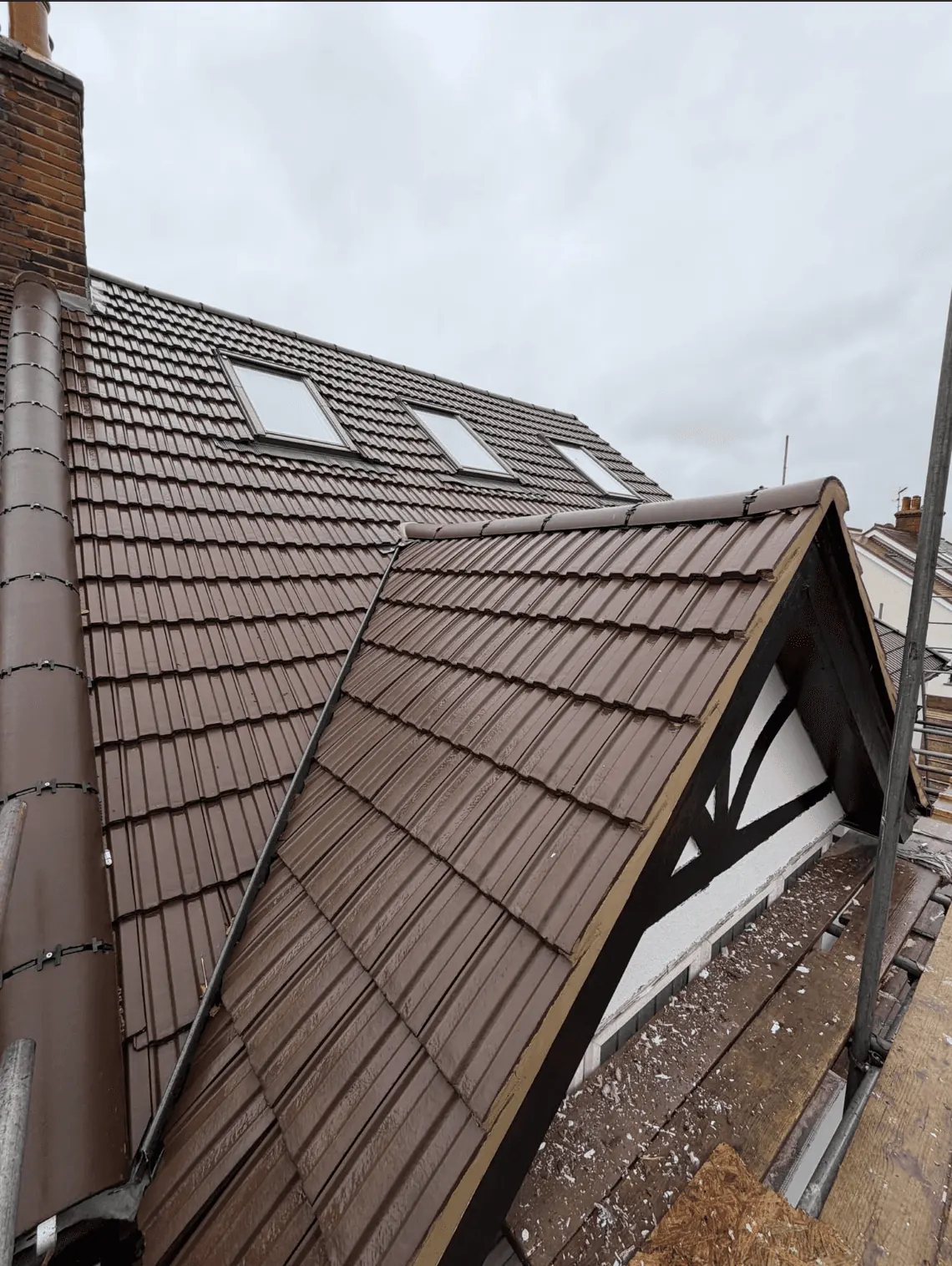
1. Slipped, cracked or missing tiles and slates
One displaced tile or slate is sometimes all it takes. On older slate roofs the nails holding each slate corrode over time, a problem roofers call nail sickness, and slates start to slide out of line; on tiled roofs, frost and age crack tiles or break the nibs that hang them on the battens. If the rest of the roof is sound, replacing or refixing the damaged pieces usually solves the problem, and our guide to missing roof tile repair explains what is involved.
2. Chimney flashing
A damp patch on a chimney breast, or in the corner of a bedroom next to the stack, points to the flashing. Lead flashing seals the joint between the roof and the brickwork, and over time it can lift, crack or lose the mortar that holds it into the joints. Wimbledon's period houses often have large stacks shared between neighbours, fully exposed to the weather. Historic England's advice on maintaining roofs singles out flashings and junctions as areas to check regularly, and our post on chimney flashing problems in Wimbledon goes into more detail.
3. Blocked gutters
Sometimes the roof covering is fine and the gutters are the problem. Leaves, moss and silt build up until the gutter cannot cope with a downpour, and the overflow soaks fascia boards, the tops of walls and the roof edge, which can show up indoors as damp along the ceiling line. Houses near Wimbledon Common, Cannizaro Park and the tree-lined roads around the Village fill their gutters faster than most. National guidance published by Checkatrade suggests clearing gutters around twice a year, in spring and late autumn, and our gutter cleaning service covers the whole of Wimbledon.
4. Flat roof extensions and dormers
Plenty of these houses have a flat-roofed rear extension, dormer or garage, and these rely on an intact covering and outlets that drain freely. Water that pools around a blocked outlet or a worn seam will eventually find its way in, and a very common leak point is where the flat roof meets the main wall of the house. A small, localised defect can usually be repaired; if the covering is failing across a wide area, a new flat roof in GRP, EPDM or felt is often the better long-term option.
5. Worn roof valleys
A valley is the channel where two roof slopes meet, and in heavy rain it carries the run-off from both. Leaves, moss and fallen mortar slow the flow, and older lead or felt valley linings can split, letting water spill under the tiles on either side. If your leak appears below a point where two slopes join, ask for the valley to be checked before anyone starts replacing tiles.
How to tell where the leak is coming from
The damp patch on your ceiling is not necessarily directly below the leak, because water can travel along rafters, felt and insulation before it shows indoors. Before you call a roofer, it helps to note the following:
- Where the water first appears, and whether it is the same place every time.
- Whether it leaks in all heavy rain or only when the wind blows from one direction.
- Any tiles, slates or flashing that look out of place from the ground.
- Whether the gutters are overflowing at the same moment.
Photos of the damp patch and a short video of the leak during rain are a real help. Do not climb onto the roof or use a ladder in wet or windy weather. A professional roof inspection is the safer way to look at the areas you cannot see, and our drone inspections photograph the whole roof without scaffolding.
Repair or replace?
A leaking roof does not automatically need replacing. If the water is coming through a few slipped tiles, a section of flashing or one worn valley, a targeted repair is usually enough. Replacement is worth discussing when leaks keep appearing in different places, the tiles or slates are failing across the roof, or earlier repairs keep breaking down. The condition of the whole roof matters more than the size of the damp patch.
For a sense of scale, national guide prices published by MyJobQuote in 2026 put a chimney lead flashing patch repair at £150–£250 where no scaffolding is needed, and its roof repair cost guide puts replacing five to ten broken tiles at £150–£350. The real price depends on your roof and how it can be reached, and we confirm it in a free quote before any work starts. Our roof repair page explains how we approach the work.
When a roof leak is an emergency
Some leaks can wait for a booked visit and some cannot. Treat it as urgent if water is coming in near electrical fittings, a ceiling is sagging or bulging, tiles or other materials have fallen from the roof, or water is coming in fast enough to damage the room. Move belongings away if it is safe, keep clear of wet fittings and any unstable ceiling, and switch off the affected circuit at the consumer unit if you can reach it safely.
We are open 24 hours a day, 7 days a week, and our emergency roof repair team can make the roof watertight first and come back for the permanent fix. Our guide on what to do if you find a leak in your roof walks through the first hour step by step.
Getting a heavy-rain leak checked in Wimbledon
Precise Roofing & Guttering is a family run roofing and guttering contractor based on Kenley Rd in Morden, under a mile from Wimbledon, and we cover homes across SW19 and SW20, including neighbouring Colliers Wood and Raynes Park. Guessing at the cause of a leak tends to get expensive, because new tiles will not stop water coming in around a chimney and clearing the gutters will not fix a split valley. We find where the water is getting in, explain what needs doing and give you a clear quote, and you can read more about our roof repair in Wimbledon.
Quotes are free with no obligation, and we can often visit and quote the same day you call. Our work carries a 10 year guarantee, and we offer a 20% discount for OAPs. Call 0330 133 4111 or request a free quote online.



 Google reviews
