


If you find a leak in your roof, deal with the inside of the house first: make the area safe, catch the water, switch off the electrics to that area if water is near light fittings or sockets, and photograph the damage for your insurer. Then call a roofer and leave the roof itself to them. If water is coming in quickly or part of the roof is visibly damaged, treat it as an emergency; our emergency roof repair line is answered 24 hours a day, 7 days a week on 0330 133 4111.
The first hour: a five-step checklist
- Make the area safe. Move people, pets and belongings away from the drip. If the ceiling is bulging or sagging, keep everyone out of the room below, because wet plasterboard can come down with little warning.
- Contain the water. Put a bucket or bowl under the drip, with an old towel in the bottom to stop splashing, and lay sheets or towels around it. If you can get into the loft safely, put a container or a sheet of plastic under the wet spot up there too, standing only on the joists or boarded areas.
- Isolate the electrics if water is near fittings. If water is running near a ceiling light, socket or switch, turn off that circuit, or the whole supply, at the consumer unit, as long as you can reach it without standing in water. If the consumer unit itself is wet, leave it alone, keep away and call an electrician. Have any fittings that got wet checked by a qualified electrician before that circuit goes back on.
- Photograph everything. Take photos and short videos of the ceiling, walls, damaged belongings and loft, and note the date, time and weather.
- Call a roofer. Tell them where the water is appearing, how fast it is coming in and when it started. A clear description lets us decide whether you need someone straight away or a booked visit.
Photos and notes for your insurer
Home insurance policies usually treat sudden damage, such as tiles blown off in a storm, differently from damage caused by gradual wear, so the details you record now can matter later. Photograph the damage before you start clearing up, keep anything that was ruined until your insurer says you can throw it away, and write a short note of when the leak started and what the weather was like. Ring your insurer early, as most policies expect you to report damage promptly and take reasonable steps to stop it getting worse. Keep the paperwork for any emergency work too, including the roofer’s invoice and any written description of the damage.
Where roof leaks usually come from
The damp patch on your ceiling is often some distance from where the water is getting in, because water runs along rafters, felt and insulation before it drips through. These are the usual sources:
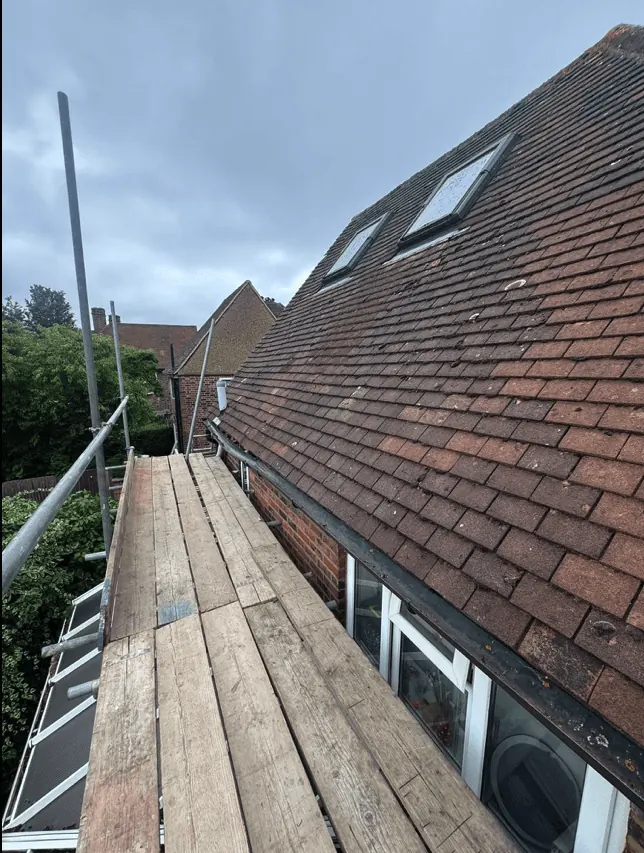
- Slipped, cracked or missing tiles and slates. One displaced tile can let wind-driven rain onto the felt beneath, and old felt eventually lets it through. These are usually straightforward roof repairs.
- Chimney flashing. Lead flashing that has lifted, cracked or lost its mortar seal lets water run down the side of the stack, often showing as a damp patch on the chimney breast. Our chimney repairs cover new leadwork and repointing.
- Flat roof joints and outlets. Extensions, dormers and garages with felt, EPDM or GRP coverings tend to leak at seams, upstands and blocked outlets, and standing water makes it worse. Our flat roofing team handles both patch repairs and new coverings.
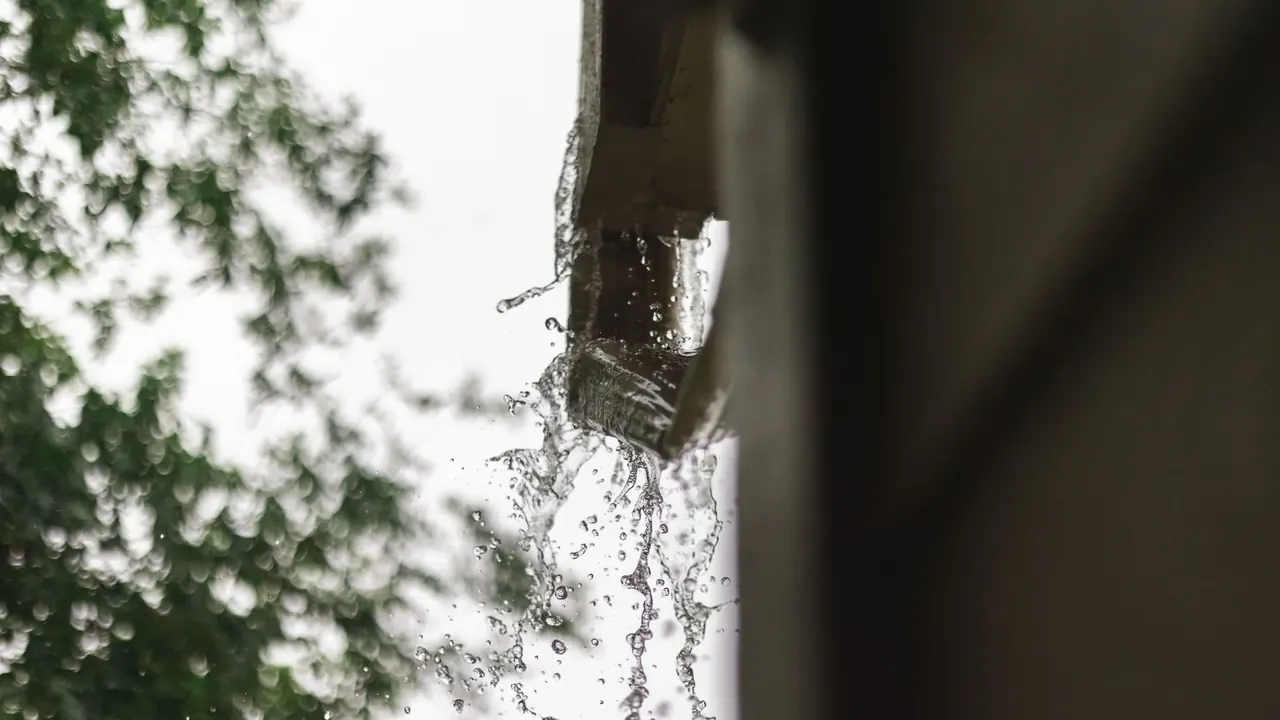
- Gutters and the roof edge. A blocked or sagging gutter can send water back behind the fascia and into the wall or eaves, which looks like a roof leak from inside. Our guide to water leaking behind a gutter explains the signs, and our gutter repairs service fixes the cause.
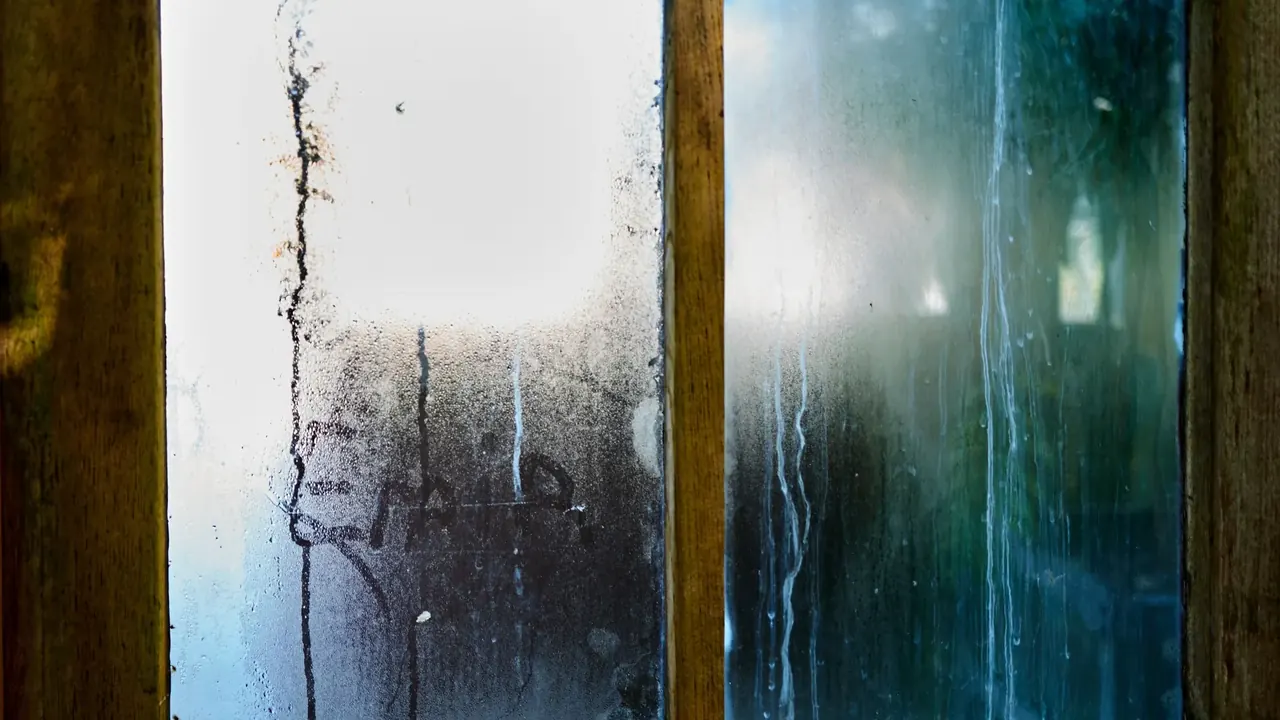
Condensation is worth ruling out too. In a cold, poorly ventilated loft, moisture from the house can form on the underside of the felt and drip onto the ceiling, which looks like a leak even on a dry day. If the drips appear in cold weather when it has not rained, mention that when you call.
When a roof leak is an emergency
Treat a leak as an emergency if water is coming through the ceiling steadily, if it is near electrics, if the ceiling is bulging, or if tiles, flashing or part of a flat roof covering have visibly come away, which often happens after a storm. In those cases the first job is to make the roof watertight with sheeting or a temporary repair, then come back for the permanent repair once the weather allows. A slow drip that only appears in heavy rain is less urgent, but it still needs finding before the timbers and plaster get wet again; our guide to a roof leaking in heavy rain covers the likely causes.
What not to do
Do not go up a ladder or onto the roof to look for the leak, especially in rain, wind or the dark. Wet tiles are slippery and many roof surfaces, including rooflights and older garage roofs, are fragile; the Health and Safety Executive's guidance on roof work explains why falls from roofs are so serious. Avoid sealant, tape or bitumen paint applied from outside as a stopgap, because it can hide the real entry point and make the permanent repair harder.
What a repair is likely to cost
The cost depends entirely on the cause. As a guide, national prices published by MyJobQuote in 2026 put replacing five to ten broken roof tiles at £150–£350 and a felt or EPDM flat roof patch repair at £200–£700. The real price depends on your roof, how easy it is to reach and what is found once the damaged area is opened up, and we confirm it in a free, no-obligation quote before any work starts. Our guide to roof repair costs in Morden has more published figures.
What happens when you call us
Precise Roofing & Guttering is a family run roofing and guttering contractor based on Kenley Rd in Morden, and we are open 24 hours a day, 7 days a week. When you call about a leak, we start by asking where the water is coming in and how fast, so we can decide whether to send someone straight away. For less urgent leaks we can often visit and quote the same day you call, and every quote is free with no obligation.
Once we know the cause, we explain it in plain terms and tell you whether it is a small repair or a sign of a bigger problem. Our work comes with a 10 year guarantee, and we offer a 20% discount for OAPs. Call 0330 133 4111 or request a free quote online.


 Google reviews
