

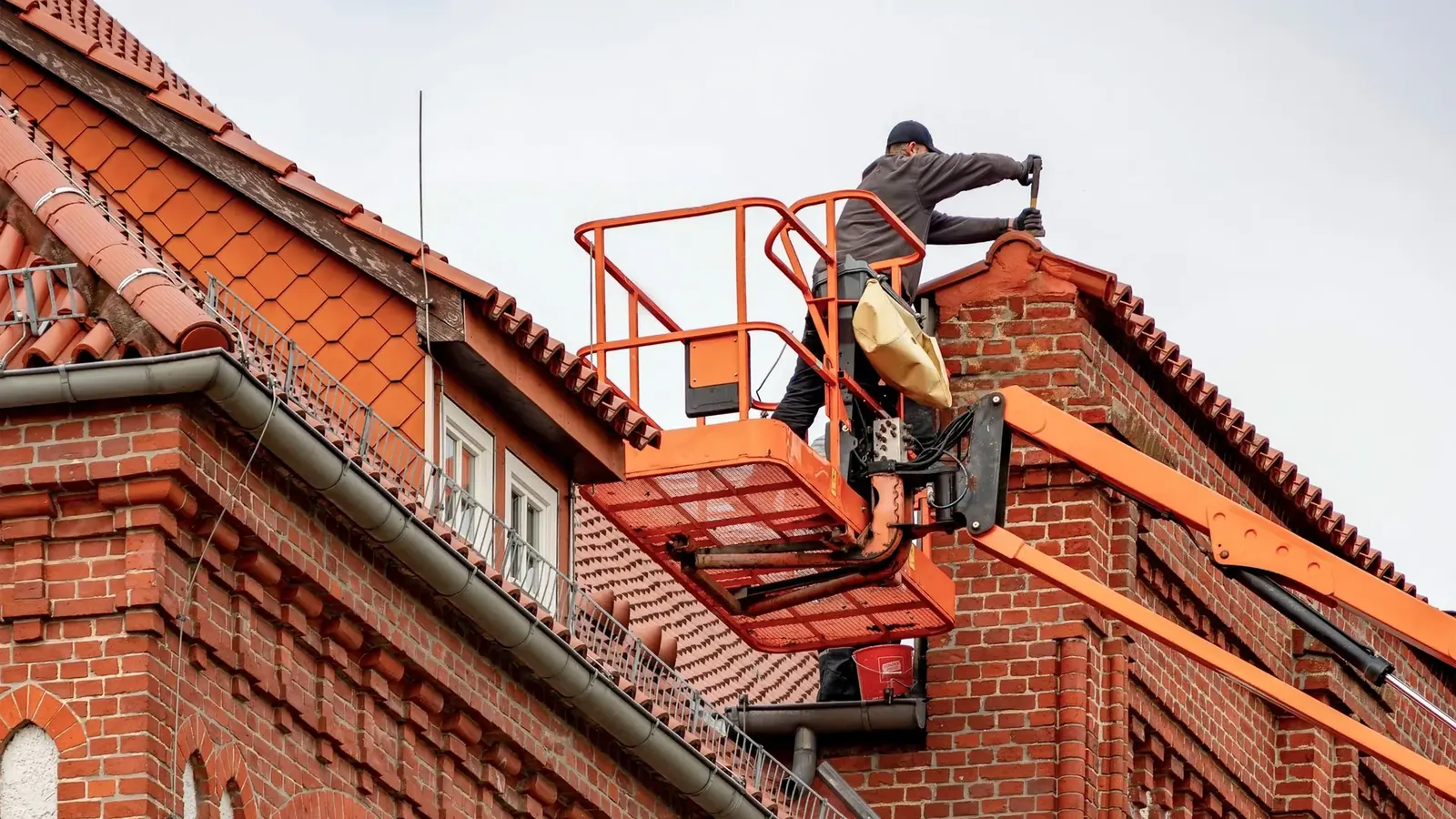
Can you repair a roof in winter? Yes, and most leaks should not wait for spring. Replacing slipped or broken tiles and slates and refitting lead can be done on any dry, calm day. Work that relies on mortar, resin or adhesive is more limited: mortar laying should stop below 3°C, and many flat roof resins and adhesives need 5°C or more and a dry surface.
In short
- HSE says not to go on any roof in rain, ice, frost or strong gusting winds
- Tile, slate and lead repairs can go ahead on dry, calm winter days
- Holcim says mortar work should stop below 3°C
- Cromar GRP and ClassicBond water-based EPDM adhesive both need 5°C or more
Can you repair a roof in winter? What depends on the weather
Two things decide whether a roof repair can go ahead on a given winter day. The first is safety: whether anyone can work on the roof without slipping or being blown off balance. The second is the material: whether the mortar, resin or adhesive the repair needs will set or bond properly in the cold and damp.
Tiles, slates and lead are mechanical. They are nailed, clipped, hooked or dressed into place, so the cold doesn't stop them working. Mortar, GRP resin and membrane adhesives are chemical, and each has a temperature below which the manufacturer says it should not be used.
Is it safe to work on a roof in cold, wet or windy weather?
Not always, and a good roofer will say so. The Health and Safety Executive says people should not consider going on any roof in poor weather such as rain, ice or frost, in strong winds, particularly gusting winds, or where the roof is slippery, and that winds above 23mph (Force 5) will affect a person's balance.
That means a winter repair often waits for the right window rather than the first available slot: a dry morning once the frost has lifted, or a calm day between storms. It also means you should never go up yourself to check or patch a leak in winter weather. Wet tiles, frost and short daylight make falls far more likely, and HSE notes that almost one in five deaths in construction involve roof work.
Which roof repairs work in winter, and which need milder weather
| Repair | Winter-friendly? | What limits it |
|---|---|---|
| Replacing slipped, cracked or missing tiles and slates | Yes, on a dry, calm day | Safety on the roof; frost and ice |
| Refitting or renewing lead flashing | Usually yes | Safety; any mortar used to point the lead into the wall follows the mortar limits |
| Re-bedding ridge and hip tiles in mortar | Only above 3°C | Mortar won't develop strength properly in the cold |
| Dry ridge and dry verge systems | Yes | Mechanically fixed, so no mortar curing needed |
| Chimney repointing and flaunching | Only above 3°C, with protection | Mortar limits; frost and rain on fresh work |
| GRP (fibreglass) flat roofs | Only on mild, dry days | Cromar does not recommend laminating below 5°C |
| EPDM rubber flat roofs | Limited, depends on adhesive | Water-based adhesive needs above 5°C for 24 hours; dry surfaces |
| Torch-on felt | Limited | Below 5°C installation is affected; work stops in icy conditions |
| Temporary weatherproofing | Yes, whenever it is safe | Wind, as covers must be fixed securely |
The sections below explain where those limits come from.
Mortar in cold weather: why ridge and chimney work can wait
Mortar is used to bed ridge and hip tiles, point verges, repoint chimneys and set flaunching around chimney pots. Mortar manufacturer Holcim says hydration and strength development generally occur above 4°C, and that masonry work should stop when the air temperature falls below 3°C unless the mortar itself can be kept at 4°C or more until it has hardened. Work can resume once the air reaches 3°C and is expected to keep rising. Fresh mortar also needs protecting from rain, snow and frost.
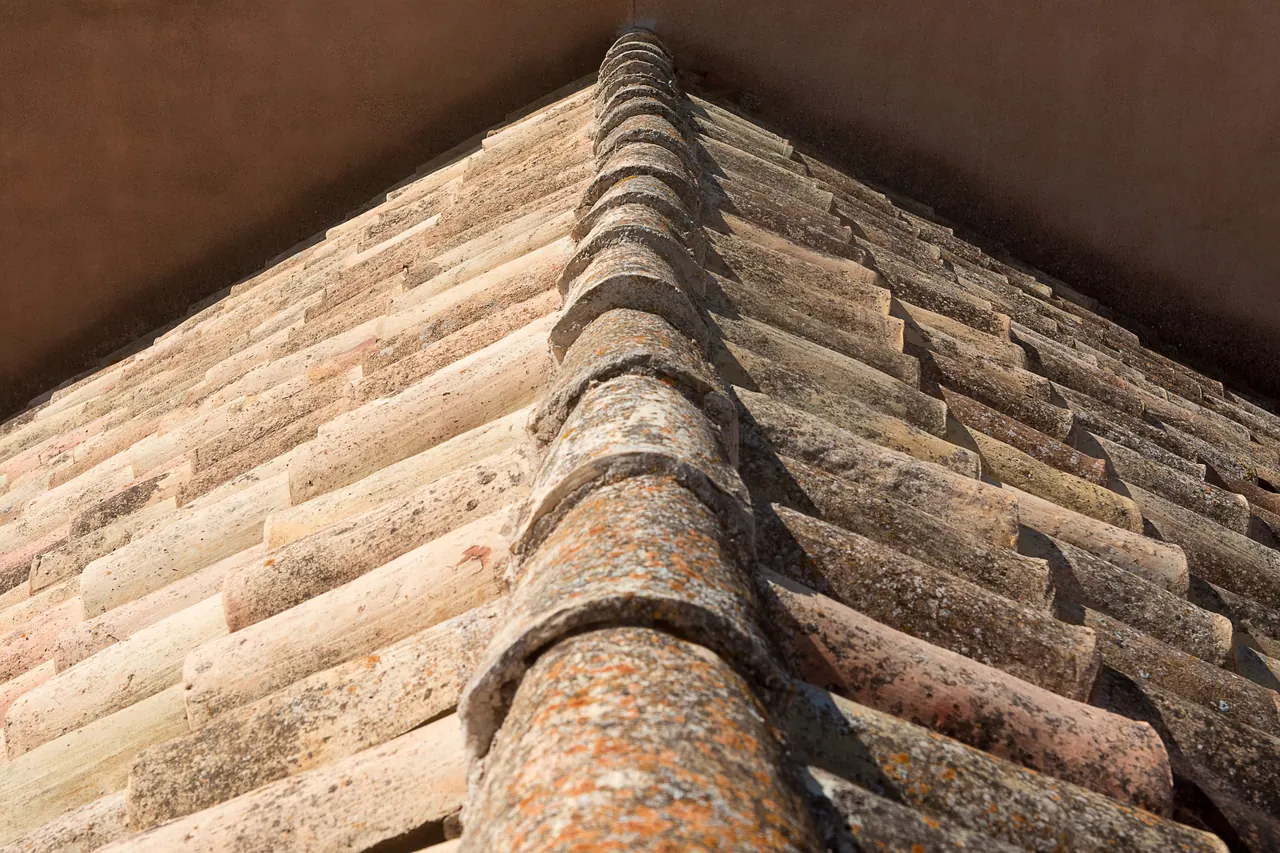
In practice, a loose ridge tile in December is usually made safe straight away and then bedded properly on a milder day. Where a whole ridge or verge needs redoing, a mechanically fixed dry ridge or dry verge system avoids the curing problem altogether. A chimney that needs repointing can usually wait for spring once any loose material has been made safe; our chimney repairs page covers what that work involves.
Flat roofs in winter: GRP, EPDM and felt
Flat roofs are where winter makes the biggest difference, because most of the materials are bonded or cured rather than fixed.
- GRP fibreglass. Cromar, a GRP roofing manufacturer, does not recommend laminating below 5°C. Resin is laid onto a dry deck too, so a GRP roof is a job for a mild, settled spell, and in mid-winter that can mean waiting.
- EPDM rubber. The ClassicBond PRO installation guide says its water-based adhesive may only be used when temperatures stay above 5°C for 24 hours, that a polyurethane deck adhesive can be used where temperatures may fall below 5°C, and that frost, ice or water must be cleared and the deck allowed to dry completely, as trapped moisture can lead to de-bonding.
- Torch-on felt. IKO's guidance says ambient temperatures below 5°C can affect installation and that work should generally be suspended in severe wintry and icy conditions.
So a small split in a flat roof can usually be patched or made safe in winter, but a full re-cover is often better booked for spring. If you are deciding what the new covering should be, our comparison of EPDM, GRP and felt flat roofs sets out the trade-offs, and our flat roofing page explains how we repair and replace them.
Temporary roof repairs: keeping the water out until the weather allows
When the weather rules out a permanent repair, the job is to stop the water now and finish later. On an emergency call, making safe can mean refixing loose tiles and slates, fitting a heavy-duty temporary cover over an open section of roof, patching a split flat roof, clearing a blocked valley or gutter that is sending water into the house, or taking down loose material that could fall. We then come back for the permanent repair once conditions allow.
In winter a temporary repair is often the sensible route, because mortar, resin or adhesive used below the manufacturer's minimum temperature may not set or bond properly. As a guide to cost, MyJobQuote's October 2026 roof maintenance guide puts an emergency roof repair call-out at £150–£300 plus repairs, as a national figure. That is a guide, not our price. Your actual cost depends on the damage and how the roof can be reached, and you get a free quote for the permanent repair.
What not to do yourself: don't climb up to put a tarpaulin over the roof, and don't smear sealant over tiles or flashing from outside. Inside, catch the water, protect belongings and keep away from wet electrics; our guide on what to do if you find a leak covers the first hour step by step.
Should you replace a roof in winter or wait for spring?
A full re-roof can go ahead in winter, as the covering goes back on in stages under scaffolding and tiles and slates are not temperature-sensitive. But shorter days and more weather stoppages make it slower, and the mortar and flat roof elements still need suitable days. Many homeowners prefer to make the roof safe now and book a roof replacement for spring, when the job runs to a steadier timetable.
Winter is a good time to get the inspection and quote done, so the work is planned rather than rushed. If your roof is borderline, our guide to repair or full replacement helps you weigh it up.
When to call a roofer this winter
Call straight away if water is coming in, if tiles, ridge tiles or flashing have come loose after wind, or if a flat roof covering has lifted or split. Those are emergencies, whatever the season, and our emergency roof repair team takes calls 24 hours a day, 7 days a week on 0330 133 4111.
For anything that isn't leaking yet, such as a cracked tile spotted from the garden or moss-filled gutters, book a visit and let us pick a sensible day to do it. A drone roof inspection lets us check the whole roof without anyone climbing on wet or frosty tiles.
Frequently asked questions
Can roofers work in the rain?
Generally not on the roof itself. HSE guidance says not to go on roofs in poor weather such as rain, ice, frost or strong gusting winds, so roofers wait for a break in the weather, even to fit a temporary cover. Most materials that need to bond or cure, such as mortar, GRP resin and adhesives, also need dry surfaces, so permanent repairs wait for a dry spell.
Can you fix a leaking roof in the rain?
Usually only temporarily. The priority is stopping water reaching the inside, which can mean sheeting over the damaged area or clearing a blocked valley or gutter as soon as there is a safe break in the weather. The permanent repair follows on a dry day. You should never try to fix a leak yourself from a ladder or the roof while it is raining.
What temperature is too cold for roofing?
It depends on the material. Holcim says mortar work should stop when the air falls below 3°C, Cromar does not recommend laying GRP below 5°C, and ClassicBond's water-based EPDM adhesive needs temperatures above 5°C for 24 hours. Tiles, slates and lead can be fitted in colder weather, as long as the roof is free of frost and ice and safe to work on.
Is winter a cheaper time to get roofing work done?
Not reliably. Prices depend on the job, the access and materials rather than the calendar, and winter jobs can take longer because of weather stoppages. The cheapest approach is usually to fix small problems early, before a winter of rain turns a slipped tile into wet battens and a stained ceiling. Get a written quote either way.
How long does a temporary roof repair last?
A temporary repair is designed to last until the permanent repair can be done safely, not for years. How long that is depends on the method, the wind and the weather. Treat it as a stopgap and book the permanent repair as soon as conditions allow, especially if the cover is on an exposed slope.
Winter roof repairs from a Morden team
Precise Roofing & Guttering is a family run company on Kenley Rd, Morden, repairing roofs across south west London and north Surrey for over 20 years. We take emergency callouts 24 hours a day, 7 days a week, make the roof watertight first and come back for the permanent repair when the weather is right. Quotes are free and often the same day, our work carries a 10 year guarantee and OAPs get a 20% discount. Call 0330 133 4111 day or night, or request a free quote online.


 Google reviews
