



 Google reviews

A stain in the back bedroom on Kings Road
On the terraces of Belmont Road and Kings Road, a leak rarely shows where it starts. Water gets in at a junction on the roof, runs along a rafter or batten, and drips onto the ceiling of the back bedroom or the bathroom some distance away. Owners often suspect the chimney first. On houses of this kind, the more likely culprit is lower down and further back.
These are among the oldest everyday roofs in Belmont. The residents' association history notes that the Belmont Road terraces carry the dates 1884 and 1888, and that Nos 14 to 20 Station Road were built between 1879 and 1884, and Inman's 1865 plan set Kings Road aside for terraces too. That puts the original timbers at around 140 years old, and the stacks, back-addition roofs and leadwork have had that long to wear.
Where the back addition meets the main roof
Terraces of this age typically have a narrower rear wing with its own small roof, lower than the main one. Where the two meet there is usually a valley, a lead-lined gutter, or a strip of lead dressed against the back wall. Water from the main roof runs onto that junction in every shower, and moss and leaves settle there because nobody can see it from the garden.
Lead lasts a long time, but not for ever. It splits where it has been folded tight or fixed too rigidly, the mortar joint that holds the top edge crumbles, and older repairs are sometimes made with bitumen paint or sealant that cracks within a few winters. A failed valley lets water straight onto the timbers underneath, which is why a small fault here can leave soft wood behind.
We look from the roof space first, to find where the timbers are wet, then from the roof. The repair is usually one of three things: new lead dressed into the wall and the valley, the valley re-formed with the slates around it reset, or the old sealant cut out and replaced with proper leadwork. If water is also coming off the main roof's gutter onto the back addition, our blocked gutter repair page for Belmont covers the outlets and downpipes.
Concrete patches in old slate
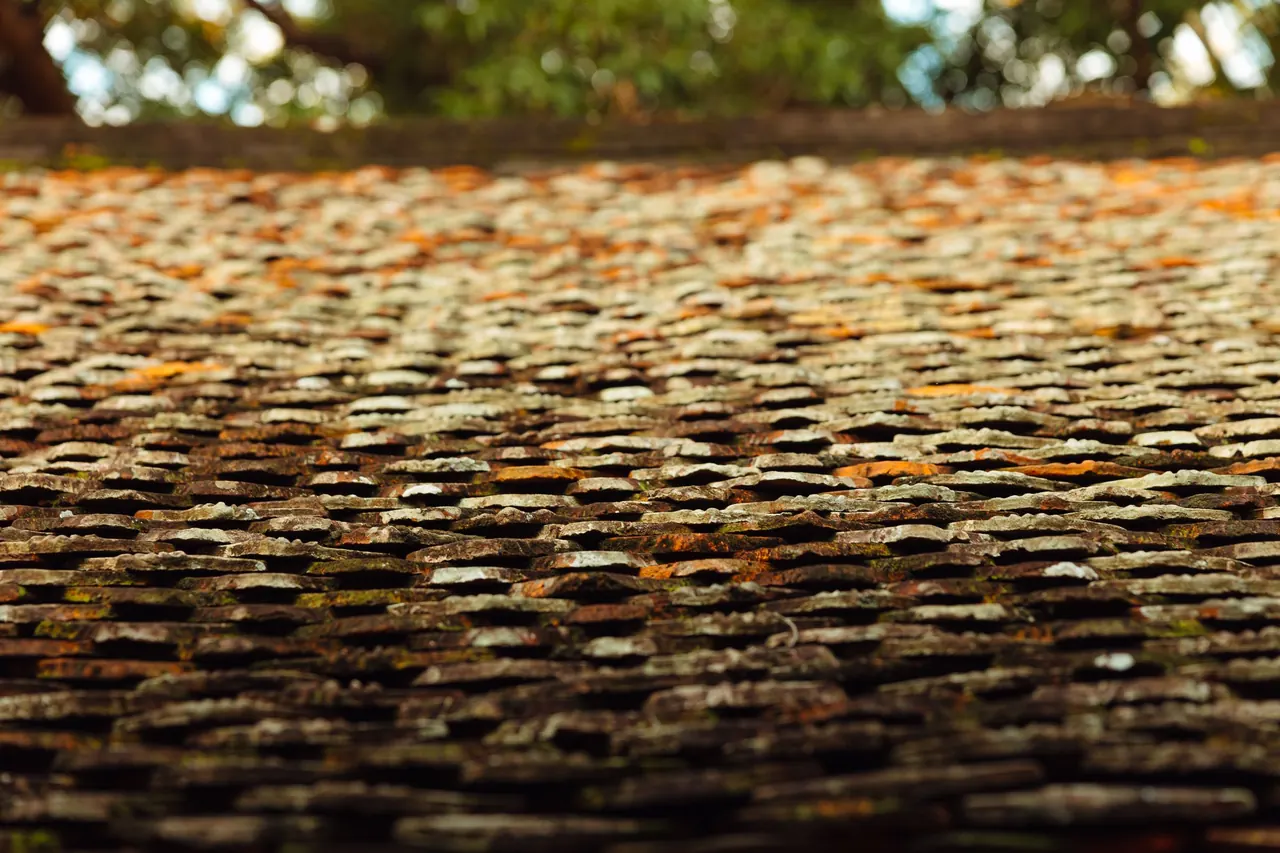
Some of these roofs may still carry slate from the 1880s. Others have been re-covered at some point, or patched. A slate roof with a few concrete tiles in it, or flashing smeared with sealant, was repaired cheaply at some point. Concrete tiles and slates do not lap together properly, so those patches tend to fail first, and putting them right with slate of a matching size, from reclaimed stock where needed, is usually a small job.
Odd slates slipping on the main slope are worth a look too. A few in one area is a repair. Slates going across the whole slope means the fixings have failed together, and we will tell you plainly that the roof is heading for re-covering rather than sell you a series of patches. Our guide on repair or full replacement walks through how to weigh that up.
Rear slopes with no side passage
On a terrace, the cost question is often access rather than materials. Rear slopes and back additions on these streets usually have no side passage, so we work out early whether the job can be done from roof ladders or needs a small scaffold at the back. Where a rear slope cannot be seen well enough from a ladder or the roof space, a drone flight gives close-up photos before we price. As a national benchmark, Which? puts replacing one to six standard tiles at £75 to £400 excluding VAT. The general process is on our main roof repair page.
Frequently asked questions
The stain on our Kings Road back bedroom ceiling is nowhere near the chimney. Where is it coming from?
On these terraces, the usual suspect is the valley or lead where the back addition meets the main roof. Water can run along a rafter or batten before it drips, so the stain can be a metre or more from the fault. We trace it from inside the roof space first.
Our Station Road house has a slate roof patched with concrete tiles. Can that be put right?
Yes. We take the odd tiles out and replace them with slate of a matching size, from reclaimed stock if needed. It looks better and it seals better.
There is no side access to the back of our Belmont Road terrace. Can you still reach the back addition roof?
Usually, yes. Many back-addition repairs can be done from roof ladders. If the work is bigger, a small scaffold at the rear may be needed, and we tell you which when we quote.





