



 Google reviews

Oak pegs and handmade tiles around the Wellhouse
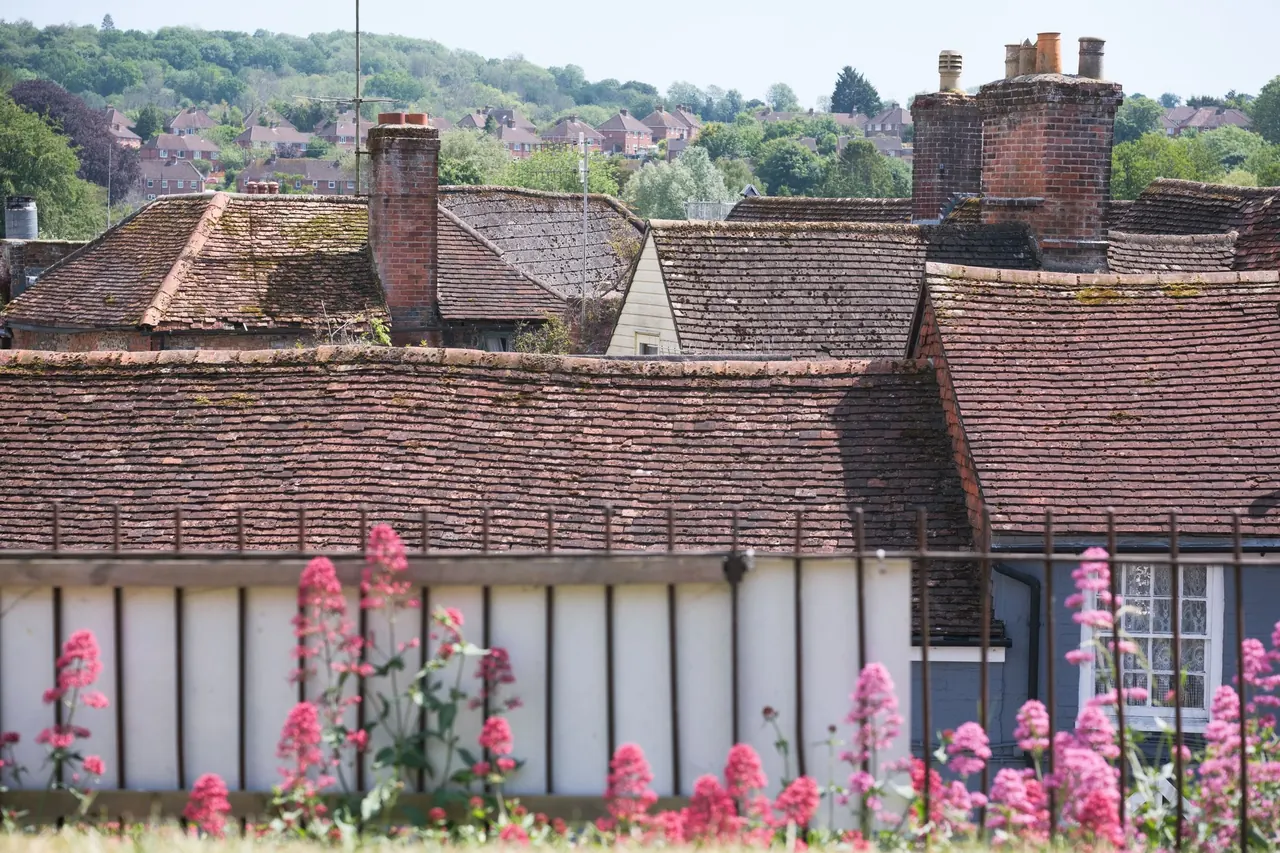
The oldest roofs in Banstead sit around the Wellhouse, Park Road, Mint Road and Woodmansterne Lane. Most of the buildings from before the Victorian period there have gabled roofs of handmade peg tile, pitched at about 50 degrees over short spans, according to the council's 2014 study of the conservation area.
Peg tiles were hung on oak pegs. Over time the pegs rot or the tile cracks around its holes, and the tile slides down and leaves a gap. A steep peg tile roof can lose one and still shed most of the rain, which is why a missing tile on a cottage can go unnoticed for a winter. The trouble starts when the water reaches the battens below.
Because handmade tiles vary in size and colour, a new machine-made tile among them stands out. The usual repair takes sound tiles from a less visible slope or from reclaimed stock, refixes them securely, and keeps any new ones for places nobody looks. Like-for-like repairs with matching materials do not normally need planning permission. On a listed building, check with the council before work that goes further than that.
Slate hips and twin roofs in the village
The mid-Victorian houses in the village are mostly brick, flint or weatherboard under low-pitched hipped slate. A shallow slate roof sheds water more slowly than a steep tiled one, so a cracked or slipped slate lets rain through sooner. The long hips on these roofs are often the first thing to go, either the mortar under the hip tiles or the fixings. Slates can be replaced one at a time, and the hips re-bedded or re-fixed.
Some village houses carry two roofs side by side. Park Cottage on Park Road has slate on its front range and tile on the rear, and Rosehill nearby has a plain tile mansard. The valley between two ranges and the change of pitch on a mansard are where water finds its way in, and where a leak on one of these houses is traced first.
Nails, battens and hips on Nork houses
The interwar roofs of Nork were built one plot at a time, so tiles, pitches and details vary from house to house. Many still have plain tiles; others were re-covered in concrete along the way. On these roofs the tile itself is often sound. What gives up is underneath: corroded nails, broken nibs, battens that have softened, and an early bitumen felt, or no underlay at all, that has perished at the eaves. When the same tile keeps slipping, the fixing or the batten behind it has usually failed, and refixing the tile alone does not last.
The other weak points are ridge and hip tiles bedded in old mortar, which cracks and loosens with age and frost on exposed ridges, and the valleys of complex hipped roofs, which fill with leaves from garden trees and push water under the tiles. Flashing where extensions and dormers meet the main roof is another regular leak point. Leadwork on the stack itself is covered on our chimney repairs in Banstead page.
On a steep or tall roof, access often matters more to the cost than the number of tiles. Where a fault is on a rear slope that cannot be seen from the garden, the drone can find it first so the access is planned before anyone climbs. If water is coming in now, use our emergency roof repair line. When faults are spread across the whole roof, our article on repair or full replacement explains how to weigh it up.
Frequently asked questions
Can you find matching peg tiles for a cottage near the Wellhouse?
Usually, by reusing sound tiles from the roof itself, often from a less visible slope, and making up the rest from reclaimed handmade tiles of a similar size and colour. You see the options before anything is fitted.
My house on Park Road is listed. Does a roof repair need consent?
Replacing a few tiles or slates in matching material is normally treated as repair. Work that changes the covering, the pitch or the detailing can need listed building consent, so ask the council before anything beyond like for like.
Is a low-pitched slate roof in the village harder to repair?
It is less forgiving. Water runs off a shallow slope more slowly, so a gap at a slate or a hip leaks sooner. Individual slates can be replaced without disturbing the rest, and the hips are checked at the same time.





