



 Google reviews

Peg tiles on the timber-framed houses
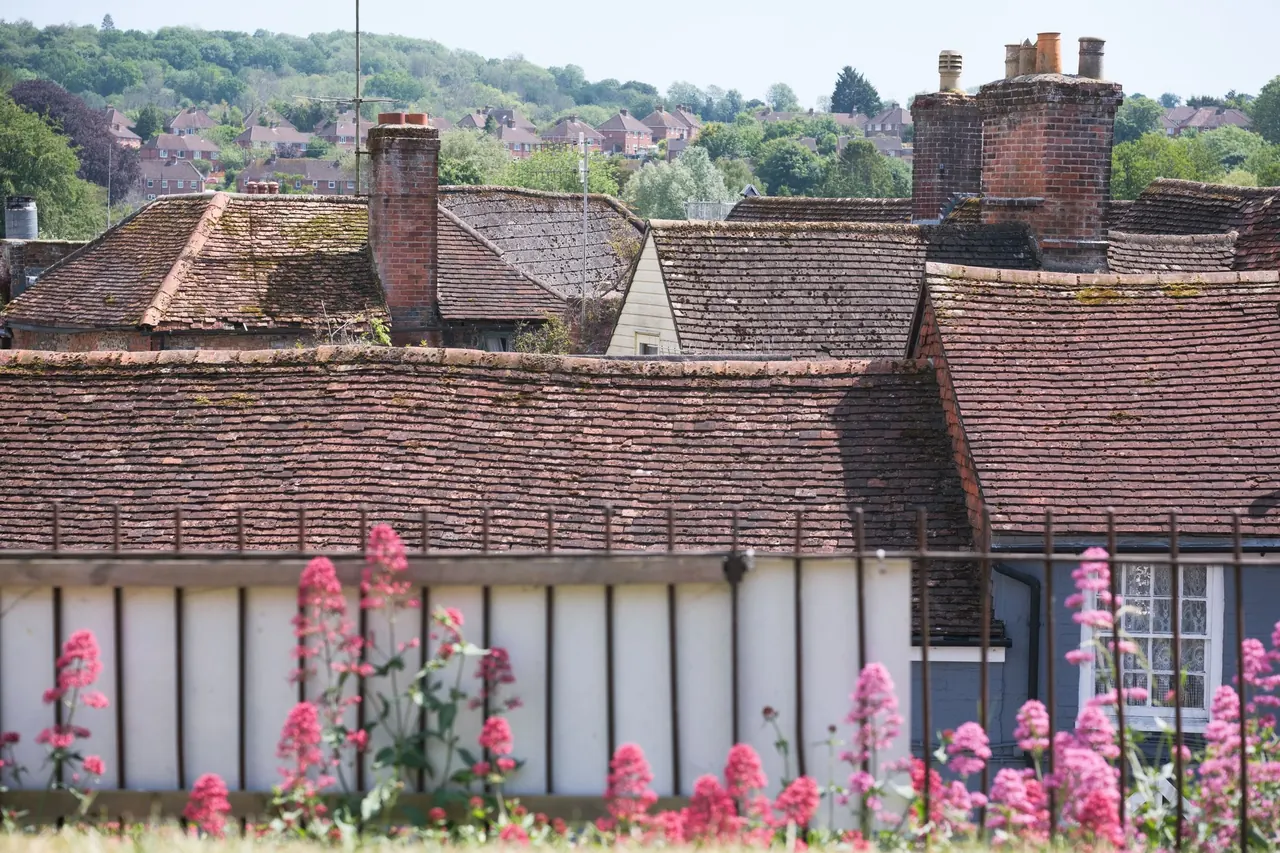
A gap in a peg tile slope is easy to spot from Spring Street or the High Street: one tile missing from an otherwise even run, or one hanging lower than its neighbours. The earliest buildings in the village are timber framed, among them The Star in the High Street, Fitznells Manor in Spring Street and the long jettied range at 11-15 High Street. The conservation area appraisal says their steeply pitched roofs are almost always covered with handmade clay peg tiles, and the genuinely Georgian houses that followed, such as Chessington House in Spring Street, kept the steep peg-tiled roof.
Each peg tile hangs on its batten from a small peg or, later, a nail. Over a long life the peg rots or the nail rusts and that tile slides down while its neighbours stay put. On a steep roof the gap lets rain straight onto the batten below. The repair is to refix the slipped tile, replace any broken ones and check the battens around the gap, because a soft batten will drop the next tile too.
The hard part is the match. Handmade tiles vary in colour, camber and size, and a bright new tile in a weathered slope stands out from the street. We use handmade or reclaimed tiles chosen to sit in with what is there, and on a listed house that choice is what keeps a repair a repair.
Slate after the railway
From the mid-19th century cheap Welsh slate came in by rail, and because slate can be laid at a lower pitch than peg tiles, later roofs in the village tend to be less steep. It is a trend rather than a rule. Glyn House, the 1859 rectory in Church Street, has steeply pitched slate roofs, while the cottages, older than the railway, have shallow hipped roofs in either slate or peg tiles.
Slate itself rarely fails. The nails do. When they corrode, slates slip out of their courses. A few can be refixed. When slates are moving across a whole slope, the fixings have gone everywhere and patching will not keep up, and the photos usually make that plain.
Ridges on the hipped cottages
On the small hipped cottages of Mill Lane and West Street, a large share of the roof is ridge and hip. Each is a line of tiles bedded in mortar, and old lime bedding cracks and washes out. A loose hip tile can slide off without warning, so re-bedding them in a suitable mortar, with the end tiles properly secured, is one of the most useful repairs on these roofs. Where the stack in the middle of the roof is part of the problem, our chimney repairs in Ewell Village cover the lead around it.
Where High Street roofs meet
Along the High Street, some of the old cottages were turned into shops long ago, with ground-floor shopfronts built over their front gardens. The King William IV, of about 1815, sits among them. Roofs there join at odd angles, with valleys and lead soakers where one building meets the next. Water that shows in a shop ceiling may have run along a timber from a valley several feet away, so we trace it back before cutting anything open.
If a slope has more slipped and broken tiles than sound ones, a repair stops being good value. Our page on re-roofing in Ewell Village covers that decision, including what the council says about concrete tiles, and the guide on repair or full replacement helps you weigh it up. The main roof repair page covers the service in more detail.
Frequently asked questions
Can you match the handmade peg tiles on my Spring Street house?
Usually, with reclaimed tiles of a similar age and colour, or new handmade tiles where a close match exists. We look at the tiles either side of the gap before choosing, and set any spares aside for next time.
Does a small repair on my listed Church Street house need listed building consent?
Like-for-like repairs in matching materials do not normally need it. Anything that changes the character of the roof, such as a different tile, does. If you are unsure, ask Epsom and Ewell Borough Council before the work starts.
My Mill Lane cottage has slate on one slope and peg tiles on another. Can both be repaired at once?
Yes. Each covering is repaired in its own material, and the hips and ridges are checked in the same visit.





