



 Google reviews

Square clay tiles from Belgium on Lynwood Avenue
Nos. 1 to 7 Lynwood Avenue were built between 1896 and 1903 to the designs of J R Harding, as one development full of projecting bays, tile hanging and big brick chimneys. The council's Burgh Heath Road appraisal notes that they use square interlocking clay tiles which apparently came from Belgium, and that the same tile turns up on a few other houses nearby, including No. 51 Burgh Heath Road.
That matters the day one of them cracks. On a steep roof with this many valleys and bays, the first job is to find where the water is really getting in, which is often not above the stain. Then comes the tile. We look for a reclaimed one of the same pattern. If none can be found, we show you the closest option before it goes on, and where it makes sense a sound tile from a hidden rear slope moves to the front and the near match goes round the back.
Most faults on the houses around Burgh Heath Road are not the tiles themselves. They are corroded nails, rotten battens, perished mortar on ridges and hips, and lead in valleys and around stacks that has split after a century of heat and cold.
Single-lap pantiles on the Downs Road Estate
Every original house on The Ridings, Walnut Close and Milburn Walk was roofed in handmade clay pantiles when the estate was finished in 1963. A pantile overlaps the tile beside it only once, unlike a plain tile, so one cracked or slipped pantile at a verge or eaves lets rain reach the underlay straight away. Tile hanging on a gable that has lost a nail or two lets water into the wall behind.
A like-for-like repair in clay pantile is what the estate's Article 4 Direction expects, and our roof replacement page for Epsom sets out those rules in full for anyone facing a bigger job.
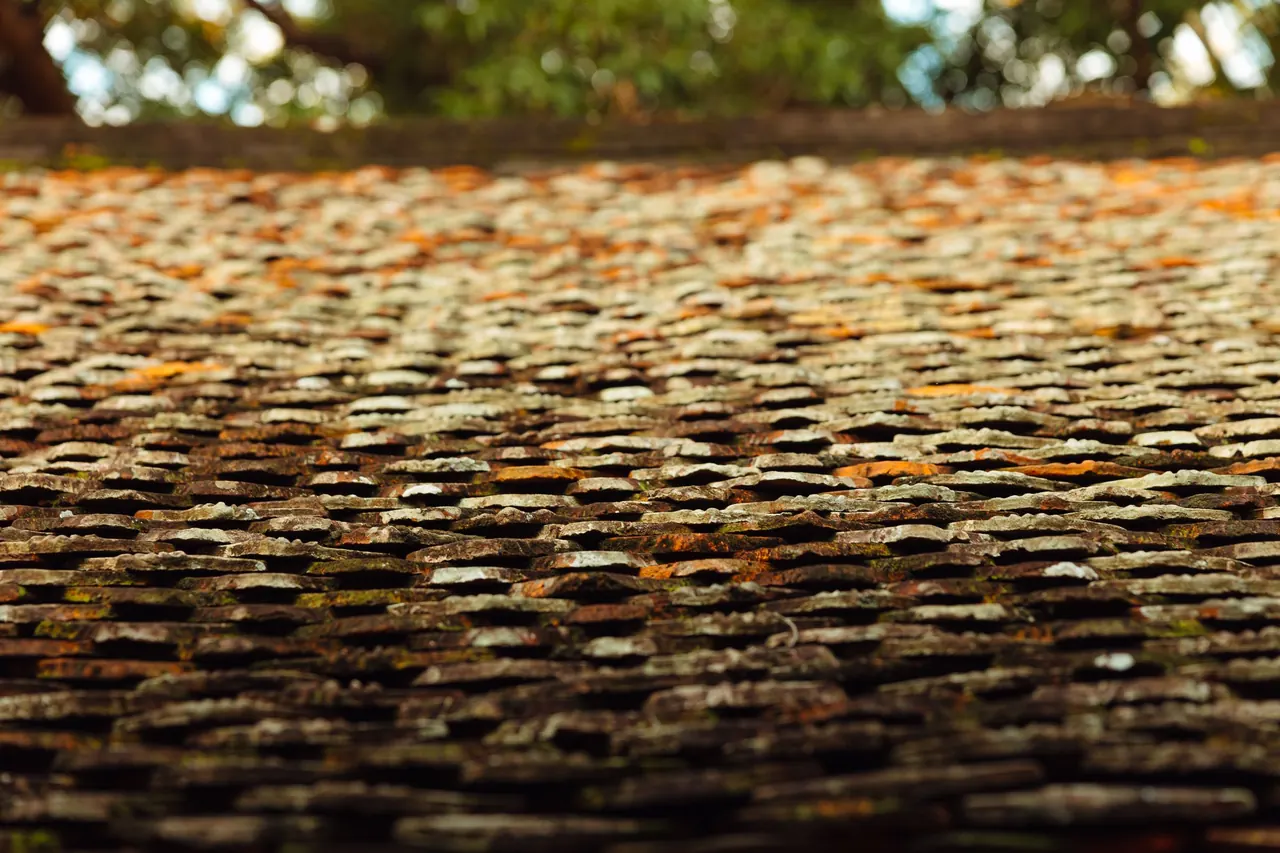
Cottage roofs around Church Side and West Hill
By Epsom Common, the Stamford Green cottages mix white weatherboarding with pantiled roofs, while the Victorian terraces on West Hill are slated with red clay ridges. The council's appraisal notes that Nos. 4 and 6 West Hill, the oldest building in the conservation area, is now slated but must first have had handmade clay peg tiles. On a small cottage roof, a broken slate or a perished ridge joint is usually a quick repair, and the right match keeps it invisible from the green.
Slate on the old hospital ranges
The converted ward blocks at Long Grove and Horton are slated, and some of their roofs are shallow. A shallow roof sheds water more slowly than a steep one, so a slipped slate there lets in more. On a building this size we usually start with a drone inspection of the roof so the fault is found before anyone sets up access. If the stack is part of the problem, we can look at chimney repairs in Epsom on the same visit.
Frequently asked questions
What happens if no reclaimed Belgian tile can be found for my Lynwood Avenue roof?
We show you the nearest tile we can get and, where possible, move an original from a slope nobody sees to the front. That keeps the face of the house right while the rear carries the near match.
My Church Side cottage is slated, but it looks older than that. Should it go back to peg tiles?
Not for a repair. The council's Chalk Lane appraisal says slate only reached Epsom by railway in the mid 19th century, so slate on an older cottage is usually a later re-covering. We repair in whatever covering is on there now. Changing the covering on a slope facing a road or the green would need planning permission under the Stamford Green Article 4 Direction, so check with the council first.
Roughly what does a small tile repair cost?
As a national guide, Which? reports £75 to £400 excluding VAT for swapping one to six standard tiles. Sourcing a rare tile or getting onto a tall building moves that, and the quote for your roof is free once we have seen it.





