



 Google reviews

Cast iron and lead below the Downs
The rainwater goods on some of the houses below Epsom Downs are good enough to be written up by the council. Its Burgh Heath Road appraisal records ornate cast iron hopper heads dated 1904 on No. 1 Lynwood Road, a roughcast house with a machine-made clay tile roof. On Downs Avenue, Ebbisham Lodge, built in 1907 to designs by Withers and Meredith, has a lead-covered box gutter decorated with flower motifs and carried on elegant brackets.
Those are the showpieces, but other Edwardian and late Victorian houses nearby can still have some original cast iron: a hopper here, a run of ogee or half-round there, a downpipe with its old ears and spigots. Where the iron is sound, keeping and repairing it is nearly always worth it on these streets. Where a run has rusted through or cracked, replacing it in cast iron keeps the look. Cast aluminium in a similar profile is a lighter option for a house that is not listed. If the iron is sound and only the joints weep, our gutter repair page for Epsom covers keeping it going instead of replacing it.
The Article 4 Directions for Burgh Heath Road, the Downs Road Estate and Stamford Green do not list gutters among the changes they control. Even so, on a conservation-area house where the gutters are part of the front, sticking with metal in a period profile is the safer choice. On a listed building, any change of material needs the council's view first.
Sizing gutters for steep, busy roofs
The other issue on these streets is volume. The council describes the houses on Lynwood Road, Downside and Downs Avenue as having busy, steeply pitched roofs, and a steep slope sends water into the gutter far faster than a shallow one. Add a valley that concentrates two slopes into one corner and a standard gutter can overflow in a downpour even when it is perfectly clean.
So before choosing a material, we look at the roof area feeding each run, where the valleys discharge and how many downpipes there are. Sometimes the answer is a deeper profile. Sometimes it is an extra downpipe, or a hopper placed where a valley empties. Then the job is the usual sequence done carefully: fascias checked and replaced first if soft, brackets at the right spacing, a fall towards each outlet, every joint sealed and the downpipes taken to a drain, soakaway or water butt.
If the boards behind are past saving, our page on fascias and soffits in Epsom covers doing both together.
Plainer houses in Langley Vale and the Wells estate
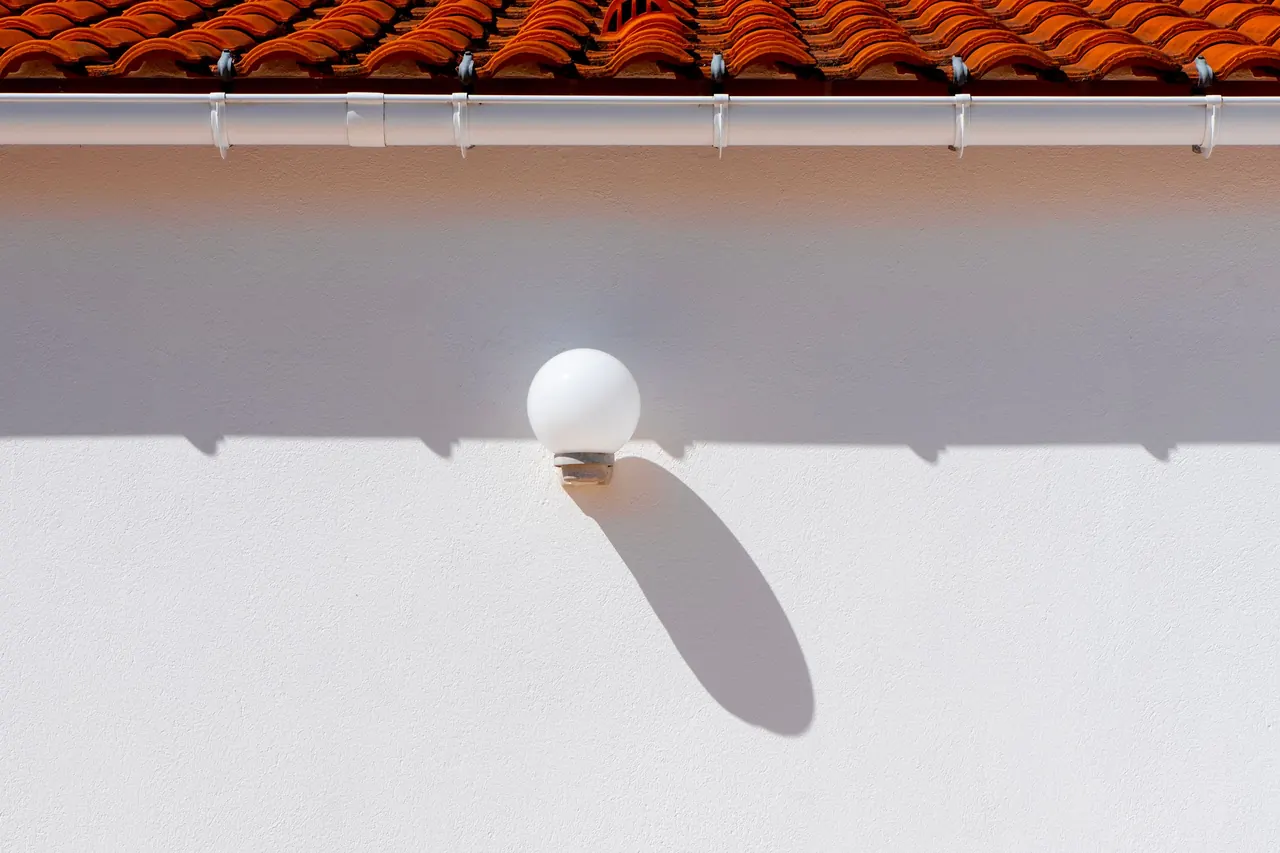
Away from the conservation areas, the houses in Langley Vale and on the Epsom Wells estate are simpler. Long, straight eaves on detached and semi-detached houses suit a modern uPVC system in a colour that matches the windows, or seamless aluminium if you want as few joints as possible. Our seamless guttering for Epsom page explains where that is worth the extra.
For a guide to cost, Checkatrade puts fitted uPVC guttering at £30 to £70 a metre.
Frequently asked questions
My hopper head on Lynwood Road has cracked. Can it be copied?
If it can be repaired, that is the first choice. If not, we fit the closest standard cast iron pattern. An exact copy of a dated or decorated hopper is specialist foundry work, and we can tell you what that involves.
Does the Burgh Heath Road Article 4 Direction stop me changing to plastic gutters?
The Direction covers front extensions and porches, roof materials and front rooflights, front windows and doors, hardstandings, and front walls and gates. Gutters are not on that list. On a period front, though, plastic can look out of place, and a listed house is a different matter.
My house in Langley Vale has one long eaves line. Is a new uPVC run fine?
Yes. It is the most affordable choice for a plain modern roofline. If joints have leaked on the old system, seamless aluminium is worth comparing before you decide.





