



 Google reviews

Higher Green's catslide bays and short front runs
The Higher Green appraisal describes houses with projecting front bays, on the left or the right, sometimes continued down to ground level to create a catslide roof. The fronts are rarely symmetrical, and each house is a little different.
For guttering, that shape sets the job. The front eaves are broken into short pieces at different heights. The catslide's gutter sits low, often just above a window or the porch, and takes water from its own long slope plus whatever the valley between the bay and the main roof sends down. A steep clay roof sheds water fast, so in a downpour a small gutter with an outlet in the wrong place overflows even when it is clean.
New gutters on these fronts are planned from the roof down. We look at where each valley discharges, put outlets and downpipes where the water actually arrives rather than only at the ends of the house, and size the gutter for the slope above it. On some fronts that means an extra downpipe on the bay. On others it means a larger profile on one short run while the rest of the house keeps a standard size. Where a porch or front door sits below the catslide gutter, the downpipe is routed so it does not empty onto the porch roof or the step.
Plain white backs, long rear runs
The same appraisal says white render is usually used for the side and rear walls, with the decoration saved for the front bays. The backs of these houses are simpler, with longer runs at one height. Here the job is about the basics: brackets at the right spacing, a steady fall to the outlets, and downpipes that discharge cleanly at the bottom. A gutter that drips onto white render leaves a mark within a season, so the joints and the fall need to be right first time.
Houses on Longdown Lane North, the older lane that runs through the conservation area, also use white painted render and pitched tiled roofs, though their designs vary far more than those round the green, and the 1960s houses near the Reigate Road junction are different again.
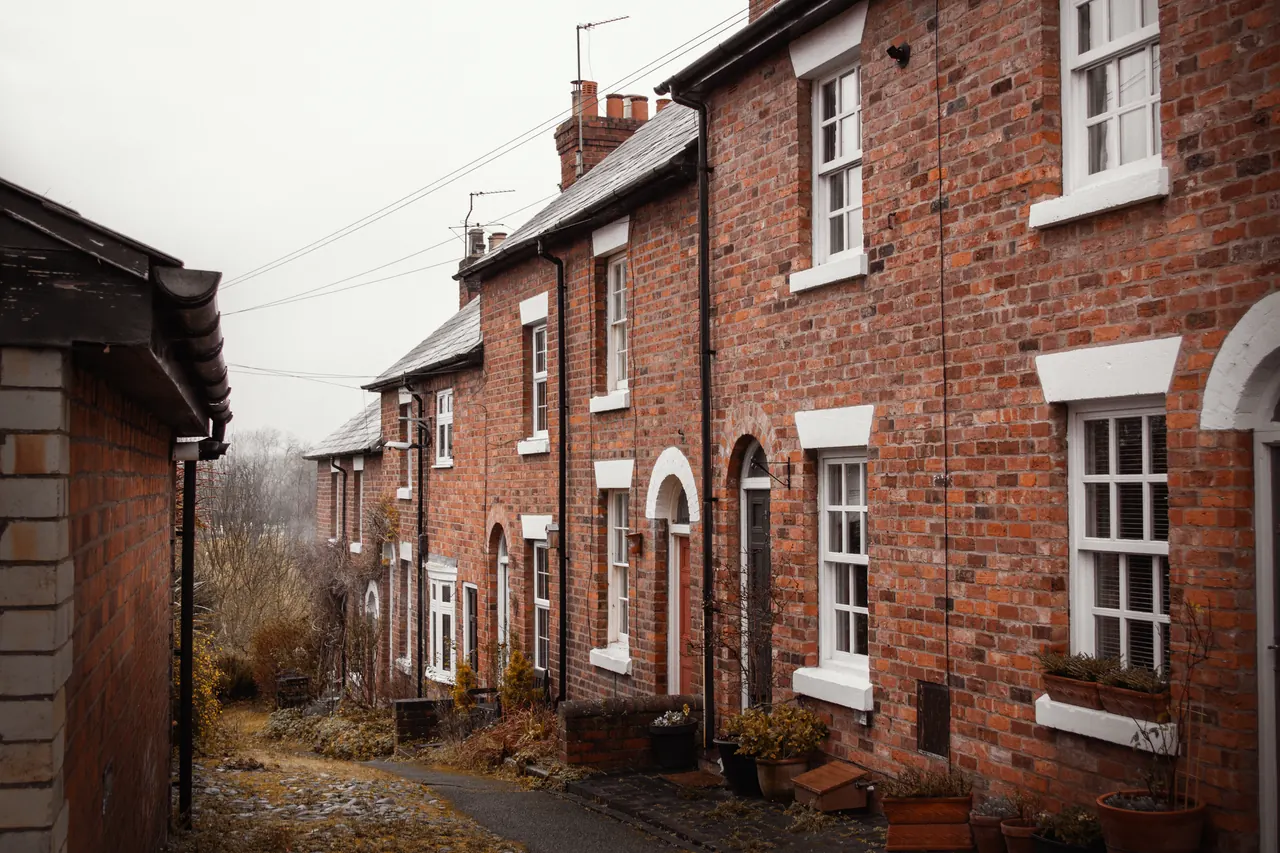
Choosing a profile for a Harwood front
- uPVC is light, affordable and low maintenance, and comes in black as well as white.
- Cast iron suits a period front where the look matters, and lasts a long time if it is painted and kept clear.
- Aluminium is light and does not rust. On the plain rear runs it can also be formed to length, which our seamless gutters in Ewell page covers.
Half-round is the traditional shape on houses of this age and tends to sit quietly against timber framing. A deeper profile can be used on a catslide run that takes more water. New brackets need a sound board behind them, so we check the fascias before anything goes up. If the timber is soft, our fascia and soffit work in Ewell comes first. Our main gutter installation page compares the materials, lifespans and costs in full.
Frequently asked questions
Where should the downpipe go on a Higher Green catslide bay?
Usually at the low end of the catslide gutter nearest the valley, because that is where most of the water arrives. On a wide bay, a second outlet can be worth it. We look at where the water runs in heavy rain before deciding, rather than copying where the old pipe was.
Will black guttering look right against the white render on Longdown Lane North?
Black often sits well against white render and dark timber framing. It depends on your fascias and windows, so we show you the options when we quote.
Does the Article 4 Direction on Higher Green cover new gutters?
The Direction served in 2000 lists front extensions and porches, roof materials and rooflights on the front slope, front windows and doors, hardstandings and front boundaries. Gutters are not named. If you plan to change the look of the front significantly, it is sensible to ask Epsom and Ewell Borough Council anyway.





