



 Google reviews

Nos. 127 and 129 and the listed High Street fronts
Nos. 127 and 129 High Street are listed grade II*: late 18th century, three storeys of red brick, with an 18th century parapet, a tile roof and the original double bowed shopfront. Nearly half the main buildings in the conservation area are listed, so the gutter and downpipe on a street front here are usually part of a protected elevation rather than a free choice.
The council's 2009 appraisal asks owners to keep using high-quality traditional materials for maintenance and to replace non-traditional ones with traditional details. It names the loss of original detail as an issue on the eastern High Street and the Upper High Street. So the first question on a street front is what was there originally. The second is what will carry the water.
Cast iron, coated aluminium or uPVC, building by building
On the Georgian and Victorian fronts along the High Street, West Street and South Street, cast iron is the traditional material, and on a listed building it is normally what goes back. On the 1930s parade and the c1900 shops on the Upper High Street, a coated aluminium in a traditional profile can look right where cast iron is not essential. uPVC is cheaper and easy to live with. It sits well on post-war blocks, newer flats and rear elevations that cannot be seen from the street, but looks out of place on a listed front.
Profiles matter as much as material. Half-round and ogee are the shapes on most older buildings here. Where a building ends in a parapet there may be no eaves gutter at all: the water leaves through the wall into a hopper head, so the installation is a new hopper and downpipe rather than a run of gutter.
Rear elevations facing yards and alleys usually allow more freedom, and the long, plain backs of the parades have their own page on rear runs behind the parades.
The 1930s parade's steep clay roofs and summer storms
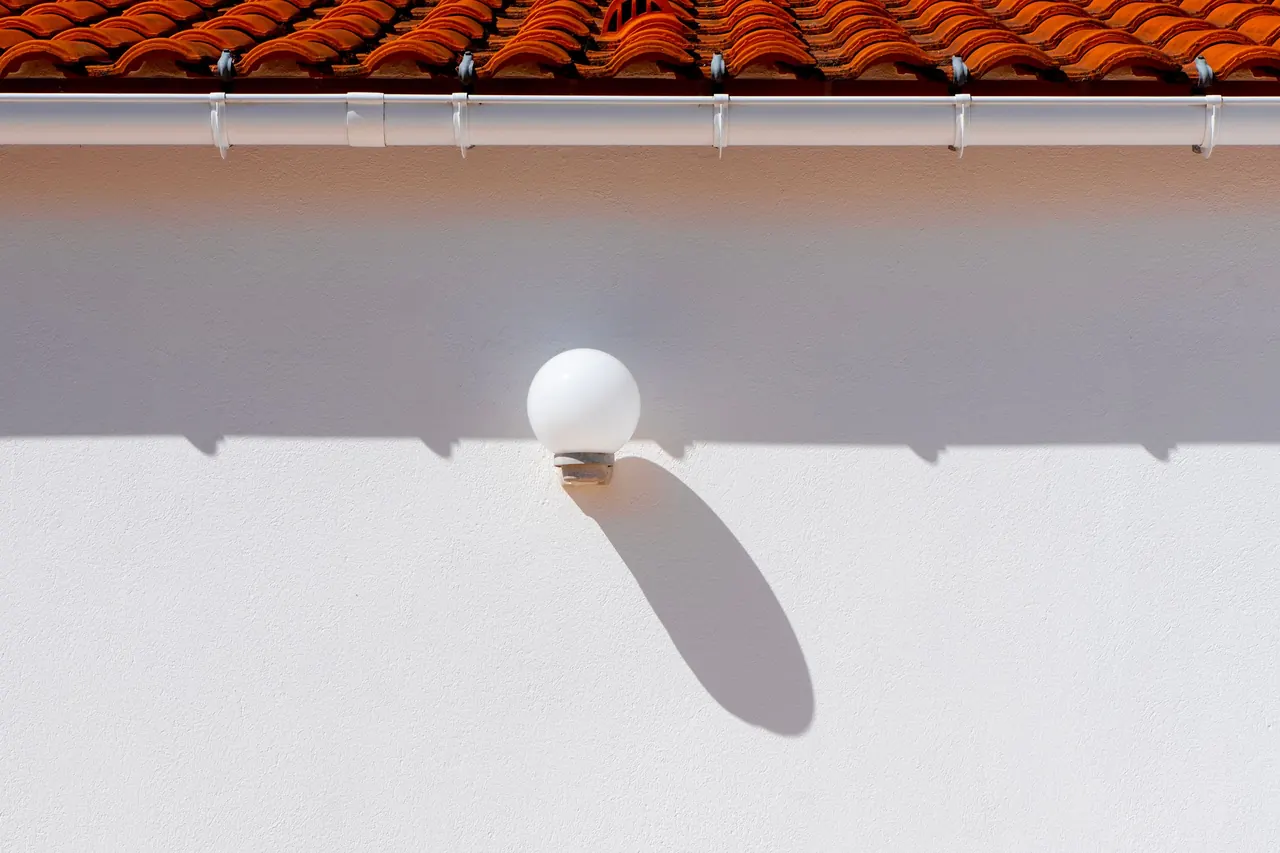
On a big, steep roof, an undersized gutter is a frequent cause of overflow. The parade at Nos. 12 to 64 High Street has steeply pitched clay roofs, and a steep slope delivers water into the gutter fast. In a summer downpour a small profile cannot keep up, and the water goes over the front, down the shop sign and onto the pavement. A deeper profile, or an extra outlet and downpipe, is the usual answer, with the new profile kept close in appearance to the rest of the row.
Downpipes need as much thought as the gutter. On a building that fronts straight onto the pavement, the pipe comes down the face of the building and connects into a drain rather than discharging across the footway. At the back, pipes run through narrow yards where bins and deliveries knock them, so they need firm fixings and positions out of the way.
Brackets need something sound to fix into. Where timber boards have rotted behind an old gutter, they are renewed first through our fascias and soffits service, and the new run is set to a steady fall towards each outlet.
Working above a shop that stays open
On a two or three storey front, access is a large part of the job and the price. A scaffold or hoarding on the pavement needs a Surrey County Council licence, and the work is planned for quieter hours and away from the Thursday and Saturday markets so the shop below can keep trading. Where only part of an old system is failing, a gutter repair may be the better value. Every new system we fit is covered by our 10 year guarantee, and materials and lifespans are compared on the main new guttering page.
Frequently asked questions
Our building is listed like Nos. 127 and 129. Who decides what gutter goes back on the front?
In practice, the listing does. Like-for-like replacement in cast iron, in the same profile and position, is normally treated as repair. A change of material or profile on a listed front is an alteration, so talk to Epsom and Ewell Borough Council's conservation team before ordering anything different.
The gutters on our 1930s parade shop overflow in summer storms. Can we fit a bigger size?
Usually, yes. A deeper profile or an extra downpipe is the normal fix for a steep roof that outruns its gutter. On the street front we keep the new profile close in appearance to the rest of the parade, so the row still matches.
Our building has a parapet and no gutter on the front. Where does the water go?
Into a gutter hidden behind the parapet, then out through the wall into a hopper head and down a pipe. If that hopper or pipe is cracked or undersized, we replace it to match.





