



 Google reviews

Nos. 12 to 64 High Street: stacks over the footway
The 1930s neo-Georgian parade at Nos. 12 to 64 High Street has steeply pitched clay tiled roofs and substantial brick stacks. It does not appear on the 1934 map and is shown on the 1955 one, so those stacks have stood for somewhere between 70 and 90 years. The council's 2009 appraisal treats them as part of the parade's character, which matters if anyone suggests taking one down.
Because the parade fronts straight onto the pavement, a stack on the street side stands over shoppers rather than a front garden. When the flaunching cracks or a pot works loose, the first concern is the people below. The second is the flat underneath, where water running down a failed flashing shows as damp on the chimney breast or along the top of the party wall.
Most of these stacks no longer serve open fires. Some vent boilers, some have been sealed, and some may not have been looked at in years. A sealed flue with no ventilation can hold moisture and stain the breast inside even when the outside is sound, so we check whether a damp patch is coming from the weather or from the flue itself.
What gives way first on a steep clay roof
- Soakers and step flashings. On a steep clay tile slope the lead has to follow the tile closely. After decades of movement it lifts or splits, and rain runs down the brick into the top floor.
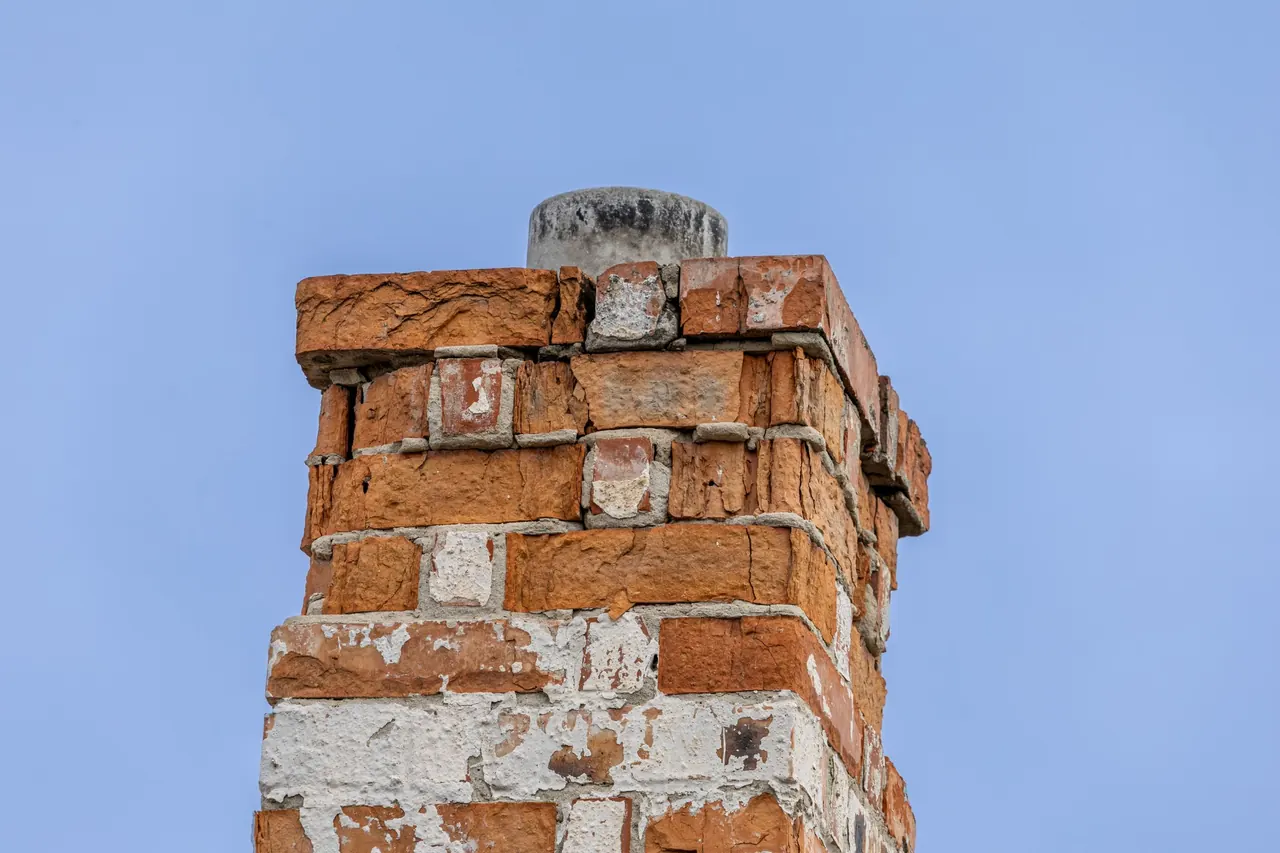
- Pointing. Open joints let rain soak into the brick. The appraisal records red and brown brick as the most common material on the eastern stretch of the High Street, so the new mortar has to suit the colour and softness of what is there.
- Flaunching. The mortar bed around the pots cracks in frost, and cracked flaunching is the usual reason a pot works loose.
- Pots and cowls. Loose pots are reset, and unused flues are capped or fitted with a cowl so rain and birds stay out while the stack still breathes.
Our chimney maintenance guide lists the signs that can be spotted from the ground.
South Street's listed stacks
Older chimneys stand on the listed buildings in South Street. The listing for No. 34 South Street records brick chimneys on a hipped tile roof over roughcast walls, with weatherboarding to parts of the side and rear. The timber-framed, weatherboarded No. 29 South Street has brick stacks rising through a pitched corrugated iron roof.
That last junction is unusual. Where a stack rises through sheet metal rather than tile, the flashing cannot be dressed in the normal way. It has to be shaped to the profile of the sheet so water cannot track along the corrugations into the roof. The same care applies wherever a stack meets a lead flat or a later felt roof at the back of a building.
On listed buildings like these, repairs are like for like: matching brick, mortar matched to the original and pots of the same type. Taking a stack down, or changing how it looks, is an alteration that needs Listed Building Consent. On an unlisted building, check with Epsom and Ewell Borough Council before removing a visible stack in the conservation area.
Access over a public footway
Scaffolding or a hoarding on a Surrey pavement needs a licence from Surrey County Council, applied for at least 10 working days ahead. On a three-storey front that lead time, and the cost of the scaffold itself, can outweigh the repair. A close look at the stack by drone first shows the pots, flaunching, pointing and flashing, so the access is only booked once we know what it is for. MyJobQuote's leadwork guide gives a published national figure of about £350 to £460 for re-leading a chimney, before scaffolding. Where the tiles around the stack need attention as well, they can be done on the same access, and the wider picture for chimney stacks of every age is on our main page.
Frequently asked questions
Bits of mortar have landed on the pavement under our High Street parade stack. Is it urgent?
Yes. Falling material over a public footway can hurt someone, and it usually means the flaunching or pointing is breaking up. Keep people clear if you can and call us.
Can the stack on a weatherboarded South Street building be repaired without disturbing the boarding?
Generally, yes. The work is done from the roof, and the flashing is the only part that meets the roof covering. The boarding below is protected while we work.
The flashing on No. 29 South Street's corrugated roof keeps leaking. Can lead be used there?
It can, but it has to be dressed to the corrugations rather than laid flat, and on a listed building the detail should follow what was there. We look at the existing flashing first and explain what has failed.
Does one stack on the 1930s parade have to match the rest of the row?
It should. The parade reads as one design from across the street, so the brick, pots and pointing on a repaired stack are matched to its neighbours.





