



 Google reviews

Cottages older than the suburb on Church Lane
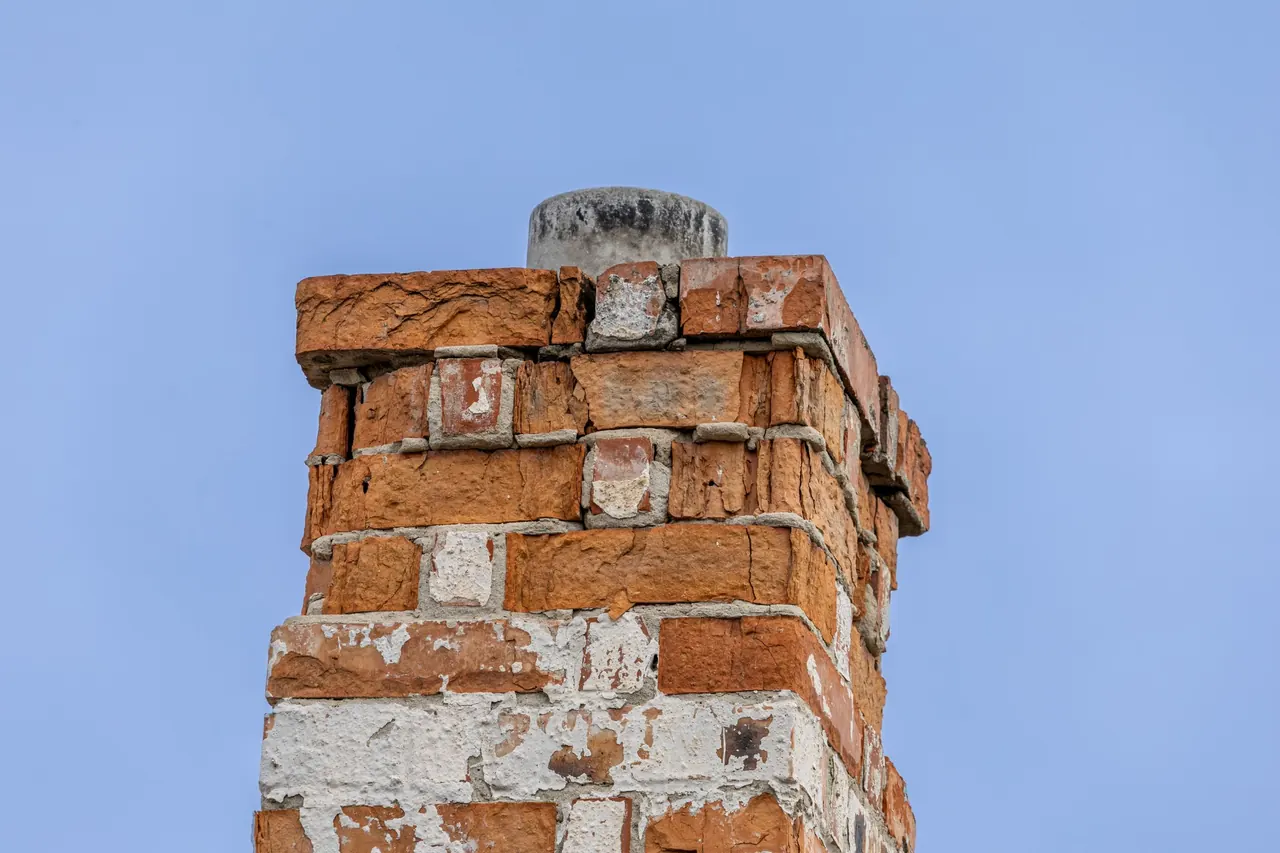
Before the 1930s, most of Chessington was farmland. Church Lane is the exception: a winding lane with a wider mix of ages than the streets around it, and the council's character study notes Victorian cottages on its eastern side among later houses and 1970s flats, below the flint walls and shingle spire of St Mary's Church. These cottages have some of the oldest chimneys in Chessington.
Stacks of this age were built with soft lime mortar. Over the decades, stacks like these have often been repointed in hard cement, had cracks filled with mastic, or had a fillet of mortar smeared along the base instead of proper lead flashing. Hard cement does not move with the old bricks, so the brick faces crack and spall around it, and water gets in behind. A repair on one of these stacks starts by cutting out the old patches, then repointing in a mortar that suits the brick, rebuilding loose courses at the top if needed, and dressing new lead into the joints.
Party-wall stacks on the Bolton Road semis
The 1930s semis along Bolton Road and Bolton Close, like most semis of that era, were built with chimneys, and the stack often sits on the party wall with one half belonging to each house. The flashing has to seal right across the stack, so a well-kept half beside a neglected one still leaks at the line where they meet. Water on one side can also travel through the brickwork into the other.
At the top, the flaunching round the pots cracks with frost and lets water down inside the stack. Pots work loose and rock in the wind. Disused flues can be capped or fitted with a ventilated cowl to keep rain and birds out while still letting the flue breathe. If next door is happy to share the work, both halves can be done together so the lead and pointing match.
Lead on a pantiled roof
On the 1950s council terraces and around Compton Crescent, the stacks rise through pantiles rather than flat tiles. Pantiles are deeply curved, so the lead apron and side flashings have to be dressed down into each trough and over each roll. Lead that has been laid flat across the top of the curves leaves gaps that rain is blown straight into, and on these roofs it is a common reason for damp around the stack. Where the old lead is sound but badly shaped, it can sometimes be redressed. Where it is split or too short, it is renewed.
A drone check of the stack comes first, and our Chessington roof inspection covers it. For a sense of the market, MyJobQuote's chimney leadwork guide gives £150 to £250 nationally for a patch repair. Our main chimney repairs page explains the full service, our chimney maintenance guide lists what to check each year, and loose tiles round the stack can be fixed through our Chessington roof repair work at the same visit.
Frequently asked questions
The chimney on my Church Lane cottage was repointed in hard grey cement. Is that a problem?
It can be. Hard cement on soft old brick traps moisture and makes the brick faces flake. If the bricks around the joints are cracking or crumbling, we cut the cement out and repoint in a softer mortar that lets the stack dry.
Can the stack on a pantiled Sanger Avenue terrace be repaired without scaffolding?
Sometimes. Refitting a short length of flashing or resetting a pot can often be done from roof ladders. Repointing a whole stack or rebuilding the top courses usually needs a scaffold for safety. The drone photos let us tell you which before you commit.
The pots on my chimney rock in the wind. Is that dangerous?
It should be dealt with soon. A rocking pot means the flaunching holding it has cracked, and a pot that falls can go through the roof or onto the path. We reset it in fresh flaunching, or take it off and cap the flue if it is no longer needed.





