



 Google reviews

Clayton Road's 1880s cottages
Most of Hook was built in the 1930s, but parts of Clayton Road are fifty years older. The cottages near the Cricketers pub date from the 1880s, on a curving road that feels like a country lane and opens out onto Five Acres Farm. Parts of Haycroft Road and Gladstone Road, at the northern end of Hook, are of the same age.
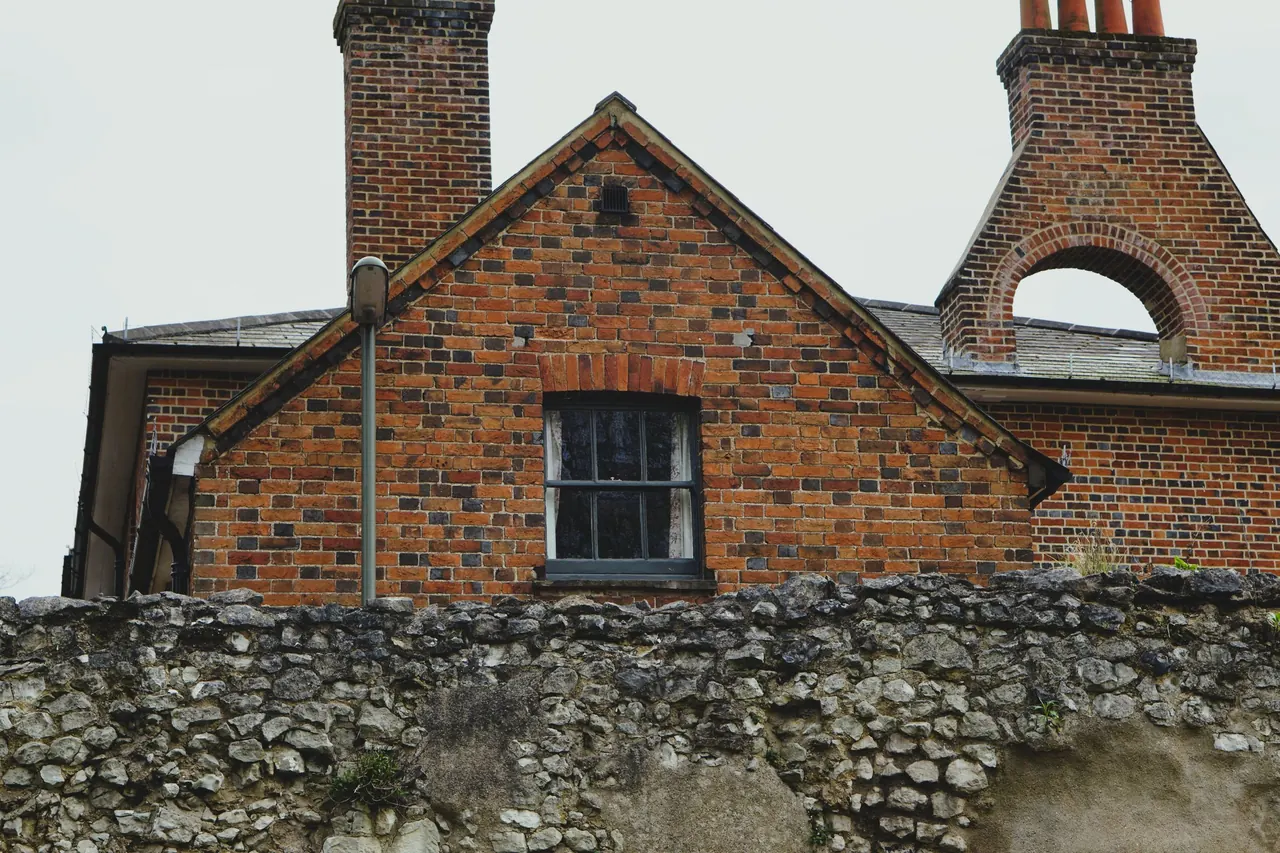
Cottages of that era have brick stacks, often one serving a pair of cottages, with several flues side by side and a row of pots on top. Many of those fireplaces have long been closed, but where the stacks remain they are the most exposed brickwork on the house.
Older still is 435 Hook Road, a Grade II listed house inscribed 1669, probably timber-framed behind its painted brick front, with a steeply pitched pantiled roof and a central chimney, according to its listing description. Work that alters the stack's character needs listed building consent, and even like-for-like repairs are worth checking with Kingston's conservation officer first.
Where an 1880s stack lets water in
A stack on a cottage of this age usually fails from the top down and from the outside in.
- Flaunching. The mortar bed holding the pots cracks with frost. Water then runs down inside the stack and the pots work loose.
- Pointing. The joints on the weather side wash out first. Once they are open, rain soaks into the brickwork and through to the chimney breast inside.
- Lead flashing. Where the stack meets the roof, the lead may have been renewed more than once, and some of it may have been patched with sealant that looks fine from the path and leaks in a downpour.
- The back gutter. On the upslope side of the stack, a small lead gutter turns water around it. Leaves and moss collect there and the lead splits.
- Lean. A tall stack that has weathered more on one side can begin to lean. That is worth looking at early.
Not every damp patch near a chimney is the chimney. Sometimes it is the slates or tiles beside it, which our roof repair page for Hook covers, and on a shared stack the fault can be on next door's side. We check both before saying where the water is coming from.
Repairs on a stack this old
We start by looking at the top of the stack, which is the part nobody can see from the ground. A drone flight gives us clear photos of the pots, the flaunching, the pointing and the flashing without anyone going up. If the repair needs a working platform round the stack, we say so in the quote.
The repairs follow what we find. Lifted or split lead is refitted or replaced and dressed into the brickwork, rather than sealed over. Open joints are raked out and repointed. Cracked flaunching is renewed and loose pots reset. On flues that are no longer used, a ventilated cap or cowl keeps rain and birds out while letting the flue breathe, and on any flue still serving a fire or stove we fit a cowl made for a working flue. Our guide to looking after a chimney covers what to keep an eye on between visits, and the main chimney repairs page explains each job in more detail.
As a cost guide, MyJobQuote's chimney repointing guide gives £450 to £1,200 for repointing a stack, with access the biggest variable.
Frequently asked questions
The stack on my Clayton Road cottage leans a little. Can it be saved?
Often, if it is caught early. A slight lean usually comes from the weather side eroding faster than the other. We look at how far it has gone and whether the brickwork is still sound. A stack that has moved a lot may need taking down to the roof line and rebuilding.
Can you work on the chimney of a listed house on Hook Road?
We can inspect it and quote. Work that alters the stack's character needs listed building consent, and even like-for-like repairs are worth checking with Kingston's conservation officer first. The council will normally expect matching materials, and we would talk that through with the owner before any work is planned.
Is lead still the right flashing for an 1880s cottage on Haycroft Road?
Yes. Lead is what these stacks were built with, it can be dressed into the shape of old, uneven brickwork, and properly fitted it lasts for decades. The common failure is not the lead itself but the way it was last fixed.





