



 Google reviews

Gables along Stormont Way
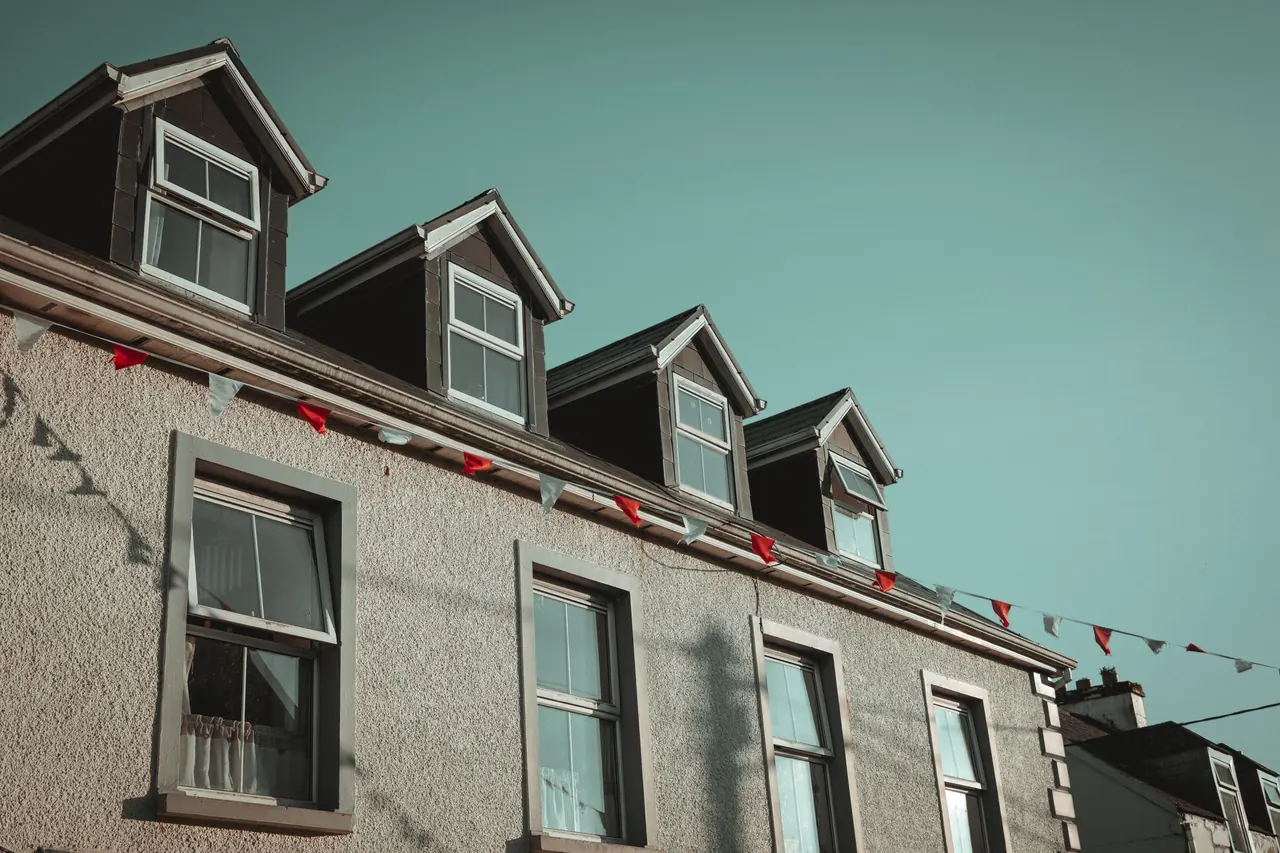
In the south of Hook, Hartfield Road and Stormont Way have what Kingston's character study calls a strong regular street pattern with dominant rooflines, and in Stormont Way, attractive gabled rhythms.
Each of those peaks is edged with a pair of bargeboards running from the eaves to the ridge. They are the highest timber on the house and the most exposed: rain hits them side-on, the sun cracks the paint on the south-facing ones, and water from the verge above runs down their face. On houses of this era they started as painted softwood, and after decades of repainting, or of not being repainted, many are soft behind the paint.
The gable is also where the fascia and soffit meet the bargeboard at the foot of each slope, a corner joint that holds water and is often the first place to rot right through.
Rot at the foot of the gable
On houses like these, the trouble usually starts low down. The bottom of the bargeboard sits just above the end of the gutter, and when that gutter leaks at its stop end or overflows, the water soaks straight into the end grain of the board. Over the years that corner goes soft, the paint bubbles, and eventually the gutter bracket next to it has nothing to bite into.
Other signs to look for from the drive:
- paint flaking off the bargeboard or fascia, with timber that feels soft when pressed
- a bargeboard split along its length or pulling away from the gable
- the gutter dropping at one end where its brackets have loosened
- gaps in the soffit, with birds, squirrels or wasps going in
- staining on the brickwork under the eaves
Hartfield Road and the paved fronts
The same study notes that on-plot parking has eroded front boundaries in some areas, particularly Hartfield Road. Where the front garden has become a drive, a ladder or a tower can usually go straight up against the front, which helps on the day. It also means the front downpipe and the foot of the bargeboard sit right above where the car is parked, so leaks there tend to be noticed as drips on the bonnet before anyone looks up.
When an old fascia or bargeboard comes off, the rafter ends behind it are exposed, and on a roof that has had a leaking gutter for years they can be soft too. Those are cut back and repaired before anything new goes up, otherwise the new boards have nothing solid to fix to.
Cutting out, capping or renewing a board
A short damaged length can be cut out and replaced on its own. Capping, where a thin uPVC board goes over the old timber, is cheaper but only works if the timber underneath is completely sound; over rot it hides the problem rather than fixing it. Where the boards are soft along most of their length, full replacement in uPVC is the long-term answer, in white, black, grey or woodgrain. Ventilated soffits help air move through the roof space.
The gutters come off when fascias are replaced, so it is usually the right time to renew them too, and our Hook gutter installation page covers that. If the verge mortar above the bargeboard is also crumbling, our roof repair page for Hook explains rebedding it. The main fascias and soffits page has more on the work.
For comparison, MyJobQuote's capping guide gives about £800 for capping the fascias and soffits of a three-bedroom semi; full replacement costs more.
Frequently asked questions
Only the bargeboards on my Stormont Way gable are rotten. Can they be done on their own?
Yes. Bargeboards can be renewed without touching the fascias along the eaves. We check the foot of each board where it meets the fascia, because if that corner has rotted the fascia end usually needs a new piece too.
Birds are getting into a gap in the soffit at the end of my Hartfield Road roof. Can you close it now?
If birds are nesting there, that section has to wait until the young have left, because active nests are protected by law. Once the nest is empty, the soffit can be repaired or renewed and the gap closed so they cannot return. Outside the nesting season it can usually be done straight away.
Can you work on my Hartfield Road house without blocking the drive for days?
We plan the job so the drive is clear at the end of each day where possible. The work is mostly at the eaves and gable, and the car can usually be parked on the road while we are working above it.





