



 Google reviews

Two ages of house on Gladstone Road
At the northern end of Hook, Gladstone Road, Brook Road and Haycroft Road run off Hook Road and end at the open space of the sports ground. They mix attractive Victorian cottages with post-war housing, and parts of Haycroft and Gladstone Roads go back to the 1880s.
That mix shows in the gutters. Cottages of that age were built with cast iron gutters and downpipes, and where those survive they have usually been painted over many times. Others have had the iron swapped for plastic at some point, sometimes on one cottage of a pair and not the other. The post-war houses were built with their own systems, and most now have uPVC that is itself decades old. On a short street, all of these can sit side by side, meeting at party walls in joints that were never designed to fit together.
Faults on the Victorian cottages near the sports ground
Cast iron does not sag the way plastic does, but it has its own failures:
- Rust from the inside. Paint keeps the outside sound while water sitting in the bottom of the gutter rusts it through. The first sign is often a drip from the middle of a length rather than a joint.
- Failed joint seals. Iron lengths are bolted together with a sealant in the joint. When that dries out, the joint weeps every time it rains.
- Cracked lengths and hoppers. Iron is brittle. A ladder leant against it or a hard frost on a full gutter can crack it.
- Brackets rusted into the wall. On a cottage with no fascia, the gutter often sits on brackets driven into the brickwork, and those rust and loosen.
- Mismatched joins. Where an iron gutter on one cottage meets a plastic one next door, the joint between two different profiles is often a bodge that leaks.
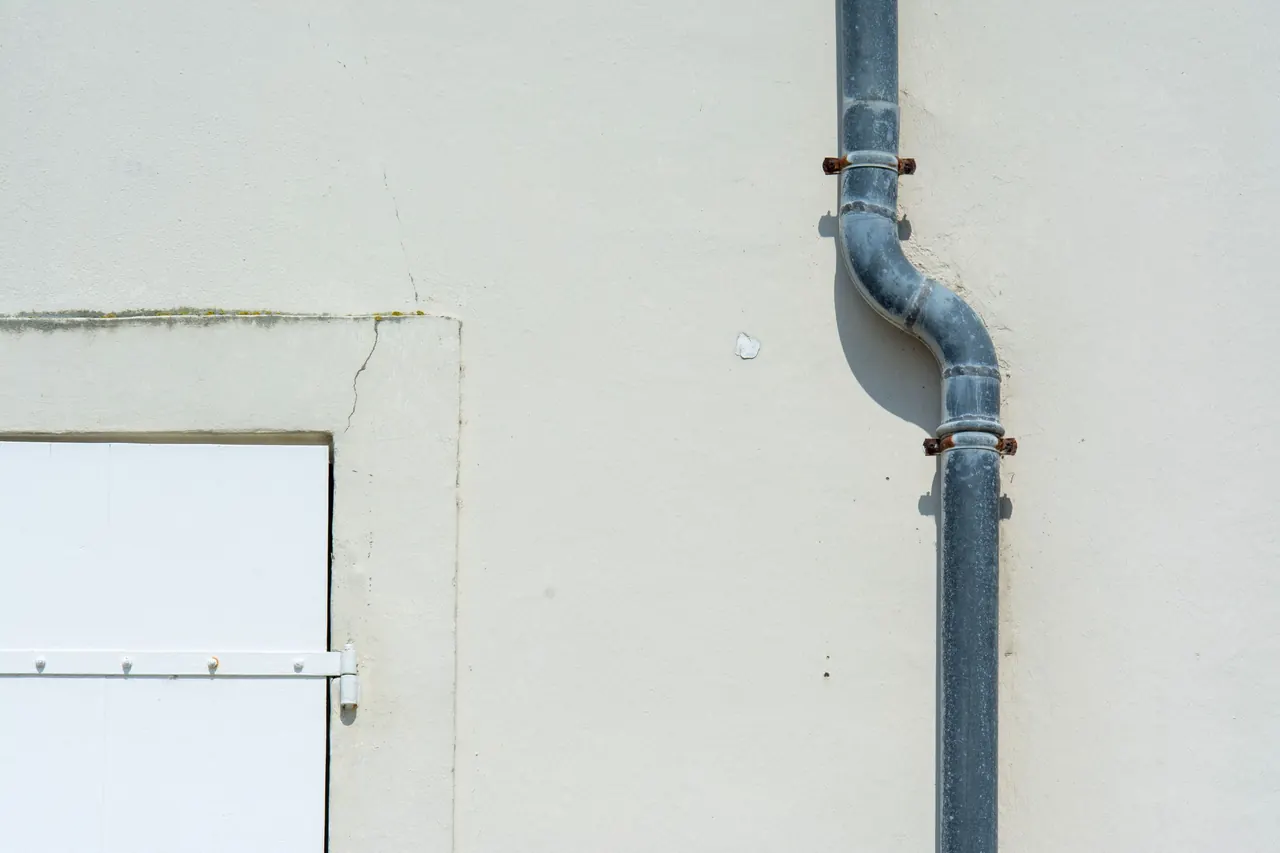
Post-war plastic on Brook Road and its neighbours
On the plastic systems the faults are different. Rubber seals in the unions dry out, so a run can leak at several joints at once. Old uPVC turns brittle and cracks at the brackets. A run that has lost its fall holds water in one spot and sags further. Downpipes come away from their clips, and the small gutter over a bay roof is easily forgotten until it stains the wall below.
Iron meeting plastic at the party wall
A leak at one joint can be caused by a sag or blockage further along, so the whole run is checked first. On iron, we clean out and reseal leaking joints, replace a cracked length or hopper, and refix loose brackets. If the iron has rusted through in several places, we will say so plainly and talk through replacing the run. On plastic, we reseal or replace unions, add or refix brackets, reset the fall and replace split lengths.
On these streets the join that matters most is often the one at the party wall. Where your gutter meets a neighbour's of a different type, we make that join properly with a suitable adaptor, so it stops being the leak that never quite goes away. If the gutter is full rather than broken, our blocked gutter repair in Hook is the right service, and if the fascia behind a plastic run has gone soft, see our Hook fascias and soffits page.
For a sense of cost, MyJobQuote's gutter repair guide puts the average UK repair at £215, starting at around £60 for resealing a single leaking joint. Quotes are free, we can often look the same day, and repairs carry our 10 year guarantee. Our main gutter repairs page explains the work in more detail.
Frequently asked questions
The cast iron hopper on my Gladstone Road cottage has rusted through. Can it be replaced on its own?
Usually, yes. Cast iron hoppers and lengths are still made in standard patterns, so a single failed piece can be replaced and painted to match the rest. If the gutter either side is close to rusting through as well, we will show you before you decide.
My cottage on Haycroft Road has no fascia board. How is the gutter held up?
On many older cottages the gutter sits on iron brackets driven into the brickwork or on the ends of the rafters. When those rust, the gutter drops at one end. We refix or replace the brackets so the run holds its fall again.
The plastic gutter on our post-war house on Brook Road cracks at every bracket. Why?
Old uPVC goes brittle with sunlight and age, and the bracket is where it flexes most. If it is cracking in several places, repairs rarely last. Brittle uPVC breaks again as soon as it is handled, so repairs tend to chase each other along the run. One or two cracks on otherwise sound plastic can be fixed; widespread cracking is a sign the run needs replacing, and we will tell you which you have.





