



 Google reviews

Long back gardens full of green
The Orchard Road part of Hook mixes 1930s to 1950s semis, short terraces and bungalows on a planned layout. Kingston's character study for Hook picks out its long back gardens full of green and space, and the grass verges, hedges and street trees at the front.
Gardens like that are good to live with and hard on a back gutter. Leaves, twigs, seeds and moss from garden trees land on the rear slope, and the next heavy rain washes the lot down to the outlet. A gutter that was clear in October can be overflowing by December. When it is overflowing right now, in the rain, that is a blocked gutter repair, not a routine clean. For planned visits before the leaves build up, see our Hook gutter cleaning page.
The bend behind a 1930s semi
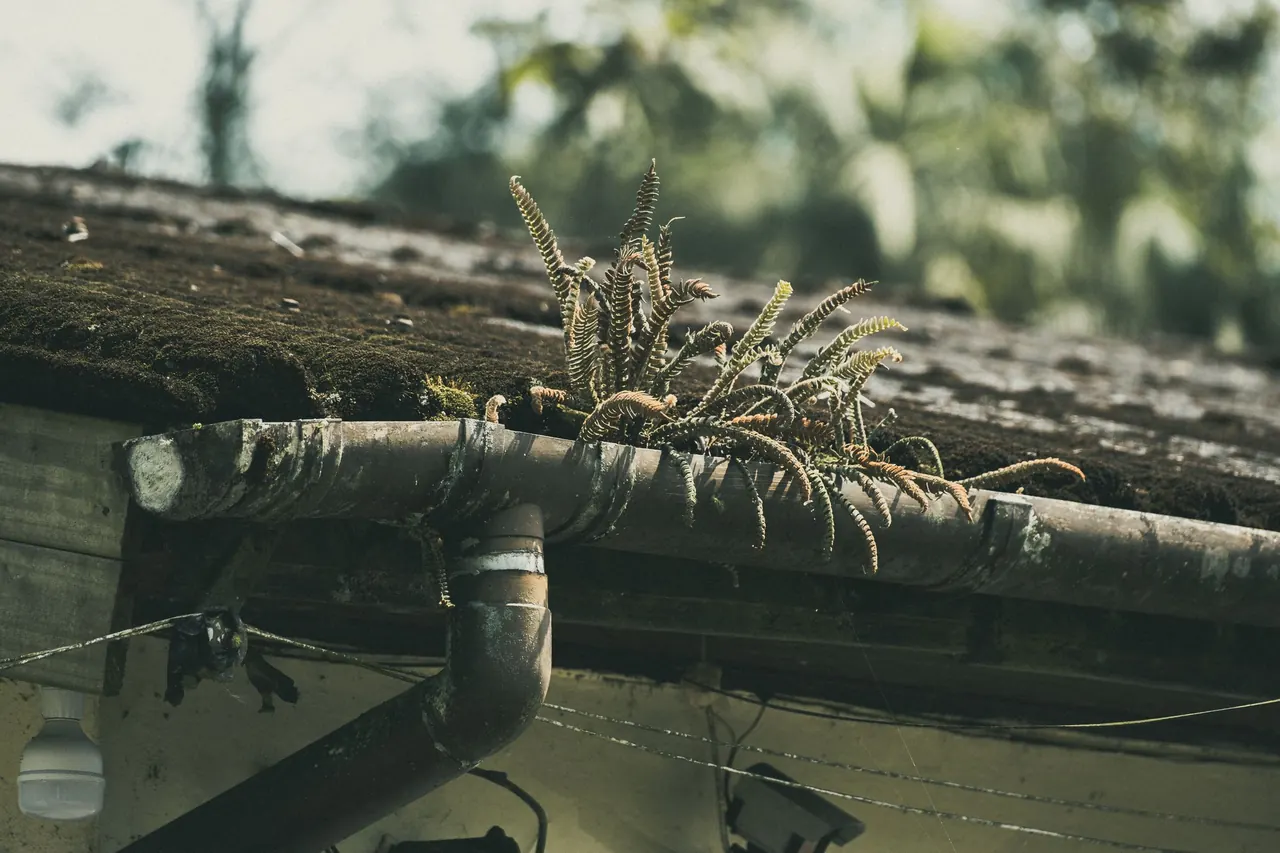
On a semi of this period the rear gutter often drains through a swan neck: two bends that carry the water from the gutter outlet back in to a downpipe fixed to the wall. It is the narrowest point in the system, and a small plug of leaves there stops the whole run. The signs are easy to read from the garden:
- water spilling over the front edge of the gutter near the outlet, while the downpipe stays dry
- a gutter that holds water for hours after rain has stopped
- plants growing from the outlet end
- a green or dark streak spreading down the brickwork below the outlet
The bay gutters at the front block in a similar way, because their outlets are small and a handful of leaves from the verge trees is enough. On the bungalows the gutter is low and easy to reach, but a big roof slope sends a lot of water to one outlet, so a partial blockage overflows quickly.
We clear the gutter by hand, rod or flush the swan neck and downpipe where the blockage is out of reach, then run water through to check the whole route flows. If the gutter has sagged so it holds water at a low point, or a joint or bracket has given way under the weight, that is put right on the same visit where possible, because otherwise it blocks again.
When the gully by the back door is the problem
Sometimes the gutter and downpipe are clear and the water still backs up. Then the blockage is at ground level, in the gully the downpipe empties into. Silt and leaves from years of gutter run-off settle there, and on houses that have been extended, the gully may now sit under a patio edge or behind a step where nobody clears it.
We check the shoe and the gully as part of the job and clear what we can reach. A blockage deeper in the underground drain is a drainage job, and we will tell you if that is where it sits. If water has been overflowing onto a flat extension roof below, our page on flat roofs in Hook covers the roof side, and soaked timber at the eaves is covered by our Hook fascias and soffits page.
As a national guide, the Which? roofing cost survey puts clearing every gutter at the front and back of a house at £75 to £350, before any repair.
Frequently asked questions
Water pours over the back gutter of our Orchard Road semi in heavy rain, though it was cleaned last spring. Why?
Most often the swan neck has filled since, with leaves washed down from the rear slope. A clean in spring does not cover what the garden trees drop in autumn. We clear the bend and the downpipe, and if the outlet is undersized for the roof we can look at a larger one.
The downpipe on our Grange Road house gurgles and the gully by the back door floods. Is that the gutter or the drain?
Gurgling and a flooding gully point to a blockage at or below ground level rather than in the gutter. We check the gutter and downpipe first so we know they are clear, then clear the gully. If the drain beyond it is blocked, we will tell you that it needs a drainage firm.
The small gutter over the porch of our bungalow off Orchard Road keeps overflowing. Can that be fixed?
Usually. Porch and bay gutters have tiny outlets that block with a few leaves, and some were fitted with too little fall. We clear it, check the fall and the outlet size, and reset or replace the short run if it holds water.





