



 Google reviews

A stack that has started to lean
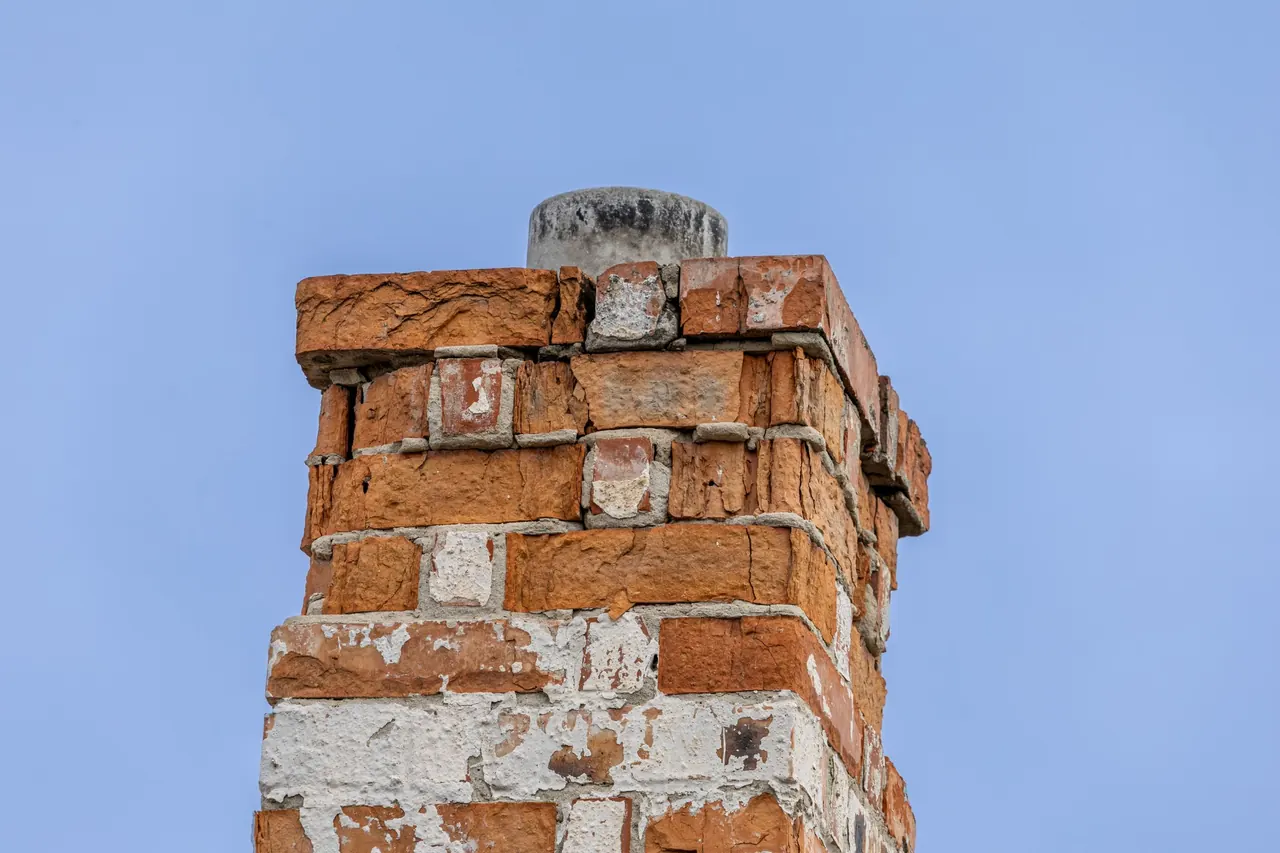
A chimney that is no longer quite upright is one of the few chimney faults you can see from the street. On a stack that served coal fires for decades, the usual cause is sulfate attack: sulfates from the flue gases soak into the mortar joints, and where that mortar stays damp it slowly expands. One side of a stack usually stays wetter than the other, so the joints on that side grow more and the stack tips away from it.
A gentle lean that has been stable for years may only need watching, and photos taken now give you something to compare against. One that is getting worse, or has open joints and cracked mortar near the top, needs attention before it drops pots or bricks onto a drive or path. The usual repair is to take the stack down to sound brickwork and rebuild the upper courses, with new flaunching, pots and lead.
Not every lean is sulfate. On the clay ground near the Hogsmill, a crack in the stack can also come from slight movement in the house, which our roof inspection in Ewell Court page explains.
Damp on the chimney breast upstairs
The other common sign is damp: a patch on a bedroom wall beside the chimney breast, or stained timber round the base of the stack in the loft. It is often taken for a roof leak, and sometimes it is. More often one of three things has failed on the stack itself:
- The lead flashing where the stack meets the tiles, lifted or split, so rain runs down inside.
- The pointing on the sides of the stack, weathered out so the brickwork soaks up rain.
- The flaunching, the mortar bed round the pots, cracked so water gets in from the top, along with any flue left open.
Unused flues can be capped or fitted with a cowl that keeps rain out but lets the flue breathe. A flue still used for a fire or stove needs a cowl made for a working flue, so we check how each one is used first. As a national guide, MyJobQuote's chimney flashing guide puts full leadwork replacement at £350 to £460 without scaffolding.
Semis, detached houses and the stack between them
On a semi, the stack often sits on the party wall and carries flues from both houses, so work to the brickwork above the roof is something to agree with next door first. Flashing on your own side can usually be done on its own. On a detached house, look at whether there is a second stack, and if so whether it rises up an outside wall rather than through the roof. A stack on an outside wall is open to the weather on three sides, so its pointing and flaunching are worth checking more often. Ewell Court House in the park, listed with tall 1879 stacks, is a special case under its own rules.
Small jobs such as refixing flashing or resetting a pot can often be done with roof ladders; repointing a whole stack or rebuilding the top usually needs scaffolding. Tiles round the stack can be dealt with as a roof repair on the same visit. Our main chimney repairs page explains the work in more detail.
Frequently asked questions
Our stack on Willow Way leans slightly towards the road. Is it dangerous?
Not always, but it should be looked at, especially if the mortar near the top is cracked or the lean seems to be growing. We photograph it from several angles so you can compare it over time, and tell you whether it needs work now or monitoring.
The detached house we have bought off Ewell Court Avenue has a stack on an outside wall. Does it need different care?
The same repairs, usually more often. Being exposed on three sides, an outside-wall stack tends to need repointing and new flaunching sooner than one rising through the middle of the roof. Check the brickwork near the top and the flashing where it passes the roof slope.
Our semi near Ewell Court Park shares its stack with next door, and only our side is damp. Can just our side be fixed?
Often, yes. If the damp is coming from the flashing or pointing on your side, that can be repaired without touching next door's half. If the problem is the flaunching or pots on top, which serve both houses, it is worth speaking to your neighbour, as the repair covers the whole stack.





