



 Google reviews

Stacks older than the suburb on Longfellow Road
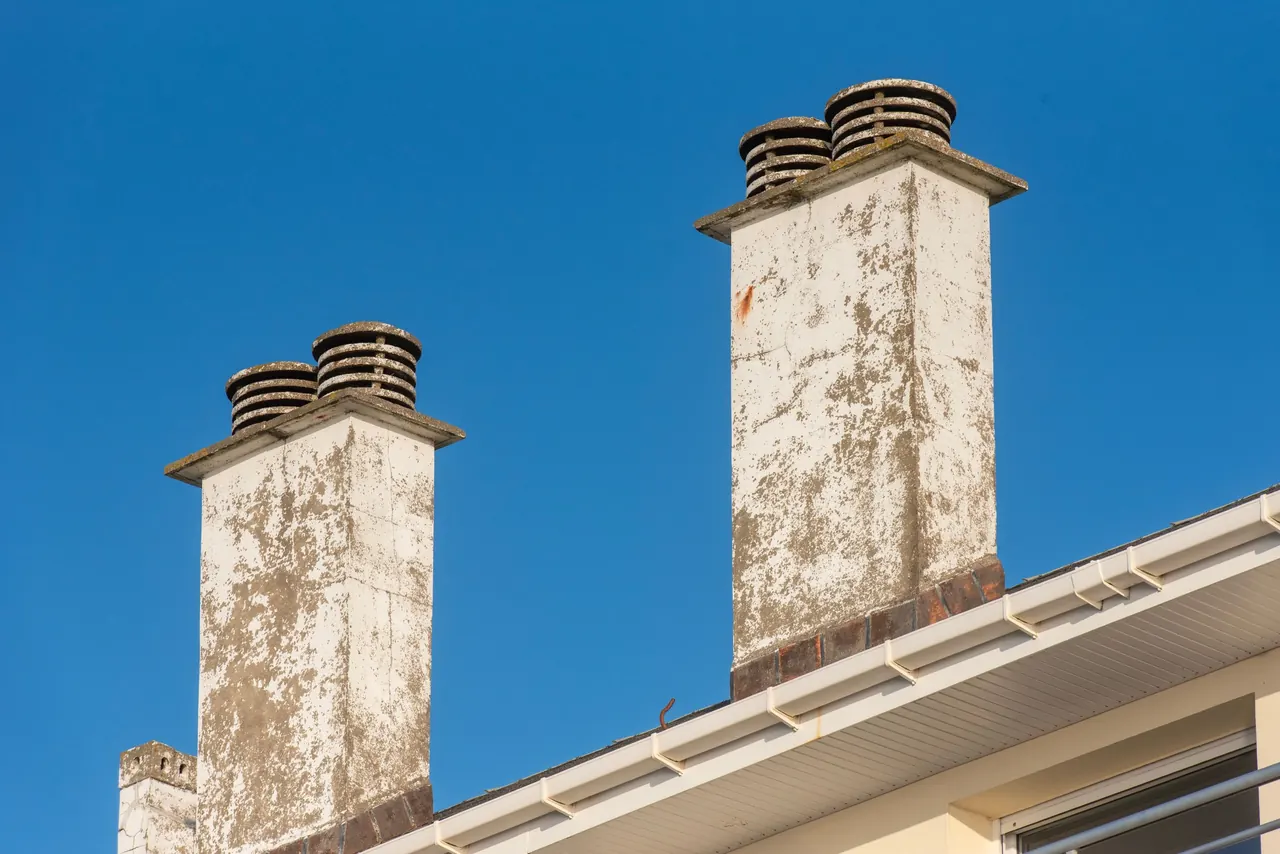
Most of Worcester Park went up between the wars, but Longfellow Road is far older. Sutton's 2009 Heritage Study describes it as mainly terraced housing built from the late 1860s, with newer houses mixed in along the east side, and the Victorian terraces are an Area of Special Local Character. On a terrace of that age, stacks typically sit on or near the party walls and serve more than one fireplace, though each house has to be looked at on its own.
After a century and a half, the things that go wrong on those stacks are mostly to do with age:
- Soft, eroded mortar: joints near the top, where the stack is most exposed, wash out and let rain soak into the brickwork.
- Spalled bricks: faces of bricks that have blown off after years of frost, often where a hard cement repoint was used in the past and trapped water in the brick instead of letting it dry out through the joint.
- Flaunching: the mortar bed holding the pots, which cracks and lets water run down inside the stack.
- Lead at the roof line: the soakers and flashings where the stack passes through the roof covering, which split or lift over time.
On a stack this old, repointing is done in a mortar soft enough to suit the bricks, not a strong cement mix. The look matters too: the stacks and pots along a Victorian terrace are part of its character, so like-for-like repair keeps the profile the same. The newer infill houses on the road have younger stacks, or none, and are treated as the 20th century houses they are.
Back gutters on the interwar hips
Across the rest of the Sutton side, the typical chimney is a single stack on the party wall between a pair of 1930s semis. These stacks are smaller and younger, but where the stack rises through a hipped slope rather than at a gable, water running down the roof meets it head on, and the back gutter behind the stack carries a lot of it in a downpour. That back gutter, and the stepped flashing down the sides, are where many leaks on these houses start. Because the stack straddles the boundary, any repair is best agreed with next door before it is booked.
Where a flue is no longer used, perhaps since a gas fire went in, it still needs ventilating at both ends to stop condensation forming inside it.
Stacks along the A2043
A stack on a house or parade facing Central Road is harder to reach than one on a side street. Where a scaffold has to stand on the pavement it needs a licence from Sutton, and the A2043's traffic makes deliveries and skips slower to arrange. Small jobs, such as resetting a pot or redressing a flashing, can often be done from roof ladders. A full repoint or rebuilding the top courses usually needs scaffolding around the stack, and the drone photos show which applies before any access is booked.
For a rough idea of cost, MyJobQuote's chimney flashing guide lists a patch repair at £150 to £250 and a full leadwork replacement at £350 to £460 before any scaffold. If the damage turns out to be in the roof around the stack, our roof repair team in Worcester Park deals with that on the same visit. The chimney maintenance guide covers what to watch between visits, and the main chimney repairs page explains each repair.
Frequently asked questions
Our Longfellow Road terrace has been rendered. Should the chimney be rendered as well?
Usually not. Render on a stack tends to crack with movement and frost, and once water gets behind it, it cannot dry out. On an old brick stack, raking out and repointing the joints in a suitable mortar normally keeps the water out better and keeps the look of the terrace.
Our house on Longfellow Road is one of the newer ones between the terraces. Does the ASLC change what we can do to the stack?
Repairs to keep a stack sound are maintenance and do not normally need permission. Newer houses sit among the terraces, so before you take a stack down or change its look, check with Sutton's planners whether your house falls inside the designated area.
Can the top of the stack on our 1930s semi in North Worcester Park be rebuilt to match the original brick?
Yes. The stack is taken down to sound brickwork, the top courses are rebuilt with bricks matched as closely as we can find, and the pots are reset on new flaunching. Next door needs to agree, as half the stack is theirs.





