



 Google reviews

Half-timbered gables and what sits behind them
The feature that marks out a Worcester Park semi is the half-timbered gable. Those black and white boards are decoration fixed over render, and the joints between board and render open up with age. Rain driven into those joints can soak the wall behind and show up inside as a damp patch high on a bedroom wall, which is easy to blame on the roof tiles above.
Sutton's draft Character Study describes the housing around the stations as Metro-land semis and short terraces inspired by the garden suburbs, many in the half-timbered Tudorbethan style. On these houses, the gable, the main roof and the bay below it can all produce a stain in the same room, which is why the first visit is about finding the way in, not about replacing tiles that may be sound.
Hips, bays and the shared side of a pair
Where a semi has a hipped main roof, long runs of hip tiles are bedded in mortar down each corner. After nearly a hundred years that mortar cracks and lets go, and hip tiles start to rock or slide. A loose hip tile is more than a leak risk: it can come off in a gale and land on the drive.
The other weak points on houses of this type are:
- The bay roof: the small roof over the front bay window, often tiled or leaded, where the flashing meets the wall above.
- Nails and battens: tiles that look fine from the street but slip because the nails holding them have corroded through.
- Old patch repairs: odd concrete tiles slotted into a clay roof years ago, which sit at a different angle and let water past the lap.
- Loft conversion junctions: the line where a later dormer or gable meets the original tiles.
On a semi, the roof reads as one roof across both houses. A repair to your half is done so it sits flush with next door's, and the tiles we use are matched in colour, size and profile as closely as we can find. For a sense of scale, MyJobQuote's ridge tile guide puts a small ridge repair of one to three tiles at around £225 to £275 nationally. Access, the number of tiles that have moved and what is underneath change the real figure.
Longfellow Road and the flats over Central Road
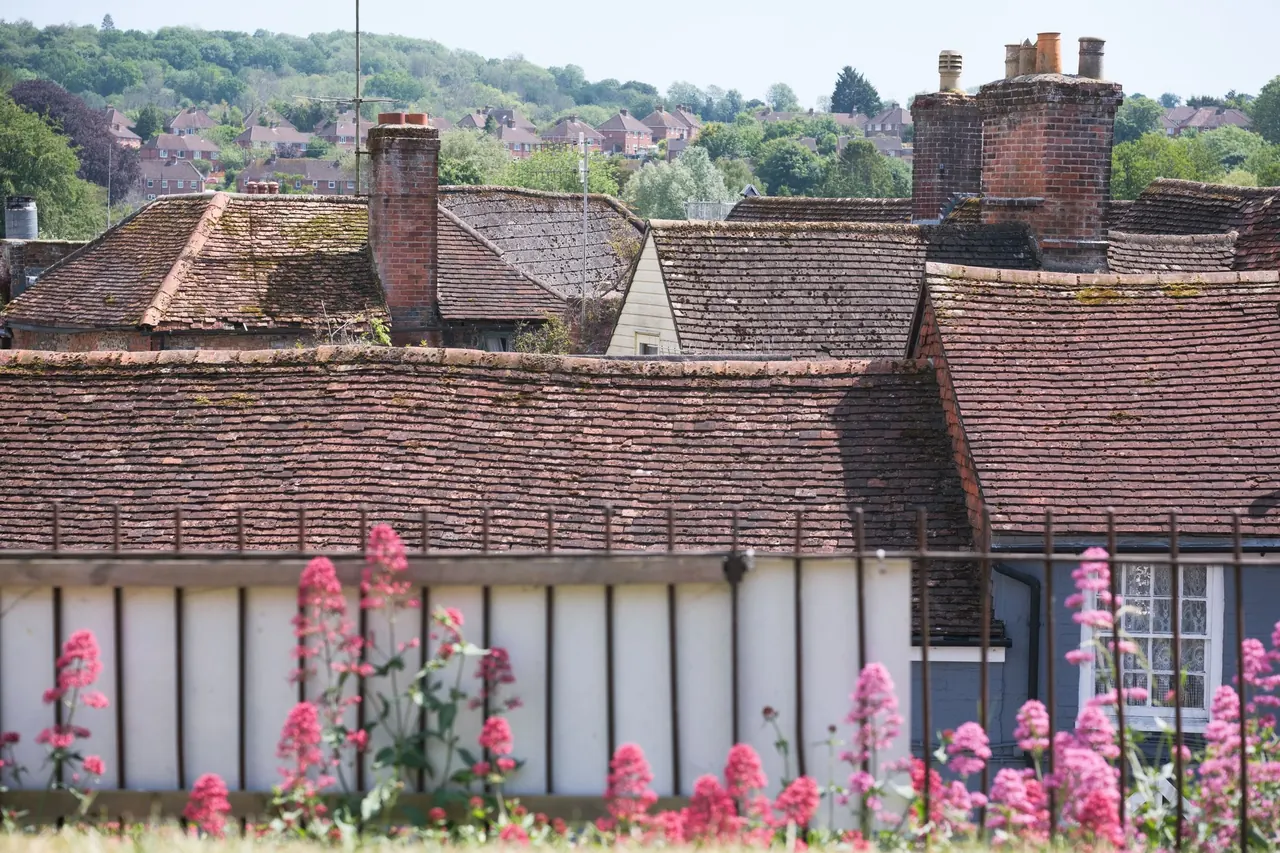
Longfellow Road's Victorian terraces, built from the late 1860s, are decades older than the semis, and their roofs have usually been repaired many times. Repairs there are done like for like, so the terrace keeps its look along the street. If the stack is the problem, our page on chimney repairs in Worcester Park covers what that involves.
Above some of the Central Road shops there are flats, and their roofs belong to the freeholder in most cases. A leak into a flat there is usually booked by the managing agent, and where a building has a pitched front with a flat section behind, both need checking, because water can travel along the hidden part before it shows.
When the faults turn out to be spread across every slope, a repair will only buy time, and we will say so. Our article on repair or full replacement explains how to weigh it up, and the main roof repair page has more on how we work.
Frequently asked questions
Rain seems to be getting in behind the mock-Tudor boards on my gable. Is that a roof repair?
It is a job we can look at. The boards are fixed over render, and when the joints open water gets in behind them. We check the gable, the bargeboards and the roof edge above it, then reseal or refix the boards and repair any render or tiles that have let water through.
Our half of a Tudorbethan pair still has clay tiles, but next door has gone to concrete. Can a repair match our side?
Yes. A repair on your half is matched to your own roof, so reclaimed or new clay tiles of the same size and colour go back, not concrete. Where your half meets next door's at the hip or ridge, the join is made so both roofs stay watertight.
We live in a courtyard block on Hemingford Road and the top-floor ceiling is stained. Who books the repair?
Usually the freeholder or managing agent, because the roof is part of the building they look after. Report the stain to them in writing with a photo. They can then book an inspection and repair, and the cost is normally shared through the service charge.





