



 Google reviews

One stack across the party wall
The semis built round the crossroads in the 1930s went up when coal fires were normal, so nearly all of them have a chimney. On a pair, the stack usually rises from the party wall and serves fireplaces on both sides. Many have not had a fire lit in decades, but a disused stack still takes the weather on every face.
The faults on a stack of this age are fairly consistent:
- Lead flashing. Lead lifts, splits or pulls out of its joint, and older mortar-fillet repairs crack away from the brick.
- Pointing. Mortar between the bricks crumbles, letting water soak into the stack and down into the loft.
- Flaunching. The sloping mortar bed round the pots cracks, loosening the pots and letting water into the top of the stack.
- Pots and cowls. Pots lean or work loose, and open flues let in rain and birds.
Because the stack is shared, a fault on one side can show on the other, and scaffold or roof access is the same job whichever half pays for it. Doing the whole stack together avoids paying for access twice. Where that is not possible, we repair your side and tell you plainly about anything on the other side that will keep causing trouble.
A drone inspection is a sensible first step, because it photographs the top of the stack, the pots, the flaunching and the flashing on every face without anyone going up, and the photos can be shared with next door. Smaller jobs such as refixing a section of flashing, resetting a pot or fitting a cowl can often be done from the roof with roof ladders. Re-leading the whole stack, full repointing or rebuilding the top usually needs a scaffold round it.
For a sense of cost, MyJobQuote's chimney leadwork guide gives £150 to £250 for a flashing patch repair and £350 to £460 for full leadwork replacement without scaffolding.
Poplar Place and the older stacks on Cheam Common Road
A few stacks here are much older than the estate. Sutton's local list includes Poplar Place, 119 and 121 Cheam Common Road, a pair of cottages with an 1828 date plaque. They are the last of a group along Cheam Common Road that housed farm labourers and people working in the local brickmaking industry. The list also includes 435 London Road, a small single-storey lodge that is the only remaining structure from the large mansions that once stood near the crossroads, and the council's draft character study adds that there are pockets of Victorian housing in North Cheam.
Stacks on buildings of that age were laid in soft lime mortar. Lime lets the brickwork breathe and move a little, and it is meant to wear away before the bricks do. Repointing an old stack in hard cement mortar traps moisture in the bricks and can make the faces spall in frost. So on an older stack, repairs start with finding out what it was built with, and the repointing is done in a mortar that suits it. Older stacks have usually been altered many times too, with pots changed, flues blocked off and flashing patched with fillets or sealant, and those patches can look fine from the garden while still letting water in during driving rain.
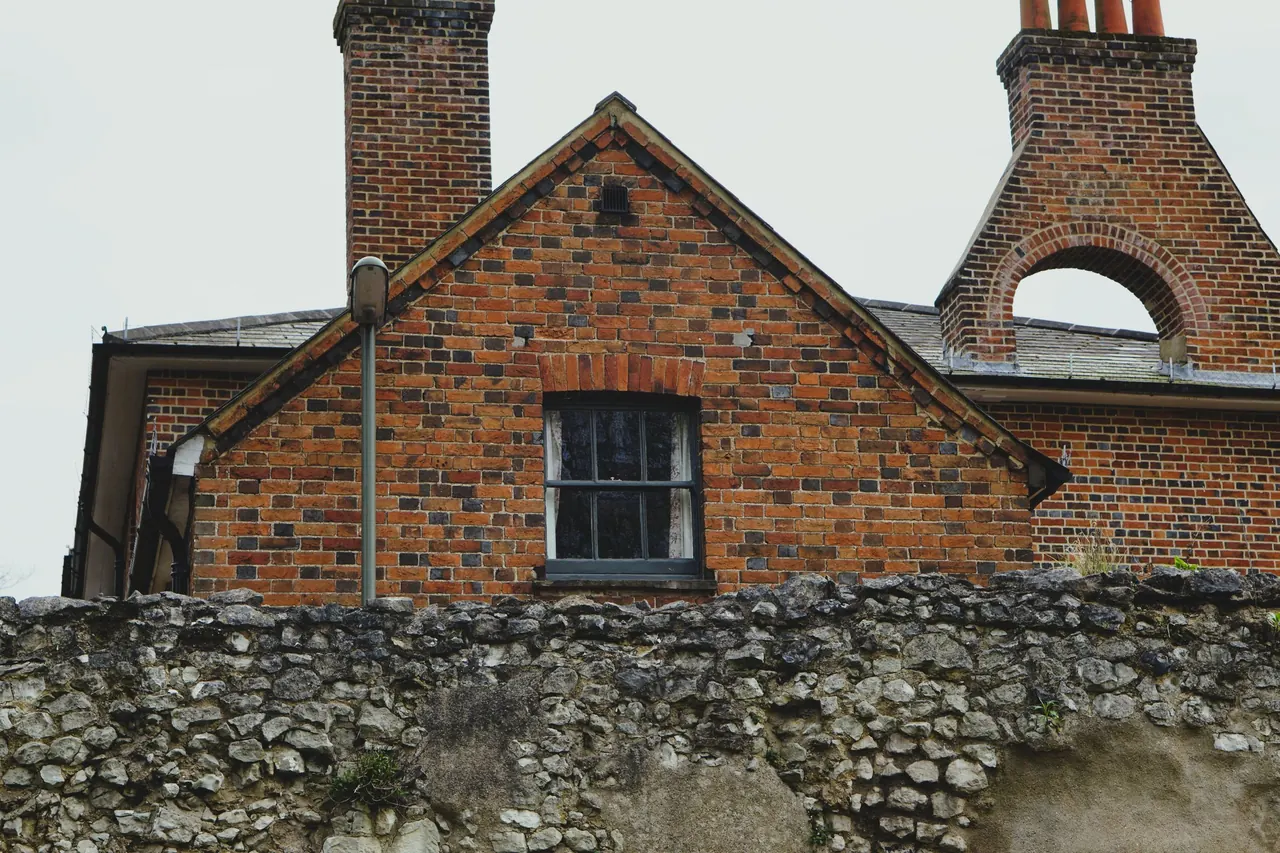
Damp below the stack, and what it points to
A stain on the chimney breast upstairs, or on the ceiling beside it, is the most common reason people look at their stack. On these houses the cause is usually one of three things: open joints in the pointing on the weather side, cracked flaunching letting water into the top, or a gap at the back of the stack where the flashing meets the tiles. If tiles round the stack are slipping too, our roof repairs in North Cheam cover those on the same visit. Our chimney maintenance guide lists what to look at each year.
Frequently asked questions
Our North Cheam stack serves both halves of the pair. Who pays for the repair?
That is for the two owners to agree. Since both houses rely on the stack, we can give each of you the same photos and one price for the whole stack, which makes the conversation with next door easier.
Can the lime mortar on a Cheam Common Road cottage stack be repointed in cement?
It should not be. Hard cement holds water in soft old bricks and can make their faces break away in frost. We check what the stack was built with before any repointing starts, so the new mortar suits the old bricks.
Why is there a white bloom on the brickwork just below the stack on my Lavender Estate semi?
That is usually salts drawn out of the bricks as water dries through them, a sign that the stack is getting wet. Failed flaunching, open joints or a gap at the flashing are the usual causes.





