



 Google reviews

Shared stacks on the interwar semis
Most of Sutton Common's houses went up between the wars, from the Hallmead Farm Estate cottages by the station to the semis along Sutton Common Road and the streets towards Stonecot Hill. They were built for open fires. The estate's character appraisal shows original mottle-tiled fireplaces still in place in one Blenheim Road cottage, and on many semis of this age the chimney stack sits on the party wall, with flues from both houses inside it.
That shapes the repair. If the lead flashing has lifted, the pointing has opened up or the flaunching round the pots has cracked, the fault usually runs across both halves of the stack. A repair to one side only can leave a gap at the centre line, so where we can, we talk to both owners before the work is booked. If only one household wants the work, we can still repair their half properly and tell both of you what we saw on the other.
We usually look at a stack with the drone first, which shows the pots, flaunching, pointing and lead close up without anyone climbing. Small jobs can often be done from the roof on roof ladders. Re-leading or repointing a whole stack normally needs scaffold round it.
Flues in use, flues blocked off
Ninety years on, the flues in one stack can be doing quite different things. One side may serve a new wood burner, the other may have been bricked up at the fireplace decades ago. What goes on top should follow that. A flue serving a stove needs a cowl made for a working appliance. A disused flue needs rain kept out but some air still moving, or the breast below can turn damp. We check how each flue is used before fitting anything.
Where a stack meets clay plain tiles on a Hallmead roof, the lead at the back of the stack and the soakers down its sides sit under small tiles that break easily, so we lift and refix those by hand. If the tiles round the stack are part of the problem, our Sutton Common roof repair page covers that side.
The older villas by Sutton Green
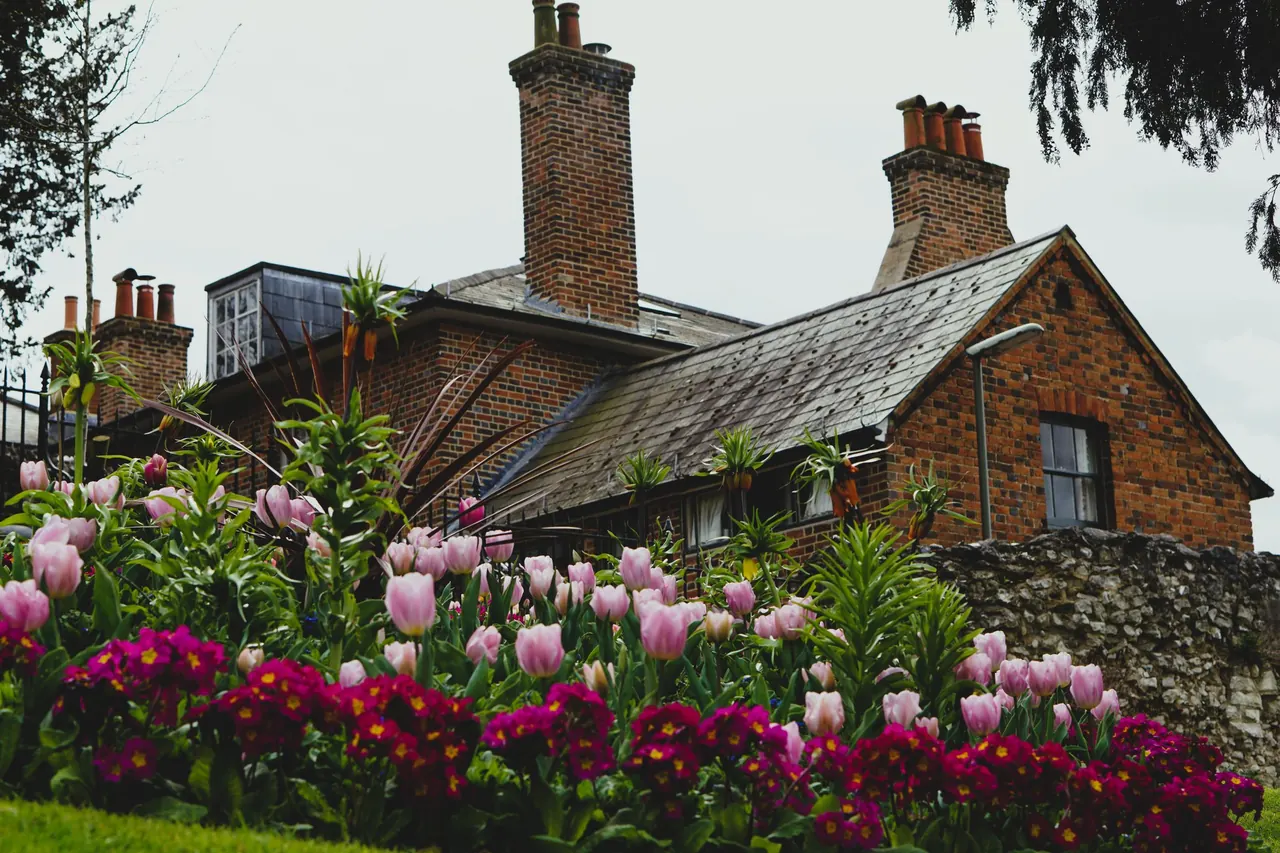
A few Victorian and Edwardian houses survive along Sutton Common Road and near Sutton Green, from before the interwar building. Their stacks tend to be taller, with several flues, and most have been repaired more than once, sometimes with hard cement mortar or a cement fillet in place of lead.
Hard cement on soft old bricks traps water in the brick face and makes it flake. On a stack like this we rake out the failed or unsuitable pointing, repoint in a mortar that suits the brick, and replace cement fillets with properly dressed lead flashing.
As a national guide, MyJobQuote puts a chimney flashing patch repair at £150 to £250, and replacing all the leadwork at £350 to £460 before any scaffold. Our main chimney repairs page and our chimney maintenance guide go further.
Frequently asked questions
Our Hallmead cottage still has its original fireplace. Can the chimney be used again?
Testing and lining the flue is a job for a chimney sweep or stove installer. What we look after is the outside: the pots, flaunching, pointing and lead, so the stack is sound and dry before anyone lights a fire under it.
Our Victorian house on Sutton Common Road has a stack pointed in hard grey cement. Is that a problem?
It can be. Hard cement holds water against softer old bricks, which then crack and flake. If the bricks are already spalling, we repoint in a softer mix and replace any damaged bricks.
There is a shop below our flat on Sutton Common Road. Can the chimney be repaired without blocking the pavement?
Usually, yes. The Hallmead Farm Estate includes five pairs of semis on Sutton Common Road, two with businesses on the ground floor, and there are other shops round the station. We place a tower or scaffold so the shop door and the footway stay usable, plan around opening hours, and tell you before booking if a council licence is needed for scaffold on the pavement.





