



 Google reviews

Kitchen extensions behind the interwar semis
The semis along Sutton Common Road and the interwar streets towards Stonecot Hill were modest houses when new, and many have grown at the back since. Single-storey kitchen and dining extensions with flat roofs are a common addition, and so are flat-roofed garages, porches and rear loft dormers.
On these roofs the trouble usually starts at the edges rather than in the middle. The flashing where the roof turns up the house wall pulls out of the mortar joint, an edge trim lifts, or the outlet into the gutter blocks with leaves from garden trees or from the trees along the railway cutting by Blenheim Road. Older felt roofs crack and blister in the sun, and a deck that has started to sag holds a pond after rain. Water still lying a couple of days after a downpour is one of the signs covered in our article on ponding.
A roof that is sound except for one area can be patched. One that leaks in several places, or feels soft underfoot, is better stripped and re-covered. If we find rotten boards, we show you before pricing them.
Dormers on the Hallmead cottages
The Hallmead Farm Estate's 2021 character appraisal records that some of the estate's cottages already have loft conversions and dormers. Where a dormer has a flat top, it sits among red clay plain tiles on a Dutch-hipped main roof.
That makes the junctions the delicate part. Re-covering the dormer top itself is a short job, but renewing the flashings at its cheeks and apron means lifting a few clay tiles round it and putting them back without breaking them. Plain tiles are small and hung on nibs, so we lift only what we need and refix the same tiles where they are sound. For a dormer that is hard to see from the garden, a drone roof inspection is a cheap first step.
Block roofs over Sutton Common's flats
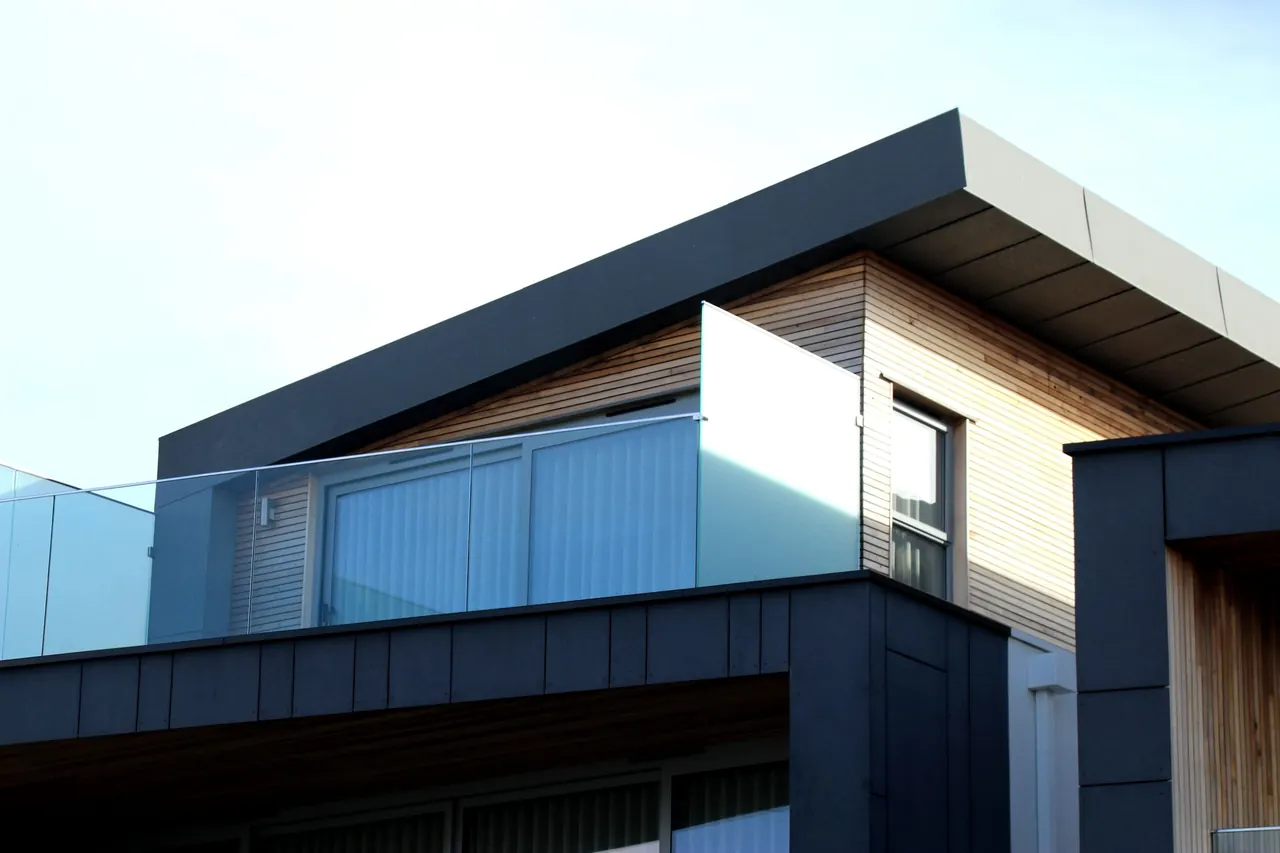
Purpose-built flats make up a large share of Sutton Common's homes, from 1930s blocks to modern ones. Where a block has a flat roof, it covers several homes, so a leak is everyone's problem, though the top-floor flat usually finds it. An older block roof may have been re-covered more than once, and each layer has its own edges, outlets and upstands. When we look at one, we work out which layer is failing and whether the deck below is still sound.
Where the roof turns up a parapet or meets a rendered wall, a crack in the render above the flashing can let water in behind it, so we check the wall before blaming the roof.
Picking a covering for a roof the neighbours look down on
| Covering | Where it suits here | Worth knowing |
|---|---|---|
| GRP fibreglass | Kitchen extensions and dormers on semis | Seamless finish, laid in dry weather |
| EPDM rubber | Larger roofs such as blocks of flats, and garages | Large sheets with very few joints |
| Torch-on felt | Garages and like-for-like re-covers | Quality varies a lot between systems |
A rear extension is often overlooked from upstairs windows next door, and a neat GRP finish tends to look tidier from above than old felt. As a national guide, MyJobQuote puts a GRP covering on a 15m² garage at £525 to £675. The main flat roofing page compares lifespans.
Frequently asked questions
We own a flat in a 1930s block on Sutton Common Road. Can the roof be re-covered without scaffolding the whole building?
Often, yes. Depending on the height and the edges, a scaffold tower or a short run of edge protection at one access point can be enough. We work that out on the survey and agree it with whoever manages the block.
Our dormer is on a Hallmead cottage. Can you re-cover it without disturbing the clay tiles around it?
Yes. We lift only the tiles needed to renew the flashings at the dormer cheeks and refix them afterwards, so the main roof keeps its original tiles.
Our kitchen extension off Forest Road is ten years old and already leaking. Does it need a new roof?
Not necessarily. On younger roofs the fault is often at the upstand, an edge trim or an outlet rather than the covering itself. We find the actual cause before suggesting anything larger.





