



 Google reviews

Above the pavement on Blenheim Road
Blenheim Road leaves Sutton Common Road at its highest point, opposite the station, and runs steeply downhill to a footpath through to Stayton Road. For the top two-thirds of its length there are houses on the west side only, because the railway sits in a deep cutting along the east side. Some of those houses stand above the road and are reached by steps.
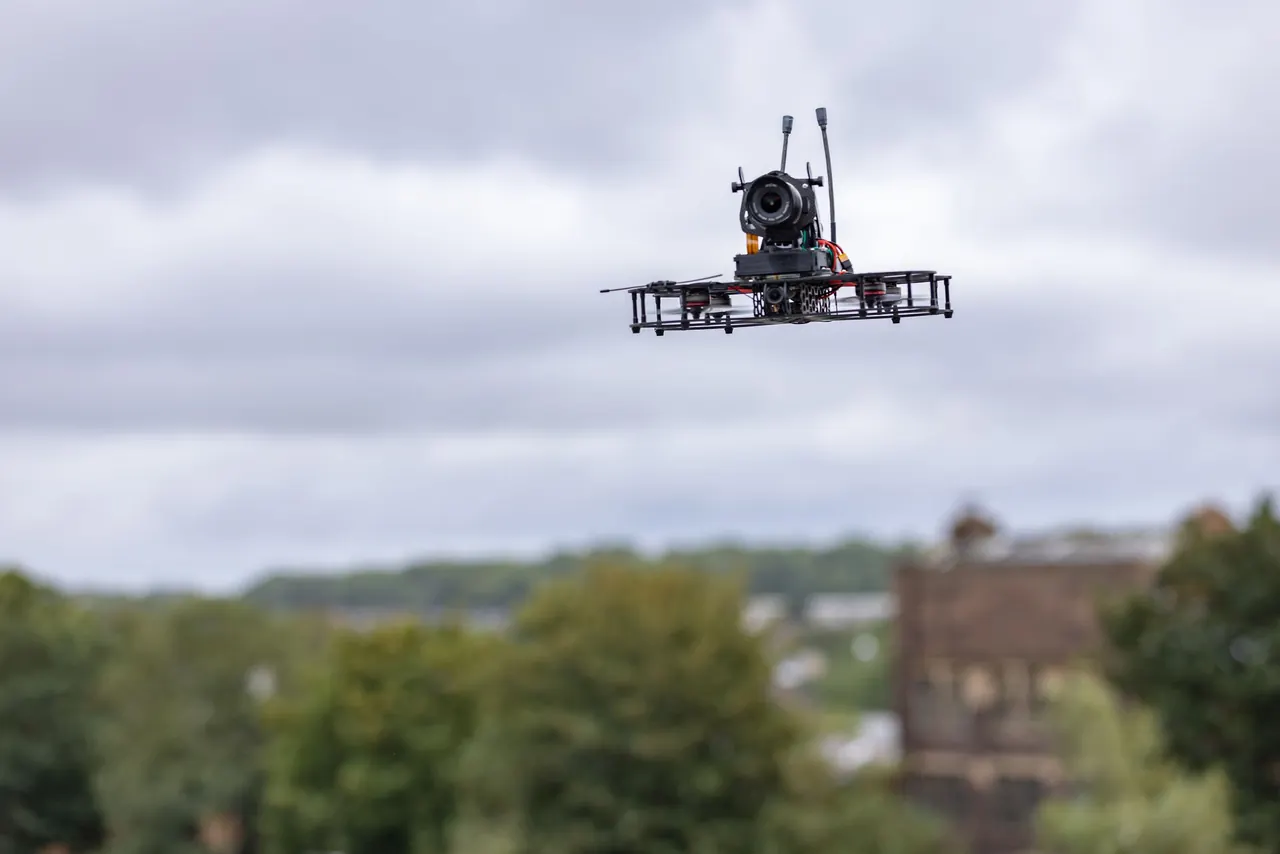
Standing a long ladder on a flight of steps, or footing one on a sloping front garden, is a poor way to check a roof when you only want to know what state it is in. The same goes for the streets east of the A217, where some roads either side of the ridge are linked by stepped footways and steep, narrow alleys rather than by level pavement. For houses like these we start with the drone, which takes off from the pavement or the garden, and then go into the loft where there is a hatch.
At the back, the drone can look at the rear slope of a house beside the cutting without anyone going near the railway land. Before each flight we check the wind, nearby trees and any overhead cables.
What turns up on a Hallmead cottage
The cottages of the Hallmead Farm Estate have high roofs with small Dutch hip ends in red clay plain tile, a pitched roof over each front bay and a tiled canopy over the side door. That gives the drone more to photograph than on most semis of the same size.
- The gablets. At each Dutch hip end there is a small gablet with its own verge and a run of cut tiles. Loose cut tiles and cracked hip bedding up here are easy to miss from the street.
- Bay and canopy roofs. Each has its own flashing against the wall. A stain in the front room or by the side door often starts here rather than on the main slope.
- Creeping tiles. Plain tiles hang on two small nibs. Close photos show where tiles have slid out of line across a slope, which usually points to failing nails or battens.
In the loft we look for daylight between tiles, damp staining on rafters and the state of the battens. On a roof that may still have its 1930s battens and no underlay, the loft often settles how long the covering has left. If repairs follow, our roof repairs in Sutton Common page explains how the clay tile and hip shape are kept.
Later semis, flats and the old villas
Semis along Sutton Common Road and towards Stonecot Hill. On these the main thing we check is later work: the valley and cheeks where a loft dormer meets the old slope, the abutment over a rear extension, and ridge tiles that have been rebedded once already. Those joins are where water usually gets in.
Blocks of flats. Purpose-built flats are a large share of Sutton Common's homes. On a block the drone gives the freeholder, managing agent or residents one clear record of the whole roof, including outlets and edges on any flat sections, before anyone pays for access equipment. The Sutton Common flat roofing page covers what usually follows.
Victorian and Edwardian houses. A few survive along Sutton Common Road and near Sutton Green. Their roofs have usually been repaired more than once, so the photos are as much about the quality of earlier patching as the age of the covering.
The full method is set out on our main roof inspection page.
Frequently asked questions
Our house on Blenheim Road sits up a flight of steps. Can you still inspect it?
Yes. The drone takes off from the pavement or the garden, so the steps do not matter for the survey itself. If the loft has a hatch, we check that from inside as well.
Our back garden runs down to the railway cutting. Can you see the rear slope without going near the line?
Yes. The drone is flown from your garden and photographs the rear slope, the back of the stack and the gutter from above. Nobody needs to stand on the embankment, which is railway land.
Our Hallmead semi has a bay roof and a side canopy as well as the main roof. Are those checked too?
Yes. The bay roof and the canopy over the side door have their own tiles, flashings and small gutters. We photograph each one and note them separately, so you can see which part of the house a leak is coming from.
We are buying a semi off Forest Road with a loft dormer. What should the inspection look at?
The dormer junctions first: the cheeks, the flashing at its top and the valley or apron where it meets the old slope. Our article on roof checks when buying in Sutton lists other questions worth asking before you exchange.





