



 Google reviews

Stacks that are part of Pearson's design
On Pearson's houses a stack does more than carry a flue. The council's character appraisal calls them integral to the design, giving the houses vertical emphasis and punctuating gables and ridgelines. They are often finished like the walls, with render against red brick and corbelled detail. On Nos. 16 to 22 Woodend, large stacks push up through the hips at either end of the terrace. Round Horse Shoe Green the gambrel-roofed semis have white-rendered stacks, and on the Oak Close semis red brick double chimneybreasts run up the flanks.
A stack that rises through a hip has lead on its sloping sides as well as the front and back, and those sloping soakers and flashings are harder to keep tight than the ones on a plain ridge stack. Render on a stack also hides cracks in the brickwork behind it until damp shows inside. When we repair one of these, we renew the lead, repair the render to match, rebed the pots and keep the corbelling as it is.
The appraisal notes that some stacks and pots were removed in the past but most survive. On the houses covered by the Article 4(2) Direction, altering the roof where it can be seen from the road needs a planning application, so repairing a tired stack is almost always the better route.
Tall stacks on the Landseer Road villas
West of the town centre, the villas on Landseer Road, York Road, Derby Road and Bridgefield Road are tall houses of up to three storeys. Where a stack stands well above the ridge, it takes the full weather on its exposed face, so the pointing there goes first and the flaunching round the pots cracks with frost. Water then runs down inside the stack and shows as a damp patch on a chimney breast two floors below.
Whether a stack like that needs its top courses rebuilt or only new flashing is something to settle from close-up photos, as described on our roof inspection in Sutton page, before access is booked.
Manor Place houses that lost theirs
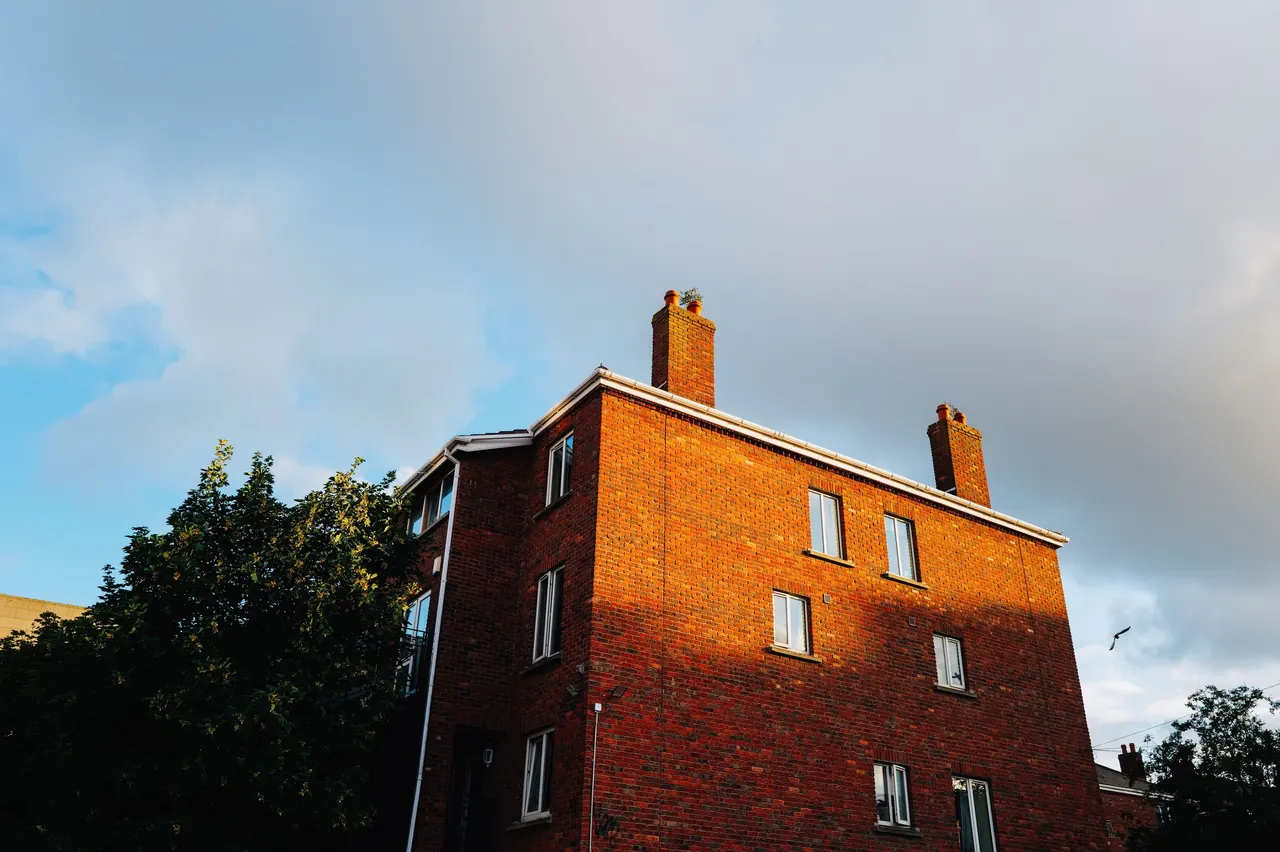
Not every old Sutton house still has its stack. Historic England's 2018 assessment of the town centre records that several of the early Victorian houses on Manor Place have lost their chimneystacks. Where a stack was taken down, the quality of the work matters for decades afterwards: a breast left open in the loft, a patch of mismatched tiles where the stack came through, or a capped stub that was never properly flashed can all let water in.
If your house had its stack removed before you bought it and you have a damp patch in the same place on the ceiling, that old opening is worth checking first. We can make it good with matching tiles and new underlay, through our roof repair work if the patch is bigger than the stack itself.
Disused flues and the cost of new lead
We renew lead flashings, soakers and back gutters, repoint in a mortar that suits the brick, replace cracked flaunching, reset or replace loose pots, and fit caps or ventilated cowls to disused flues. A flue that is no longer used still needs some air moving through it, or condensation can build up inside. MyJobQuote's chimney leadwork guide gives £150 to £250 for a patch repair and £350 to £460 for full leadwork, without scaffolding. Our chimney maintenance guide covers the checks worth doing yourself from the garden. Each of these jobs is described on the chimney repairs service page.
Frequently asked questions
Why does the lead keep lifting on the stack through my Woodend hip?
On a stack that comes through a hip, the lead runs down the sloping sides in steps, and those steps are where it most often lifts or splits. We check each one and renew the stepped flashing on that side rather than patching single steps.
Can the render on my Horse Shoe Green chimney be repaired to match?
Yes. We cut out the loose render, repair the brickwork behind it and re-render to match the texture and white finish of the rest of the stack, so it sits with the other houses round the green.
Our Derby Road villa has a stack well above the roof. Will it need scaffolding?
For most repairs at the top of a stack that height, yes. Repointing, new flaunching and resetting pots all need a safe working platform round the stack, and on a tall villa that means a scaffold.





