



 Google reviews

Behind the paint on a North Cheam fascia
Timber fascias that have been painted many times often look fine from the ground. The trouble starts behind the gutter, where water from a leaking joint or an overflowing corner runs down the back of the board and sits there. Pressing a screwdriver into the back edge, where the brackets sit, tells you more than the paint does. The first sign is often the gutter itself: brackets pulling out, a run tipping forward or a sag that was not there last year.
Many houses here have hipped main roofs, with eaves on every side, so there is more fascia per house than on a gabled terrace, and the corners at the foot of each hip are where soft timber usually shows first.
Signs that the boards need attention:
- Timber that is soft or crumbles when pressed, especially at the corners
- Paint flaking or stained behind the gutter
- Gutter brackets pulling out or the gutter tipping forward
- Gaps in the soffit, or birds and wasps going in and out
- Short boards over bays and porches that have split or dropped
If the rot is limited to a short length, that length can be replaced. If it runs along most of the board, the full run is replaced, usually in uPVC. Capping, a thin uPVC board fitted over the old timber, only works on boards that are sound right through, because capping over rot hides it rather than fixing it.
Soffits, vents and the loft above
The soffit closes the underside of the eaves, and on a roof of this age it was often a plain board with no ventilation at all. When the loft is insulated and the roof re-felted, moisture from the house needs a way out, and ventilated soffits are a simple way to keep air moving through the roof space. New soffits also close the gaps that let birds, squirrels and wasps in. Check for nesting birds before work starts, since active nests are protected and the job has to wait until they have gone.
Checkatrade's fascia and soffit guide gives £90 to £170 per linear metre for replacing fascias and soffits, which gives a rough idea before your own roofline is measured.
Bargeboards on the half-timbered gables
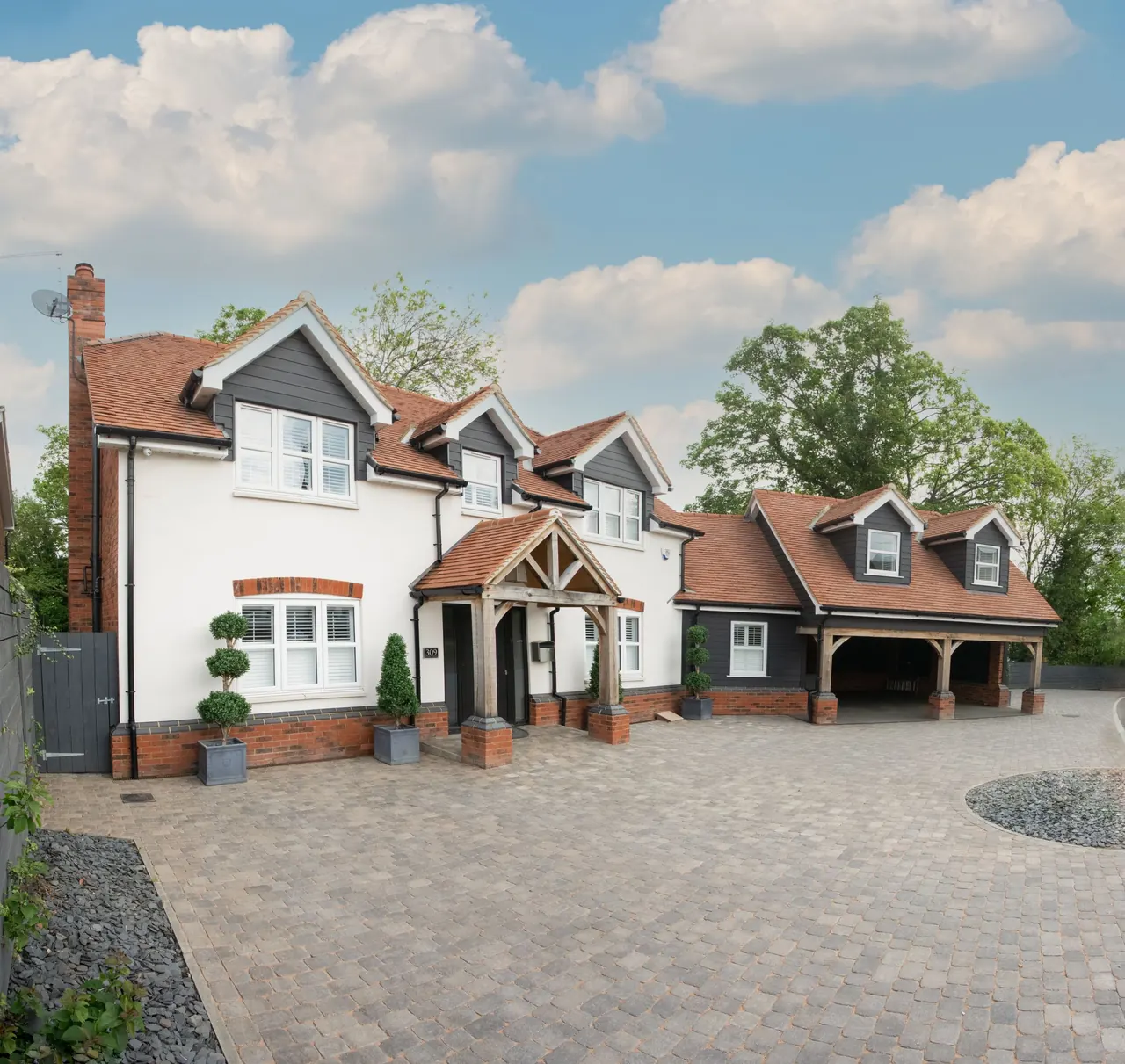
On the Tudorbethan houses, the gable over the front bay has dark timbers set in white render, framed by a pair of bargeboards running up the sloping edges. Those boards take more weather than any other on the house, and rot usually starts at the foot of the gable and at the joint by the apex. Swapping a shaped timber board for a flat white plastic one changes the face of the house, and on a pair it leaves the two halves looking different. Where most of the board is still good, a short damaged section can be repaired and the original kept. Where it is replaced, black or woodgrain uPVC sits well against half-timbering.
Because the fascias carry the gutters, the two are usually done together, and our gutter installation in North Cheam page covers the gutter side. If a re-roof is planned, doing the roofline while the scaffold is up saves a second set of access, and our roof replacement page explains that job. For the interwar streets over the border, see our fascias and soffits in Worcester Park.
Frequently asked questions
The gutter on my North Cheam semi is pulling away at one corner. Is that the fascia?
Often, yes. If the screws have lost their grip, the board behind is usually soft at that point. We check the timber first, then refix the gutter into sound board or replace the length that has gone.
Will black uPVC bargeboards look right on our half of a Lavender Estate pair if next door keeps painted timber?
Black or a dark woodgrain usually sits well beside painted black timber from the street. We can show you samples against the gable before you decide.
Can sound timber fascias on a 1930s house off London Road be capped instead of replaced?
Yes, if the board is sound right through. We test it along its length first. Where any of it is soft, that section is replaced before capping goes over the rest.





