



 Google reviews

Bays, porches and the boards nobody looks at
Merton's planners describe the semis around Garth Road and Wydell Close as having two-storey front and rear bay windows and single-storey porch canopies, and the Tudor-style houses around Tudor Drive have their bays too. On top of the main eaves, that gives each house two short bay fascias with soffits underneath, plus the boards round the porch canopy.
The bay soffit is easy to overlook because you only see it standing directly under it. Damp from a failed bay roof flashing can soften it unnoticed, and once a corner drops, a gap opens that birds and wasps soon find. The fascia behind the main gutter tends to rot from the back, where an overflowing gutter has been soaking it, and once it softens the gutter brackets lose their grip. If water is running down the wall behind your gutter, our article on water leaking behind a gutter explains the link.
First-generation uPVC and capped timber
On a house where the roofline is still painted timber, it has had close to 90 years of weather and an unknown number of coats of paint. Many houses here went over to uPVC some time ago, and the first generation of plastic boards can now be brittle or discoloured. Some of those were capped straight over timber that was already going, which hides the rot rather than stopping it.
Capping only works if the wood underneath is completely sound. Where the boards are rotten along most of their length, or where the gutters are being replaced anyway, taking the old boards down and fitting new ones is the better use of the access. As a national guide, MyJobQuote puts capping the fascias and soffits on a three-bedroom semi at around £800, and full replacement costs more.
When the old boards come down, we check the rafter ends behind them and deal with any damage before the new boards go up. Ventilated soffits help keep air moving through the roof space where the eaves have no other ventilation. Because the fascia carries the gutter, new guttering usually goes on at the same visit through our Lower Morden gutter installation service.
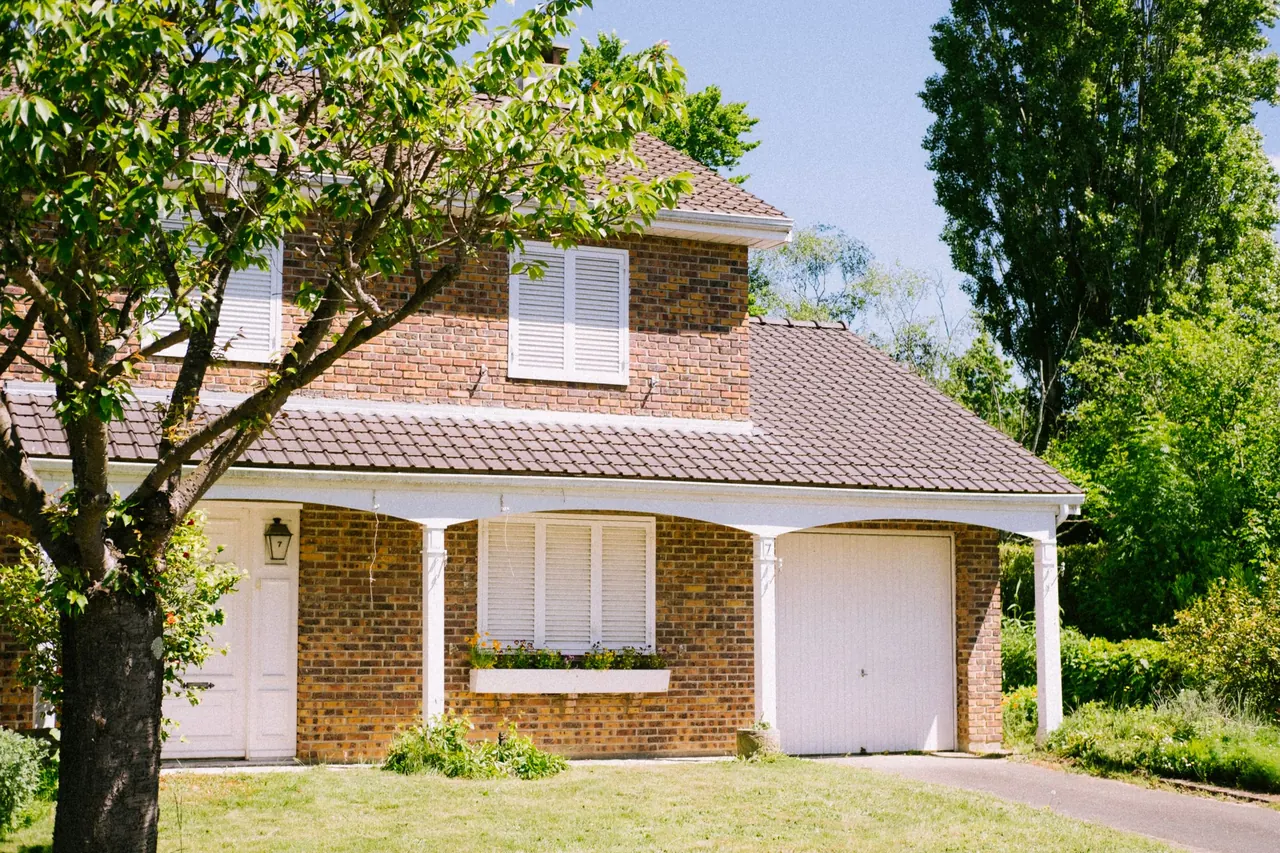
Bargeboards on the Tudor Drive gables
The Crouch houses around Tudor Drive and Lower Morden Lane were sold as half-timbered and gabled, and each front gable has a bargeboard running up both sloping edges. They face the weather with nothing above them but the verge tiles, so paint breaks down first at the joints and the ends rot from the bottom up. On a half-timbered gable a patched board is very visible.
New uPVC boards come in white, black, grey and woodgrain finishes. On a Tudor-style front, black or woodgrain often sits better against the timbering than bright white, though the choice is yours, as Lower Morden has no conservation area controlling it. If you are re-roofing, the roof replacement scaffold is the obvious time to do the whole roofline, and the main fascias and soffits page covers materials and lifespans.
Frequently asked questions
Birds are getting in under the bay soffit on our Lynmouth Avenue house. Can it be closed up now?
Not if there is an active nest. Nesting wild birds are protected by law, so the gap is closed once the young have left, which usually means waiting until late summer. After that we replace the soft board and check the bay roof flashing above, because a dropped soffit corner often means water is getting in higher up.
The fascias on our Garth Road semi were capped in plastic years ago. How do we know what is underneath?
The signs are a fascia that flexes when you press it, gutter brackets that have pulled loose, or staining at the joints. We take off a short section of capping to look. If the timber behind is soft, capping again just repeats the problem, and the boards need replacing.
Will black uPVC bargeboards look right against the timbering on a Tudor Drive gable?
Usually better than white, but it depends on the colour of your timbering and windows. Black suits dark-stained timbers, and woodgrain can work where the timbering is lighter. We talk you through the finishes before you choose.





