



 Google reviews

A roofline that runs all the way round
On a gabled terrace, the fascia runs along the front and the back and stops. Most houses in West Barnes have hipped roofs, so the fascia and soffit carry on along the side as well, turning a corner at each hip. Add the separate fascia and soffit over the front bay, and the bargeboards on any hip-to-gable loft conversion, and a semi here has a lot of roofline for its size.
The weak points follow the gutter. Rot starts at the corners of the hip, where the gutter angle joints have dripped onto the end grain of the boards for years, and at the ends of the bay fascia, where the small bay gutter overflows. Paint that flakes in patches, rather than evenly, usually means water is getting behind the board at that spot. Gaps in old timber soffits let birds and wasps into the eaves.
The side of the house is the part people forget. It is often over a narrow passage, hard to see from the road or the garden, and on many houses it is still the original timber long after the front has been replaced.
What capping hides
Where only a short length is soft, that section can be cut out and replaced. Where the boards are rotten along most of the run, or the gutters are being renewed anyway, it is better to replace the whole roofline.
Capping, or overboarding, fixes a thin uPVC cover over the old timber. It costs less, but it only works if the wood underneath is sound, and it hides the timber from view for good. On a corner that has been soaked for years, capping traps the wet board inside. Full replacement in uPVC comes in white, black, grey and woodgrain, and a ventilated soffit helps air move through a roof space with no other eaves ventilation.
On a semi, your fascia runs on into your neighbour's. Your section is finished neatly at the boundary, and if two neighbours do theirs together, the line matches.
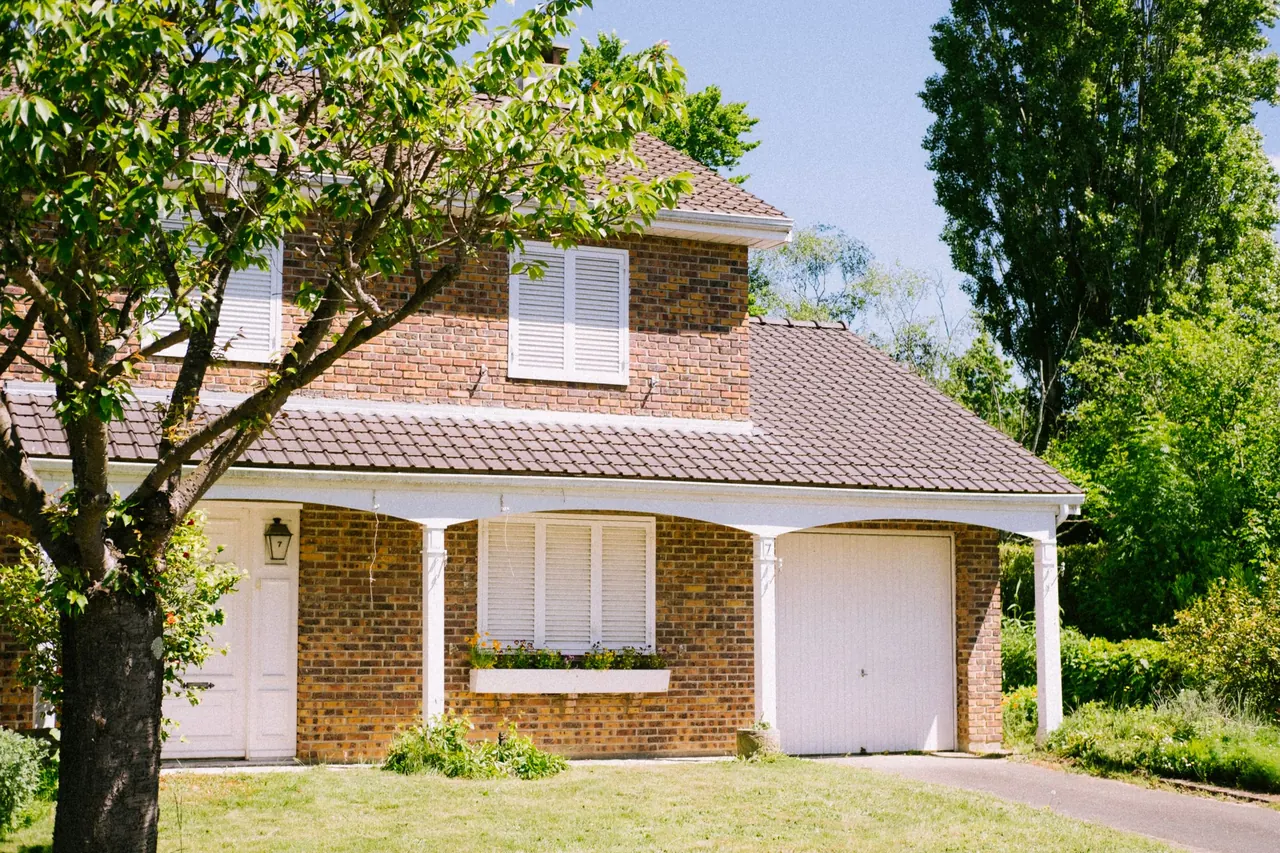
The Blay bay strut
Houses by George Blay, such as those on Westway, have one detail worth knowing. The small bay under the third bedroom window is carried on a projecting strut that lies flush with its underside, or, especially on side elevations, on a curved cabriole strut, as the residents' association history of Blay's building describes. Where the underside or fascia of that bay has been boxed in with plastic, the strut and the timber round it are checked before anything new goes on.
Boards and gutters together
Rotten fascias let gutters sag, sagging gutters overflow, and overflowing gutters rot the fascias. Replacing both at once breaks that cycle and means the access only goes up once. New gutters for a West Barnes semi can be priced at the same time.
As a guide figure, Checkatrade's fascia and soffit guide gives £90 to £170 per linear metre nationally to replace fascias and soffits. On a hipped house, measure all the way round, not just the front, when comparing prices. The main fascias and soffits page covers materials and finishes, and if water streaks the wall behind your gutter, this guide to leaks behind gutters shows why the board rots.
Frequently asked questions
Why are the fascias on our hipped West Barnes semi rotten at the corners but fine in between?
The corners of a hipped roof are where the gutter angle joints sit, and those leak first. Years of drips soak the end of the board at that point. Replacing the corner boards and the gutter angles together fixes both.
Can the bargeboards on our hip-to-gable conversion be done at the same visit?
Yes. The bargeboards on a converted gable are part of the same roofline and are usually replaced alongside the fascias, in a matching finish.
The underside of the small bay on our Westway Blay house has been boxed in with plastic. Should it be opened up?
If the boxing is sagging, stained or soft to the touch, yes. A strut carries that bay, so a sagging cover can mean the timber behind it is wet. Opening it shows whether only the board needs replacing or the support needs attention too.





