



 Google reviews

Deep overhangs on Parkfield Avenue and the 1930s streets
On the houses east of Durham Road the problem is size. Merton's borough character study describes deep overhanging eaves on the 1930s detached houses and on the post-war hipped semis of Parkfield Avenue. A deep overhang means a wide soffit and a fascia that runs right round a hipped roof, so there is more board to go wrong and more of it out of sight. Stains or flaking paint on the underside of a wide soffit often mean water has been getting behind the gutter for some time, and our article on water leaking behind a gutter explains the usual causes.
On these houses there are three routes. Where boards are rotten along most of their length, or the gutters are being renewed anyway, full replacement in uPVC is the long-term option, in white, black, grey or woodgrain, with ventilated soffits to keep air moving through the roof space. Capping covers the existing timber with a thin uPVC board, which is cheaper but only works if the timber underneath is completely sound. Where only a short length is damaged, repairing or replacing that length is often enough.
If a scaffold is going up for a new roof, renewing the boards at the same time saves paying for access twice, which our roof replacement page for Cottenham Park covers. Each option is set out on the main fascias and soffits page.
Painted eaves on the Durham Road and Panmuir Road maisonettes
The 1903 to 1909 maisonette blocks have a different roofline. Each projecting bay rises to a steep gable, which Merton's Durham Road conservation area appraisal describes as mostly finished with mock timber framing in render and pebbledash infill, and the main eaves run along the front of the block between the bay gables, carrying a gutter that serves several homes. At 2 to 28 Panmuir Road the bays have flat roofs instead of gables, so the edge of each bay roof has its own short fascia.
On a block like this, the fascia over one flat is a short piece of a long line. When one owner swaps painted timber for white uPVC and the next keeps theirs, the change shows from across the road. Where boards need replacing, we keep the new section level with the old line and in a colour that suits the block, and we point out to you if the neighbouring board is soft too, since the gutter brackets on either side rely on it. If the gutter along the front is being renewed as well, our Cottenham Park gutter installation page explains how a shared run is best handled.
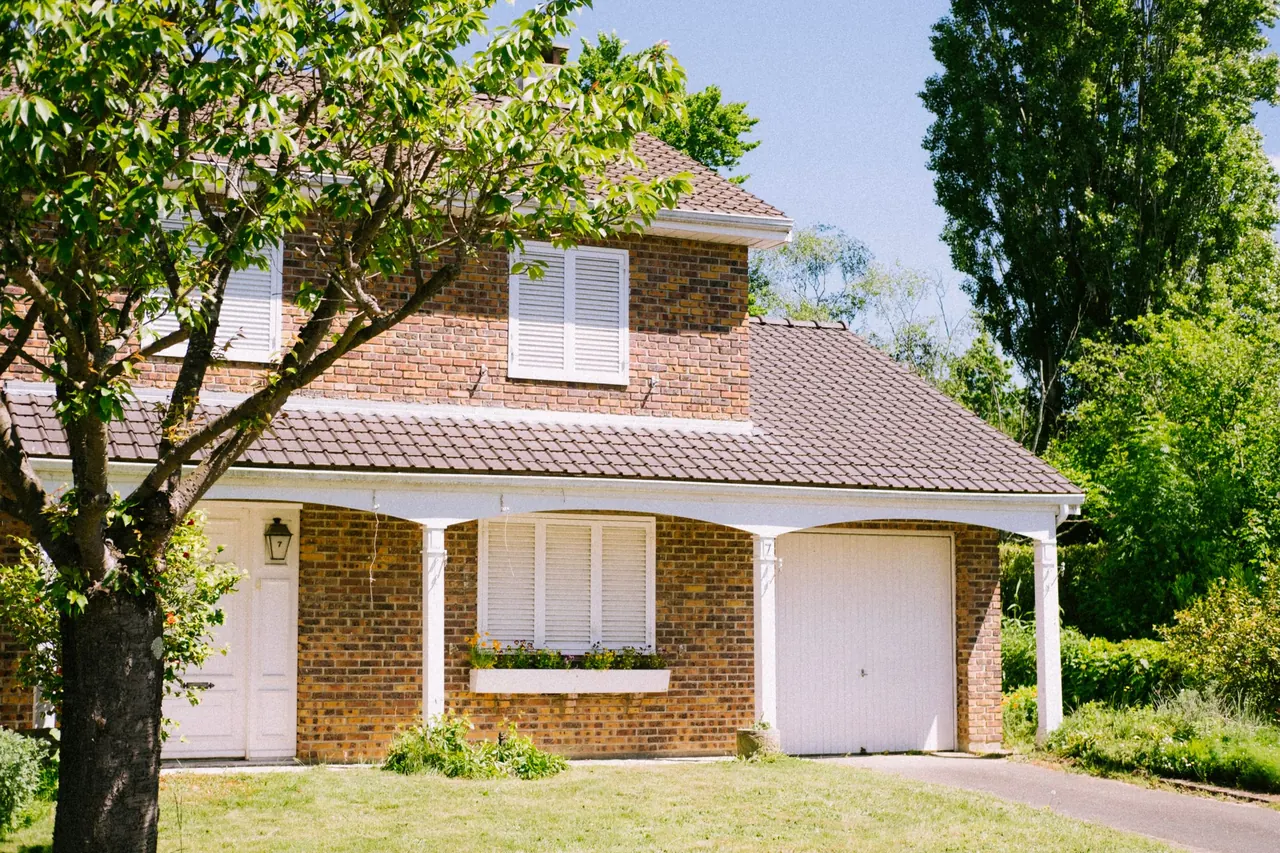
Carved bargeboards from 13 to 19 Cambridge Road
A few Victorian houses on Cambridge Road need a different approach altogether, because they still have decorated timber on their gables. Merton Council's Durham Road conservation area appraisal describes ornate timber bargeboards on the street-facing gables of 13 Cambridge Road, built in 1892, and ornate bargeboarding on the gable of 15 Cambridge Road, an 1879 house designed to look like a country cottage. The 1896 pair at 17 and 19 Cambridge Road have front gables with bargeboarding and timber bracing.
The appraisal marks all four as making a positive contribution to the conservation area. The borough character study also picks out decorative bargeboards and fish-scale gable decoration along Cambridge Road, and asks that alterations follow the original detailing and materials.
Timber like this rarely fails all along its length. Rot tends to start at the foot of the board, where it meets the eaves and catches drips from the gutter end, and at joints where paint has cracked and let water sit. A damaged length can usually be repaired or replaced on its own, then primed and painted to match, so the carved profile above it stays as it is. If a board is too far gone to save, we talk through the options with you before anything comes down, including what the council is likely to expect on a front gable.
Frequently asked questions
The bargeboard on our Cambridge Road gable has rotted at the bottom. Does the whole board have to go?
Usually not. The foot of a bargeboard takes the most water, and the rot is often confined to the last half metre or so. We cut back to sound timber, replace that length, and prime and paint it so the join does not show from the street.
Can one owner on a Durham Road maisonette block change their fascia to uPVC?
Physically, yes, but on a block designed to read as one building it is worth matching the colour and depth of the boards either side. Changes to maisonettes in the conservation area can also need planning consent, so check with Merton before choosing a different look.
The soffit under our Parkfield Avenue eaves has dark stains. What is causing it?
Most often water running behind the gutter and soaking into the back of the fascia, then down onto the soffit. We look at the gutter, the fascia and the roof edge above the stain before deciding whether the boards need replacing or the gutter needs resetting.
Is it cheaper to do the fascias on our Hunter Road house when the gutters are replaced?
Generally, yes. The gutters have to come down to replace the fascia anyway, so doing both together avoids taking them down twice and makes sure the new brackets go onto sound boards.





