



 Google reviews

Barge boards on the Clement Road villas
Merton's Wimbledon North character assessment picks out four Victorian villas on the south west side of Clement Road. They are two storeys with roof accommodation, with hipped clay tile roofs, distinctive projecting front gables with barge boards, and prominent chimneys. On houses like these, the roofline is part of the front, and the gable trim is one of the first things you notice from the pavement.
Gable barge boards on houses of this age take the weather head on. Painted timber boards usually fail at the foot, where water runs down the board and sits in the joint with the fascia, and along the top edge if the tiles at the verge no longer overhang it properly. Paint that has been allowed to break lets water into the grain, and once the timber is soft, the board starts to drop away from the gable.
On a Village roofline job we start with what the house is meant to look like, then choose the material.
Lancaster Road and Highbury Road gables
Merton's assessment of Lancaster Road notes that most of its gables carry decorative bargeboards, alongside tall chimneys, with an Arts and Crafts influence. On Alan Road and Highbury Road, barge-boards appear among the features of the large turn-of-the-century houses, together with dormers, bays and decorative eaves.
Decorative boards can usually be kept. Where only a length has rotted, we cut out that section and replace it to the same profile, and leave the sound timber in place. Where a board has failed along most of its length, it can be replaced in timber to match, so the gable keeps its outline. If a pattern is too intricate to copy in a straightforward way, we tell you before anything comes down.
Soffits on these houses close off deep eaves. Gaps and holes let in birds, squirrels and wasps, and the timber behind the gutter is where rot usually starts. We replace failed soffit boards and close up the gaps, and where the roof space lacks ventilation, ventilated soffits help.
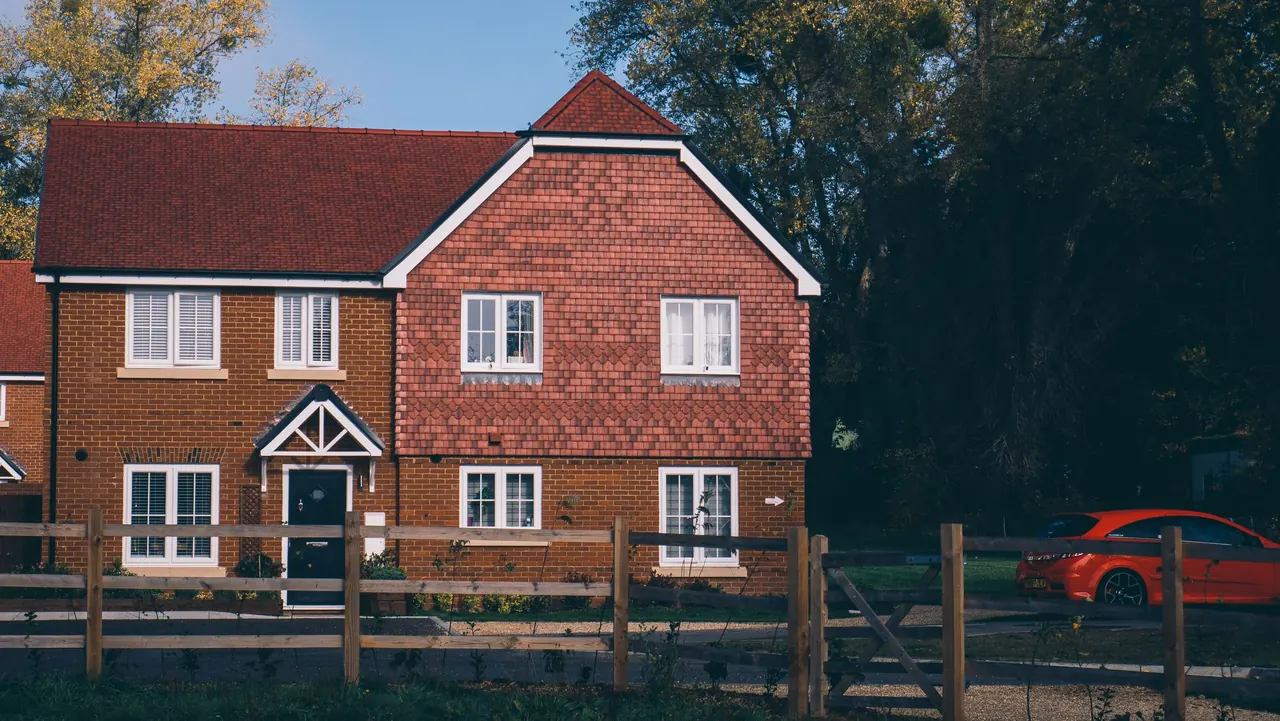
Keeping timber, and where uPVC fits
On prominent period fronts in the Wimbledon North and Wimbledon Village conservation areas, and on any listed building, swapping painted timber for plastic on the street side is worth checking with Merton before you decide. On rear elevations, extensions and later 20th century houses, uPVC is usually practical, and it comes in white, black, grey and woodgrain finishes.
Capping, a thin uPVC board over existing timber, only makes sense where the timber underneath is completely sound. Capping over rot hides it rather than fixing it, so we check the boards before recommending it.
Shop backs on the High Street
Many High Street buildings have no fascia at the front at all, because the roof sits behind a parapet or cornice. Their fascias and soffits are at the back, on rear additions, dormers and outbuildings along High Street Mews, where they are rarely painted or looked at. Peeling paint and soft corners on those boards usually mean a gutter has been overflowing for some time.
Because fascias carry the gutters, the two are best done together. If the boards are coming off, it is a good time for new gutters in the Village, and keeping them clear with regular Village gutter cleaning protects the new boards. Our article on water leaking behind a gutter explains how a fascia usually starts to fail, and our main fascias and soffits page has more detail.
Frequently asked questions
Can you keep the original barge boards on my Clement Road villa?
Where they are sound or only partly rotten, yes. We replace the damaged length to the same profile and leave the rest. If they have failed completely, we talk through matching timber replacements before anything comes down.
Is uPVC acceptable on a Lancaster Road gable in the Wimbledon North Conservation Area?
On a street-facing decorative gable, it is worth asking Merton first, since the bargeboards are noted as part of the street's character. On rear elevations and extensions, uPVC is usually fine.
Why is the paint peeling on the fascia at the back of our High Street shop?
Usually because the gutter on it has been leaking or overflowing, soaking the board from behind. We check the timber, replace what is soft and fix the gutter so the new paint or board lasts.





