



 Google reviews

Plain painted boards on the houses off the hill
Most fascia and soffit work in Wimbledon is on ordinary painted timber. A gutter that has overflowed for a few winters soaks the fascia behind it, the rot starts from the back where nobody can see it, and eventually the gutter brackets lose their grip. Gaps in a decayed soffit then let in birds and wasps. On a two-and-a-half-storey house off Wimbledon Hill Road, the first you know of it is often a gutter hanging off one end of the front.
For boards like these there are three routes:
- Repair where a short section is damaged on otherwise sound boards.
- Full replacement where the timber is rotten along most of its length or new gutters are going on. uPVC comes in white, black, grey and woodgrain, and ventilated soffits help air move through the roof space.
- Capping, which covers sound timber with a thin uPVC board. It only works if the timber underneath is completely sound, so we test it along its length first.
For a guide to cost, Checkatrade's fascia and soffit cost guide gives a national range of £90 to £170 per linear metre for replacing fascias and soffits. On a tall house the access is a real part of the price, so a roofline job is best timed with other work that needs the same tower or scaffold.
The later houses among the Victorian ones, such as 16a Malcolm Road from the mid-1970s, are the simplest cases. Their eaves are plain, and full uPVC replacement suits them well.
Open rafter ends on Raymond Road
Not every house here has boxed eaves. Merton's conservation appraisal notes that the roof rafters are exposed at eaves level on 14 and 16 Raymond Road, both from 1899, and 16 also has profiled timber detailing at the eaves of its front dormer. On 18 Malcolm Road, from 1897, the hipped and half-hipped roofs have a pronounced overhang at the eaves.
On open eaves, the rafter ends themselves are the roofline. When they rot, the answer is repair, not boxing them in with a uPVC fascia and soffit, which would hide the very detail that makes the house what it is. We look at each rafter end, tell you which are sound, and talk through repairing the damaged ones. A few buildings, such as the Worple Road shops at The Pavement, finish their eaves in brickwork and have no fascia to replace, and we say so before quoting.
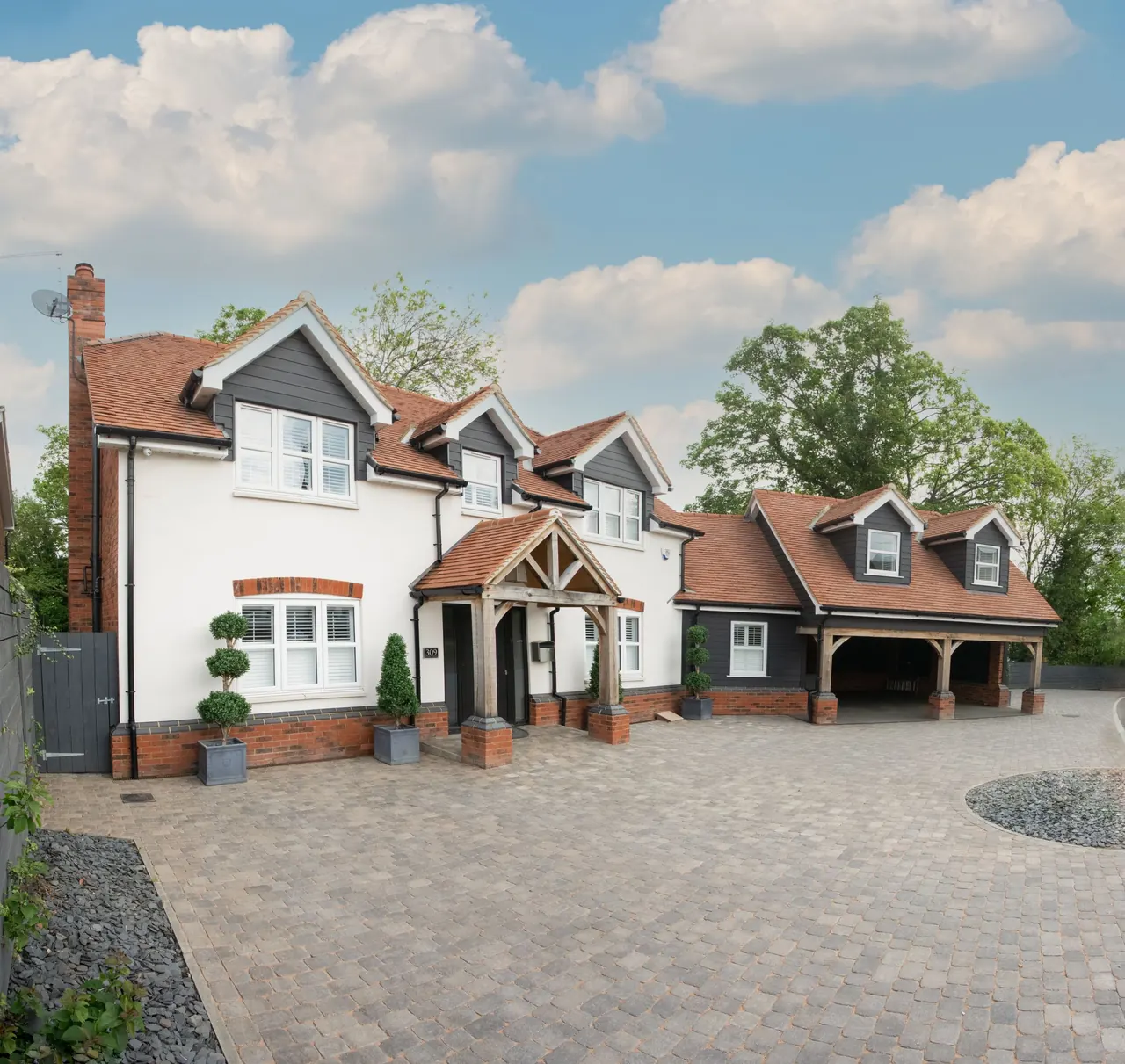
Ornate bargeboards on Lake Road
The pair of very large houses at 6 and 7 Lake Road, from around 1890, are yellow stock brick under a tiled roof, with ornate timber bargeboards at the half hips and gables. A few streets away, 12 Raymond Road, a house of 1891, has a slate gable facing the street with an ornate bargeboard.
Decorative bargeboards are carved or fretted timber on the most exposed edge of the roof. Paint fails first along the bottom edge and around the cut-outs, water gets into the end grain, and rot starts where the board is fixed to the gable. A board in that state can often be saved by cutting out the rotten section and splicing in a new piece to the same profile. Swapping a carved bargeboard for a plain uPVC one changes how the house looks. 12 Raymond Road is inside the conservation area, while 6 and 7 Lake Road were only proposed for inclusion in 2005, so check the current boundary with Merton before changing either.
Because the fascia carries the gutter, we usually look at both together. Our page on gutter installation in Wimbledon covers the gutter side, and when a house is being re-roofed, the scaffold for a Wimbledon roof replacement is the natural time to renew the roofline too. Where the boards rotted because a gutter kept overflowing, our blocked gutter repair page deals with the cause.
Frequently asked questions
The gutter on my Mansel Road semi is pulling away at one end. Is that the fascia?
Often. When brackets pull out, the board behind them has usually gone soft. We check the fascia along the whole run, then either repair the bad section or replace the board before the gutter goes back up.
My Raymond Road house has open rafter ends instead of a fascia. Can uPVC go over them?
It can be done, but it would hide an original feature of the house and change its look in the conservation area. Repairing the rafter ends is usually the better route, and we tell you which ones need it.
Can the rotten end of an ornate bargeboard on Lake Road be repaired rather than replaced?
Often, yes. If most of the board is sound, the decayed part can be cut out and a new piece spliced in to the same pattern, then painted to match. We check the fixings into the gable at the same time.





