



 Google reviews

Fascia rot behind the gutters on Victory Road
North of Merton High Street, on Victory Road, Hamilton Road and Hardy Road, the terraces have plain eaves, often with a brick dentil course below. The fascia is usually a plain board, and rot tends to start behind the gutter brackets, where water from a dripping joint runs down the back of the gutter and sits against the timber. On a terrace the board also meets the neighbour's at the party wall, so we make a neat finish at each boundary.
A sagging gutter is often the first sign that the board behind it has gone soft. If your gutters need replacing too, the gutter installation page covers that side, and regular gutter cleaning stops new boards getting soaked.
Gabled bays and bargeboards off Melbourne Road
Merton Council's South Wimbledon character study describes the Edwardian terraces on Shelton Road, Mina Road, Branksome Road and parts of Melbourne Road as two storeys with double square or canted gabled bays and bargeboards, with rendered fronts and timber beam decoration. Every one of those gables has two bargeboards running up its edges, and some have timber detailing in the gable itself. Add the fascias along the eaves and the soffits under them, and a single house has a long run of painted timber facing the weather.
Bargeboards fail from the top and the bottom. At the apex, water gets into the joint between the two boards. At the foot, where the board meets the eaves, it sits on end grain and soaks in. Paint flakes, the timber darkens and goes soft, and eventually a section drops or pulls away from the gable. Because these gables face the street, it is also the most visible part of the house.
The council's guidance for the area asks that alterations are informed by the original detailing and materials. A shaped timber bargeboard replaced with a flat white board changes the look of the whole gable, so where most of the original is sound we repair or replace the damaged section on its own. Where it has gone, we talk through replacement options and how close each gets to the original profile.
Tile hanging on Milner and Brisbane Roads
On Milner Road and Brisbane Road, and on a number of houses on the Melbourne Road streets, the study notes red tile hanging. Where hanging tiles run up to the eaves or the gable, the fascia and bargeboard sit against them, and replacing a board means lifting and refixing the top courses of tiles. We allow for that in the quote and replace any broken tiles with matching ones.
1970s houses on Wilmore End
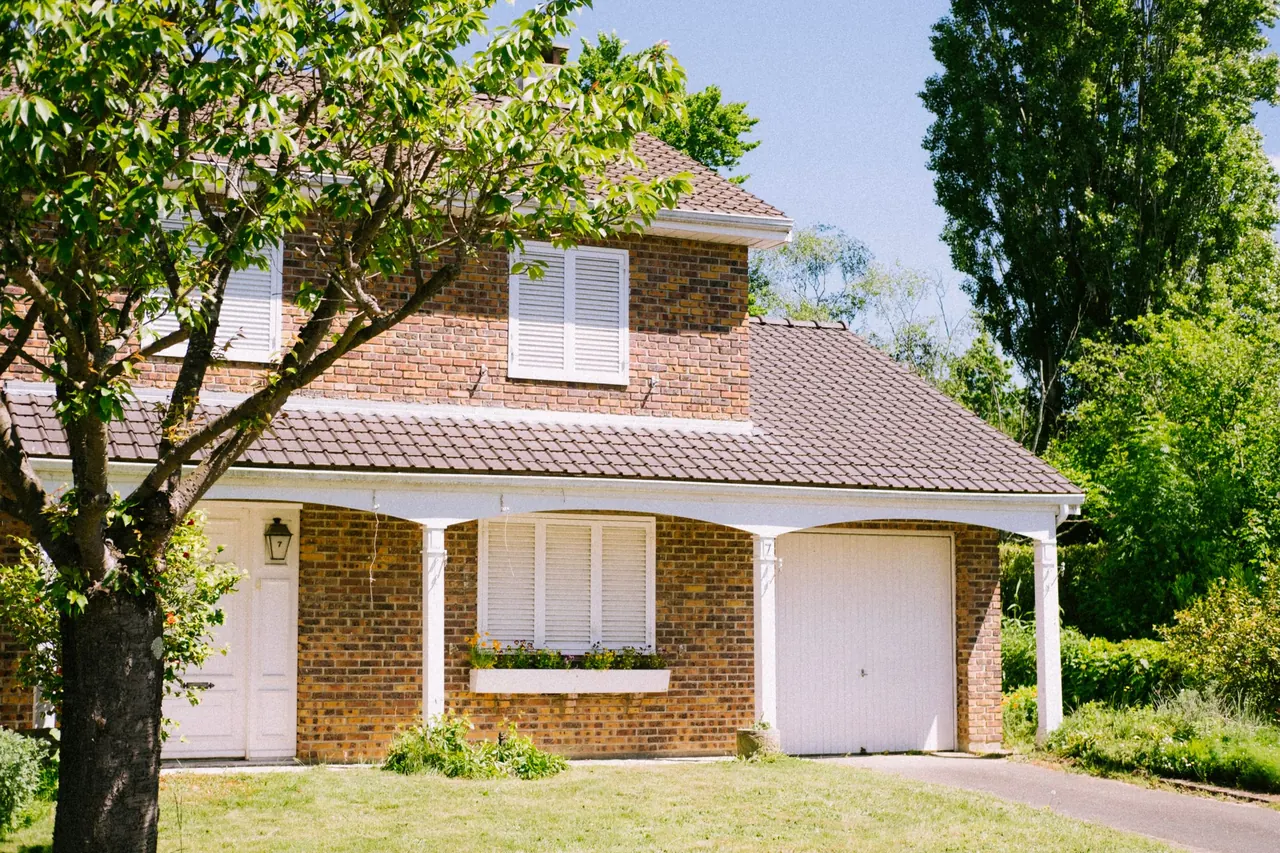
The late 1970s pairs and blocks of four on Wilmore End are a different job. Where the eaves run long and straight across a pair or block, the timber boards of that era may have been painted many times over. Replacing them in uPVC is straightforward on houses like these, and the finish can be matched to the white cladding. Ventilated soffits help where there is no other eaves ventilation.
As a guide, Checkatrade's fascia and soffit cost guide gives £1,100 to £1,900 for new uPVC fascias, soffits and guttering on a small terraced house, front and back. Gabled bays add bargeboards on top of that. The main fascias and soffits page has more on materials.
Frequently asked questions
Can the decorative bargeboards on my Shelton Road gables be kept?
Often, yes, if the main length is sound. A damaged section can sometimes be repaired or replaced on its own, which keeps the rest of the original board in place. If the board has rotted through along its length, we discuss replacements before anything is removed.
My Milner Road bay has tile hanging right up to the eaves. Does that change the job?
A little. The top courses of tiles have to come off so the new board can be fixed and the tiles refitted over it. We allow for that and for matching any tiles that break.
Are uPVC boards right for my Wilmore End house?
On houses of that age and style they usually suit well, with long straight runs and no decorative timber to keep. We check the rafter ends behind the old boards first, because uPVC fixed to rotten timber will not last.





