



 Google reviews

Old House Close and Cambisgate
Most of Wimbledon Village is old, but Merton's Wimbledon North character assessment records a layer of post-war housing among the older streets. Old House Close and Cambisgate off Church Road date from the 1960s, as does a neo-Georgian crescent at 87-101 Church Road, and 27-31 Belvedere Grove are 1970s houses.
Old House Close is a set of staggered neo-Georgian terraces in red brick with stone quoins, prominent tiled roofs, columnar porches and, on some houses, small original front dormers. Cambisgate is a three storey scheme set in landscaped grounds. Neither has the parapets, hopper heads or ornate eaves of the High Street, and their eaves are plain and regular.
The staggered terraces in Old House Close need a little thought. Each step in the building line breaks the eaves, so a terrace becomes a series of runs, one per house or pair, with a corner or stop end at each step. A seamless gutter removes the joints along each run, and we plan the outlets so each section drains cleanly.
The curve at 87-101 Church Road
The 1960s crescent at 87-101 Church Road follows a curve. Seamless aluminium is formed in straight lengths, so on a curved frontage the run is broken into straight sections with jointed angles, and on a tight curve the benefit is smaller. We look at the frontage and tell you how many joints the finished run would have before you decide, so you can weigh it against a standard sectional gutter.
Cambisgate's three storeys bring a different question: height. A gutter on a third-storey eave is costly to reach for repairs, so fewer joints along each run means fewer places that will ever need someone to go back up. Getting the outlets in the right place matters more than usual too, because a downpipe moved later means access again.
The 1970s houses at 27-31 Belvedere Grove are a smaller group among the clay roofs of the Belvedere estate. Their gutters face the same street as Edwardian neighbours, so colour matters: aluminium comes in a coated finish and can be matched to darker joinery rather than defaulting to white.
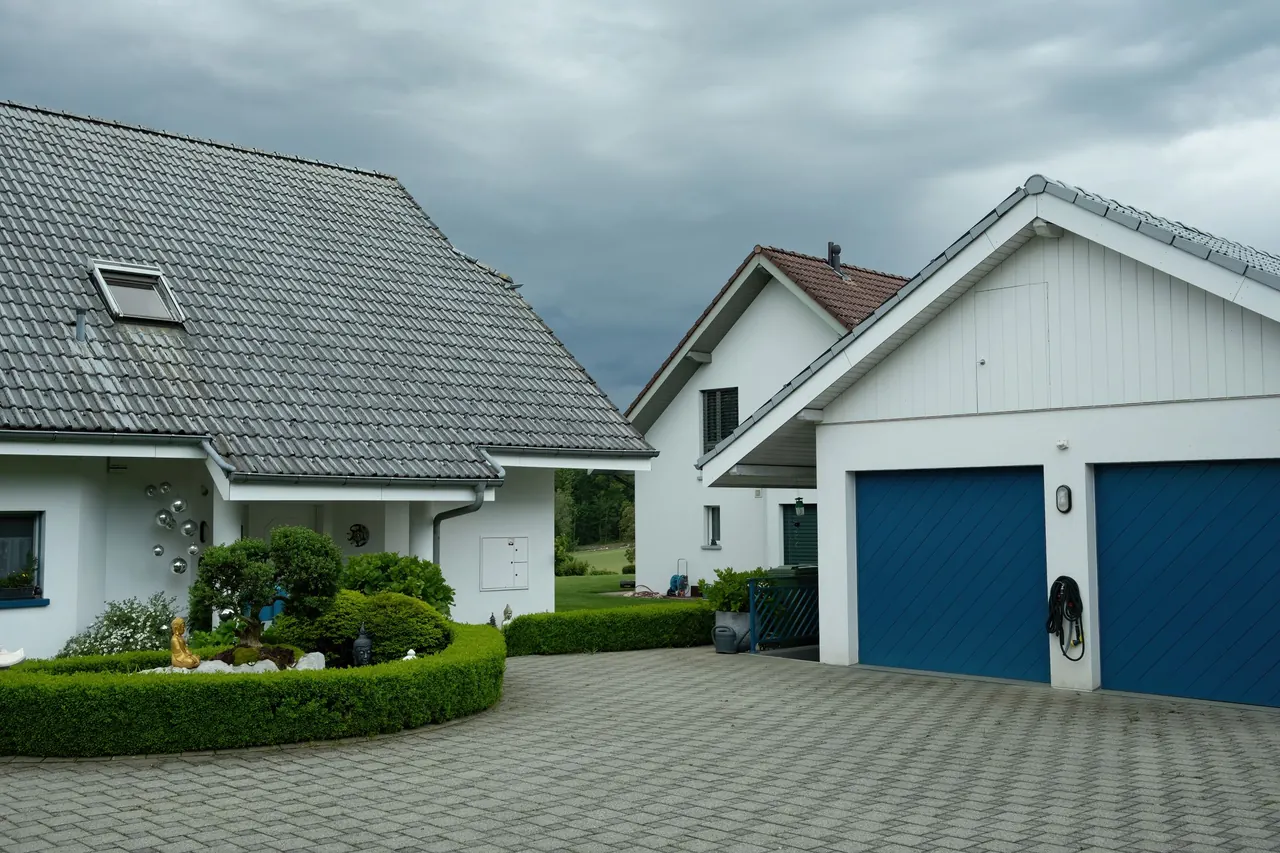
Where the older Village calls for something else
Seamless aluminium is not the right answer for the period buildings around these streets. The listed cottages in Belvedere Square, a listed shop front on the High Street, or a parade with its gutter behind a parapet all call for matching the original rainwater goods, which is covered on our page for gutter installation in the Village.
On the post-war houses, the fascia has to be sound to carry the brackets, and soft timber is replaced first, as set out on our Village fascias and soffits page. MyJobQuote's guttering guide gives metal gutters such as aluminium a life of up to 50 years with care, against up to 25 for uPVC.
Our main seamless gutter installation page covers the system in more depth. For the town-centre flats and blocks lower down the hill, see seamless gutters in Wimbledon.
Frequently asked questions
Do the staggered terraces in Old House Close suit seamless gutters?
Yes, with a corner or stop end at each step in the building line. Each house or pair gets its own one-piece run, so the joints that usually leak along a straight length are gone.
Can a seamless gutter go along the curved front of 87-101 Church Road?
Not as one curved piece. The run is made in straight sections joined at angles to follow the curve. On a gentle curve that still leaves far fewer joints than a sectional system. On a tight one, we may suggest a standard gutter instead.
Can a 1970s house on Belvedere Grove have dark seamless gutters?
Yes. Aluminium comes in coated colours, so the gutter can match dark window frames or the fascia rather than standing out in white against the clay roofs of the older houses next door.





