



 Google reviews

Lancaster Place and the chimneys already lost
The terrace of narrow cottages at 1-8 Lancaster Place dates from before 1865. Merton's 2006-07 character assessment describes them as stock brick with hipped and ridged slate roofs, and notes that some of their chimneys have been removed. The same assessment proposed bringing the erection, alteration or removal of chimneys under planning control.
As far as Merton's current list of conservation areas shows, it stayed a proposal: no Article 4 direction is listed for Wimbledon North, or for Wimbledon Village, the conservation area Lancaster Place is now mapped in. But it shows how much the stacks matter to the look of these streets. On a short terrace, each lost chimney is noticeable, and a stack is much cheaper to keep than to rebuild later.
Old stacks on cottages like these tend to fail from the top down. The flaunching round the pots cracks, water gets into the brickwork, the pointing washes out on the weather side, and the lead where the stack meets the slates lifts. Left long enough, the top courses loosen and the stack looks like a candidate for removal.
Patchy pointing, and how to avoid it
The same assessment notes that some of the Lancaster Place cottages have been re-pointed over time, leaving the terrace patchy. That is a common result of using whatever mortar is to hand: hard grey cement pointing on soft old stock brick looks wrong and can trap water in the brick behind it.
When we repoint a stack here, we rake out the failed joints and fill them with a mortar matched in colour and joint profile to the original as closely as we can, so the repair does not stand out from the street. We would rather repoint the whole weather face evenly than patch the worst joints and leave a stripe.
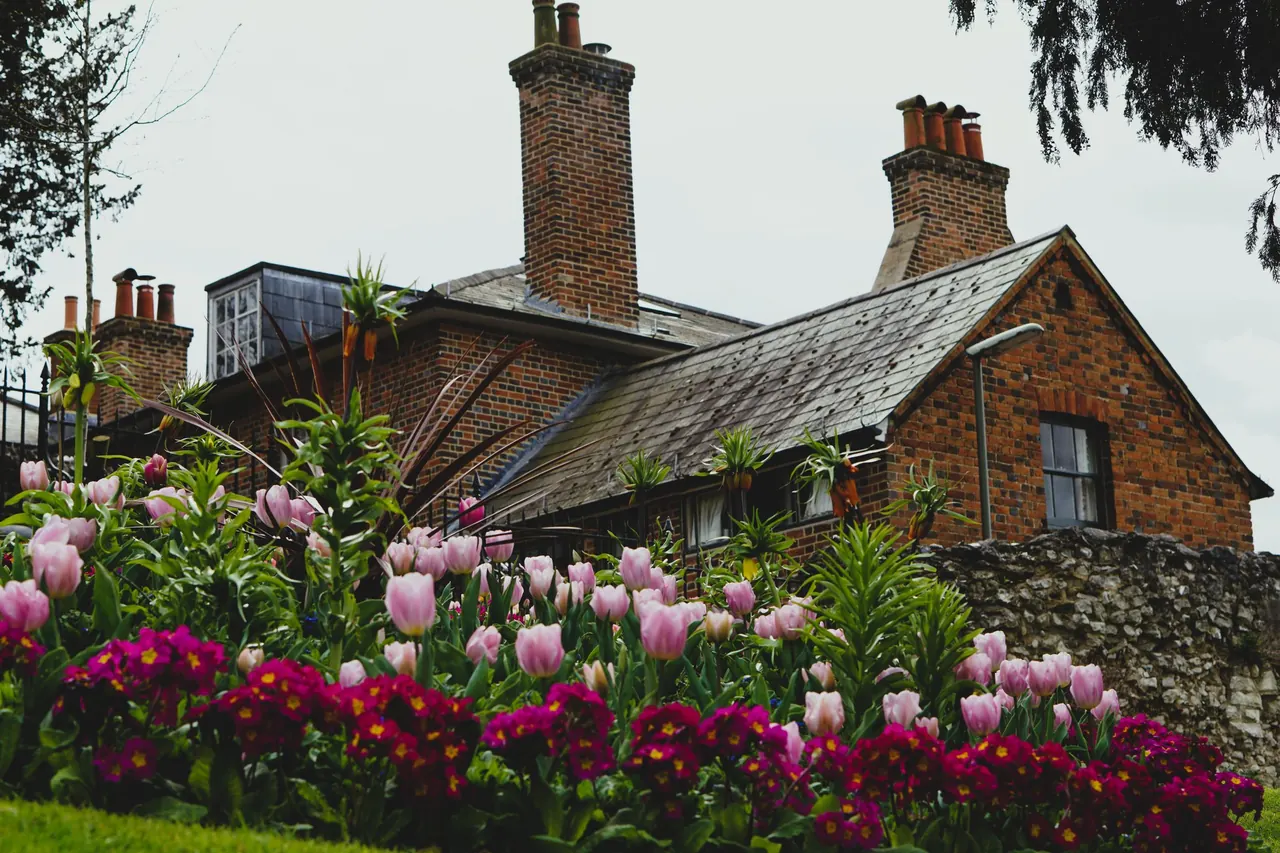
Stacks on Belvedere Square and Eagle House
Belvedere Square, begun in 1864, is a listed group of polychrome brick cottages with steep hipped slate roofs, dormers and prominent chimneys. On the High Street, Merton's design guide describes Eagle House as having tall moulded polygonal chimneys between its bays, and its assessment of Belvedere Grove notes tall chimneys on the houses there.
Stacks like these are part of what is protected, especially on listed buildings. Repairs keep the brick, the pointing profile and the lead lines as they are. Anything more than a like-for-like repair to a listed stack, such as rebuilding ornamental brickwork, needs consent, and we raise that before work starts.
Seeing a three storey High Street stack
On the High Street, a stack can rise from a roof three or four storeys above the pavement, so lead that is set into the mortar joints, flaunching that holds the pots firm and a cap on an unused flue all matter more than usual. Smaller jobs can sometimes be done from the roof with roof ladders and safety equipment; larger work above a pavement usually needs scaffolding, and we explain the access before we price.
Most Village stacks are too tall to judge from the pavement, so we usually photograph every face by drone first, as part of a Village roof inspection. For a sense of scale, MyJobQuote's chimney leadwork guide gives national guide figures of £150 to £250 for a patch repair to the flashing and £350 to £460 for full replacement, before any scaffolding. Our article on chimney flashing problems in Wimbledon explains what you can spot from the ground, slates round the stack are covered under our Village roof repair page, and the main chimney repairs page has more on each job.
Frequently asked questions
Does Merton's old chimney proposal stop me altering the stack on my Lancaster Place cottage?
The proposal to bring chimney alterations under planning control was not made into an Article 4 direction, according to Merton's current list. Lancaster Place is still in a conservation area, though, so check with Merton before taking down or changing a stack.
Can you match the old pointing on a stack in Lancaster Place?
We match the mortar colour and joint finish as closely as we can, and repoint the whole face rather than odd joints, so the stack does not end up patchy like some on the terrace already are.
Can the chimneys on a listed Belvedere Square cottage be repointed?
Yes, like-for-like repointing in a matching mortar is normally repair work. Rebuilding a stack, changing its height or taking it down is different on a listed building, and needs listed building consent from Merton first.





