



 Google reviews

One stack, two houses on Dunmore Road
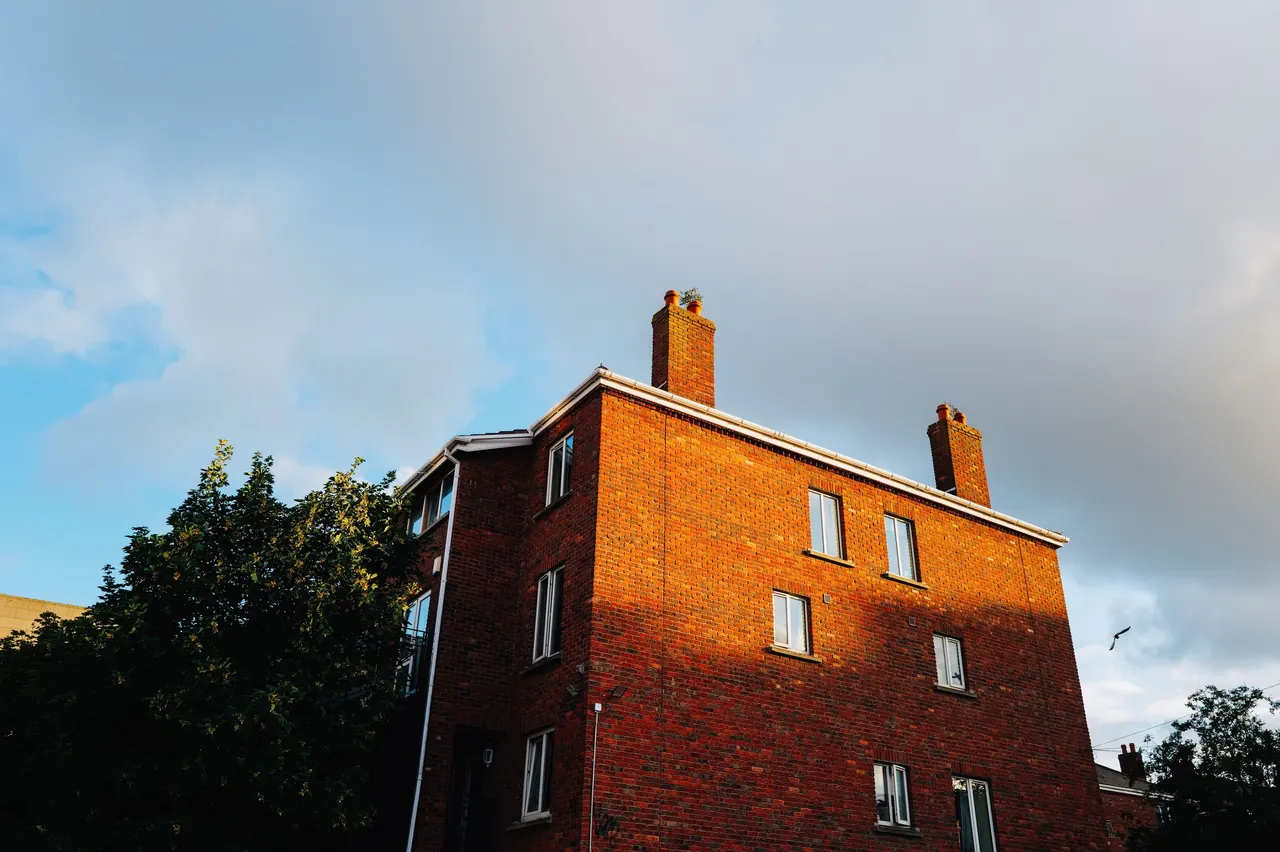
Dunmore Road is one of the smallest conservation areas in Merton: 41 houses, built in about 1907 on land sold off from the estate of Thomas Devas after his death in 1900. All but one are semi-detached. Merton's Dunmore Road character assessment describes the roofs as topped by chimneys on the line of the party walls, with both the gable ends and the party walls projecting above the roofline and capped with red tiles.
That arrangement puts a lot of joints in one place. The stack has lead flashing where it meets each slope. The party wall rising beside it has its own tile capping and its own joint with the roof. A crack in any of them lets water into the wall, and the damp can show in either house, because it follows the brickwork rather than the boundary. Repairs done on one half only often leave the leak where the two halves meet, so it is worth speaking to next door before work starts and pricing the stack as one job.
The tiled roofs themselves carry red ornamental finials on the ridges, and the pairs have steep front gables over the bays. Scaffolding a stack in the middle of a pair, with very shallow front gardens, needs planning. Some work can be done from roof ladders, and we decide which after seeing the stack.
Party walls through the slate on the Lambton Road streets
A short walk west, the Lambton Road conservation area has the same idea in slate. Its appraisal lists party walls and flank walls projecting through the roof planes as a common detail, and describes a strong rhythm on Pendarves, Kenwyn, Rosevine, Trewince and Tolverne Roads set by the gables, the bays, the chimneys and the party walls breaking the line of the roof. Where a stack sits on a party wall it serves both houses, and on the end of a terrace a flank wall standing up through the slope adds another joint to keep sealed.
Stacks of this age were built in soft mortar, and a century of weather on an exposed stack opens the joints near the top first. Once water gets into the brickwork it freezes and pushes the pointing out, then the flaunching around the pots cracks, and pieces start turning up in the gutter. A leak that looks like the chimney can also be the slope beside it, so our Raynes Park roof repair page covers the slate and party wall joints that sit next to the stack.
Flashing, pointing and the top of the stack
The work on these chimneys usually comes down to four things. Lead flashing that has lifted, split or pulled out of its joint is re-dressed or replaced, and old sealant patches come out, because they look fine from the street and let water in during heavy rain. Loose or crumbling mortar between the bricks is raked out and repointed. The flaunching, the mortar bed around the pots, is renewed if it has cracked. Pots are reset if they have worked loose, and flues no longer used get a ventilated cap or cowl so rain and birds stay out without trapping damp.
Before quoting, we can photograph the stack by drone, so you and your neighbour see the same pictures of both halves and we know what access the job needs. On cost, MyJobQuote's chimney leadwork guide puts full replacement at £350 to £460 without scaffolding and around £700 to £920 when scaffolding is needed. Our article on chimney flashing problems in Wimbledon homes covers houses of the same age, the chimney maintenance guide lists yearly checks, and our chimney repairs service covers stacks of every age.
Frequently asked questions
The red tile capping on my Dunmore Road party wall has cracked. Is that part of a chimney repair?
It is usually done in the same visit. The capping keeps rain out of the top of the party wall right next to the stack, and a cracked or loose tile there lets water into the same brickwork as a failed flashing would.
The lead on my Pendarves Road chimney has been patched with sealant. Is that good enough?
Rarely for long. Sealant shrinks and lets go, and it hides whether the lead underneath has split. We take the old patch off, look at the lead, and either re-dress it into the brickwork or replace it.
Can you look at my Kenwyn Road stack by drone before anyone decides on scaffolding?
Yes. The photos show the flashing, the pointing, the flaunching and the pots close up. From them we can tell whether ladders will do or a scaffold is needed, and the access goes into the quote.





