



 Google reviews

A century of weather on the original pots
The Apostles Residents' Association records that chimney stacks are intact on all but a very small number of houses on the estate, and that most still carry their original clay pots. On a house built in the 1890s or 1900s, that means brickwork, mortar and pots that have taken well over a century of weather. A stack that no longer serves an open fire is easy to forget about until something shows indoors.
The faults on these stacks follow from their age. Mortar weathers out of the joints near the top, where the stack is most exposed. The flaunching, the sloped mortar bed holding the pots, cracks and lets water into the top of the stack. An old pot can split or work loose. And the flashing where the stack comes through the slates or tiles lifts, especially on a roof that was re-covered in concrete tiles later on and had its leadwork disturbed. Indoors, the signs are a stain in the loft at the base of the stack or a damp patch on the chimney breast in a bedroom.
Where a stack sits on the line between two houses, its flues serve both, and a crack in the flaunching affects both households. We show you which parts are on your side, so you and your neighbour can decide how to handle the rest.
The rebuilt stacks at the Kingston Road ends
Bombing in the Second World War destroyed houses at the northern ends of Carlton Park Avenue, Vernon Avenue, Dupont Road and Sydney Road, and those plots were rebuilt in red brick in the 1950s. Merton Council's character study also records 1950s blocks on Chestnut Road, Vernon Avenue and Carlton Park Avenue. These houses have their own stacks, built half a century after the terrace beside them, in different brick, and they age on their own timetable.
A post-war stack is not automatically in better shape. It has now stood for around seventy years, and the junction where a 1950s roof meets the older terrace next door can complicate the flashing at the stack. We treat each one on its own merits and match any repointing to the brick of that block, not the yellow stock brick of the Edwardian houses.
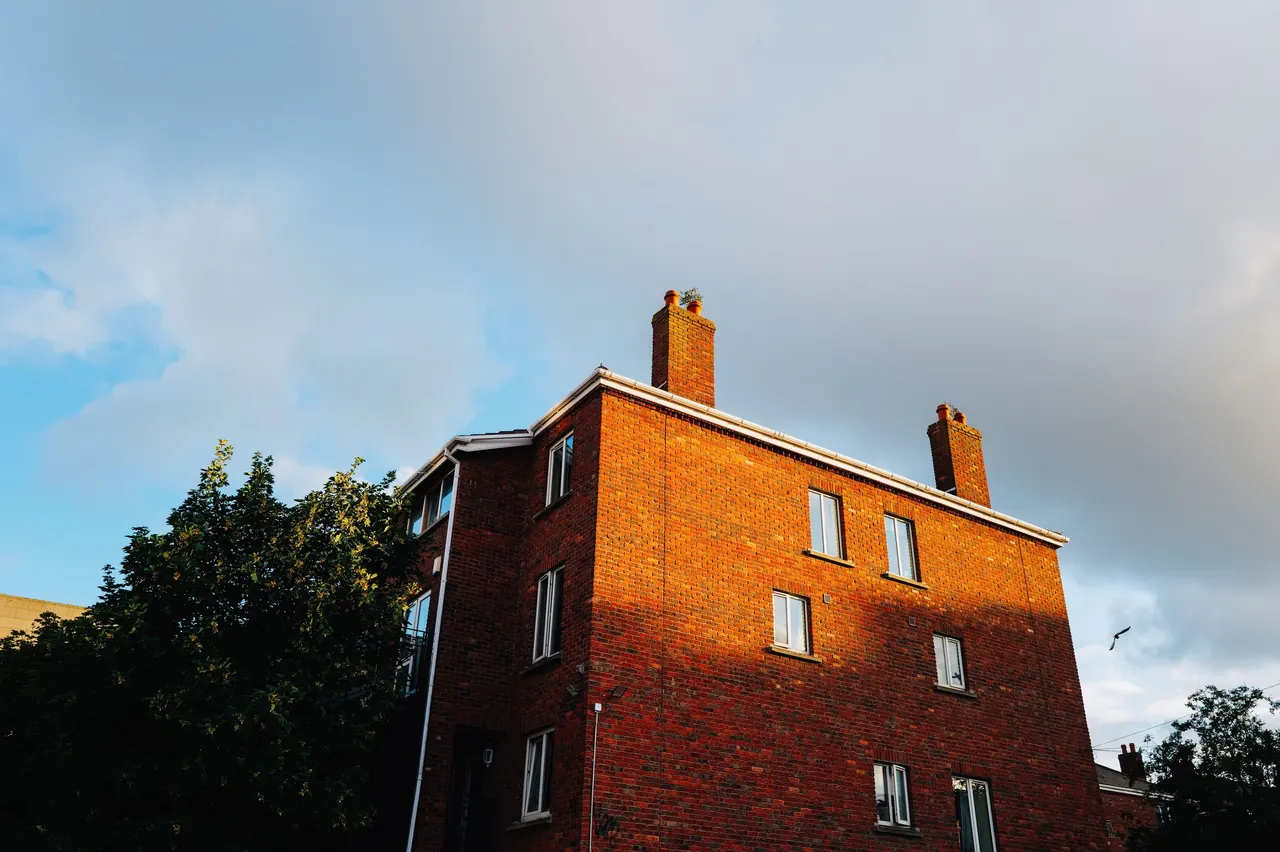
Working on a stack above a small front garden
The houses sit behind small front gardens, so a falling pot or a lump of flaunching can land on a path or the pavement. A pot that leans, or mortar turning up in the front gutter, is worth acting on quickly. The tile-capped party parapets that rise above the roof line on every Apostles road sit right beside many stacks, and their capping is worth checking on the same visit, as our Bushey Mead roof repair page explains.
We start with drone photos of every face of the stack, including the back face that is hidden on a mid-terrace house. Small jobs, such as resetting a pot, renewing flaunching or refixing a length of lead, can often be done with roof ladders and the right safety kit. Re-leading a whole stack or rebuilding the top courses needs scaffolding, and we say so before you agree to anything. As a guide, MyJobQuote lists a flashing patch repair at £150 to £250 and full chimney leadwork at £350 to £460 without scaffolding. Our main chimney repairs page explains each repair, and our chimney maintenance guide covers yearly checks.
Frequently asked questions
One of the original clay pots on my Edna Road stack has cracked. Can it be replaced to look like the rest?
Yes. We take the cracked pot down, source a clay pot of a similar size and profile, and bed it in fresh flaunching. If the others on the stack are loose too, we reset them at the same time.
The stack on my 1950s house on Dupont Road looks different from next door's. Does it need different work?
The repairs are the same kind, but the materials differ. The brick, mortar colour and pot style belong to the post-war rebuild, so we match those rather than the older terrace.
Can you see the back of the stack on my Clifton Park Avenue house without scaffolding?
Yes. The drone photographs all four faces, the pots and the flaunching from above, so you can see the condition before any access is booked.





