



 Google reviews

Bargeboards and half-timbering on Dunmore Road
Merton's Dunmore Road character assessment says the road was protected mainly for the elaborate detailing of its houses and how little that detailing has been altered. Each pair has canted bays on both floors topped by a steep gable, and the gables are rendered and framed in timber bargeboards. On alternate pairs the gable is set back in line with the front wall, with a separate lead roof over each bay and vertical timber slats in the gable to give the look of half-timbering. Many of those slats have been painted to blend with the render.
The porches are timber too, with ornamental trelliswork in the top rail and bottom panels under red tiled roofs. Together that is a lot of painted timber at the roof edge, and it lasts well as long as it stays painted. When it doesn't, water gets in at the joints and the bottom ends of the bargeboards, where they meet the eaves, and the rot spreads up from there.
Cut bargeboards on Lambton Road, beams on Stanton Road and Coombe Lane
Dunmore Road is not the only street with decorative boards. The Lambton Road conservation area appraisal records ornately cut timber bargeboards on the front and side gables of one group of houses, ornate bargeboards with a swag pattern on the side gables of 63 Lambton Road, built in 1882, and timber finials on the front gables at 17 to 35 Lambton Road. In the Worple Road character area, Merton's Raynes Park character study describes pairs on Stanton Road sharing a gable with timber beam decoration, and on the 1930s houses south of Coombe Lane it lists timber beam decoration among the recurring features.
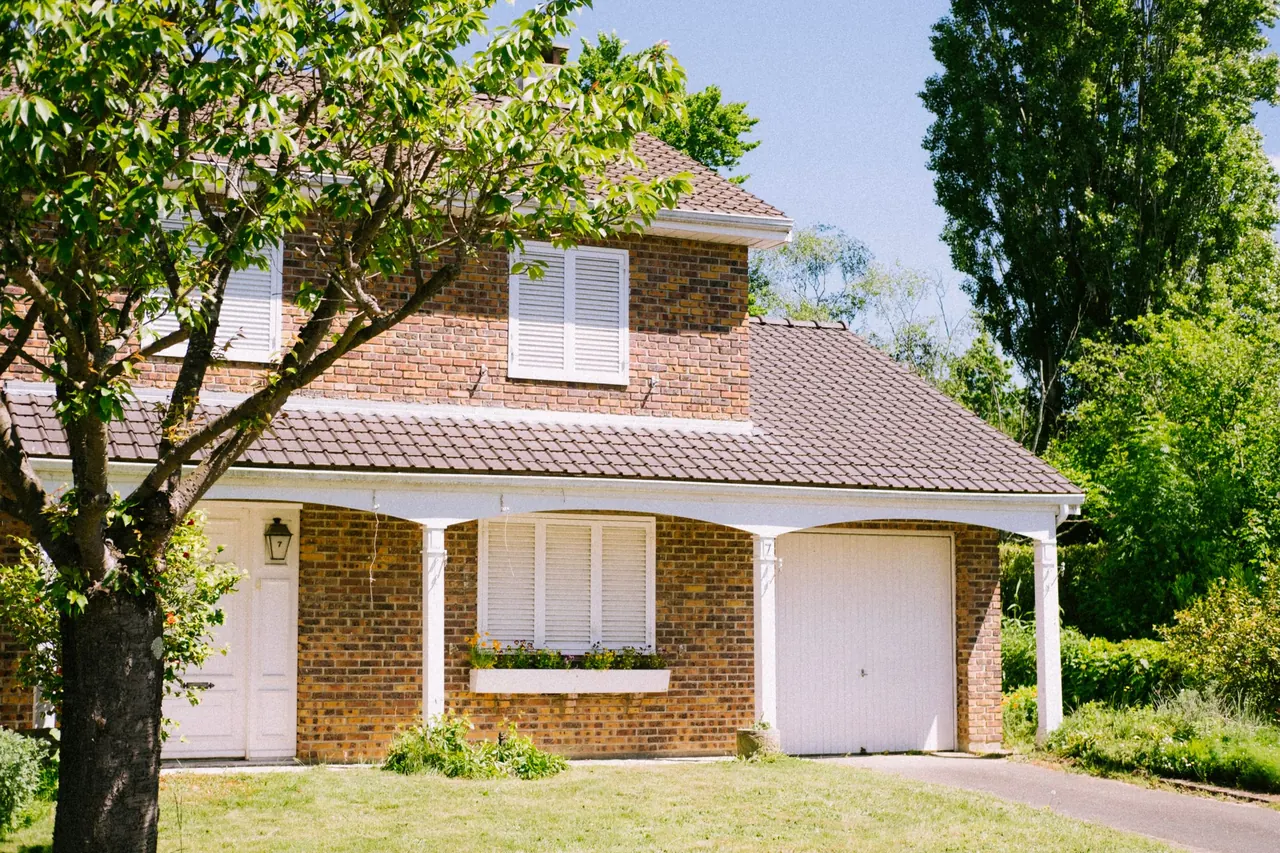
The 1930s and post-war houses on Coombe Lane, Firstway and Camberley Avenue are different again: their roof edges are mostly plain fascias and soffits, and on one side of Camberley Avenue the eaves are deep and overhanging, on decorative brackets, which means wide soffits and long fascia runs.
Repairing the timber, or replacing in uPVC
On a decorative bargeboard in the Dunmore Road or Lambton Road conservation areas, the first question is whether it can be kept. A short rotten length at the foot of a board can often be cut out and replaced on its own, leaving the sound, shaped timber above in place. Merton's character study asks that alterations in the Lambton Road area follow the original detailing and materials, and the Dunmore Road assessment credits that road's protection to how little its detailing has been altered. A plain uPVC board in place of a cut or half-timbered one goes against both. uPVC may not be acceptable there, so if a full replacement is unavoidable, talk to Merton's conservation officer before choosing a material.
Capping, where a thin uPVC board is fixed over the old timber, is cheaper but only works over completely sound timber, and on a decorative board it hides the very detail that gives the house its character. MyJobQuote's capping guide gives about £800 as the average for a three-bed semi, as a national figure.
On the plain eaves of a 1930s or post-war house, full replacement in uPVC is the long-term answer, in white, black, grey or woodgrain. We take the gutters down, check the rafter ends behind the old boards and deal with any rot, then fit new fascias and soffits, with ventilated soffits where the roof space needs air. If the gutters are tired, our page on new gutters in Raynes Park covers replacing them at the same time. If water is running down the wall behind a gutter, our article on water leaking behind gutters shows how a failing fascia gives itself away. Board sizes, colours and venting are on our main fascias and soffits page.
Frequently asked questions
The bargeboard on my Dunmore Road gable is rotten at the bottom end. Does the whole board have to go?
Not always. If the rot is confined to the bottom length and the shaped section above is sound, that length can be repaired or replaced on its own, keeping the original shaped section. We check how far the rot goes before suggesting anything bigger.
Would Merton accept uPVC bargeboards on a house in the Lambton Road conservation area?
Possibly not on a decorative gable, for the reasons above. Ask the council's conservation officer before committing to a full uPVC replacement there.
The timber trim on my Dunmore Road porch roof is rotting too. Can it be done with the bargeboards?
Usually, if it is the edge board or fascia on the porch roof, since it needs the same repair as the boards above. The trelliswork itself is joinery, and if that needs work we will tell you it is a job for a carpenter.





