



 Google reviews

High Cedar Drive and the 1980s houses
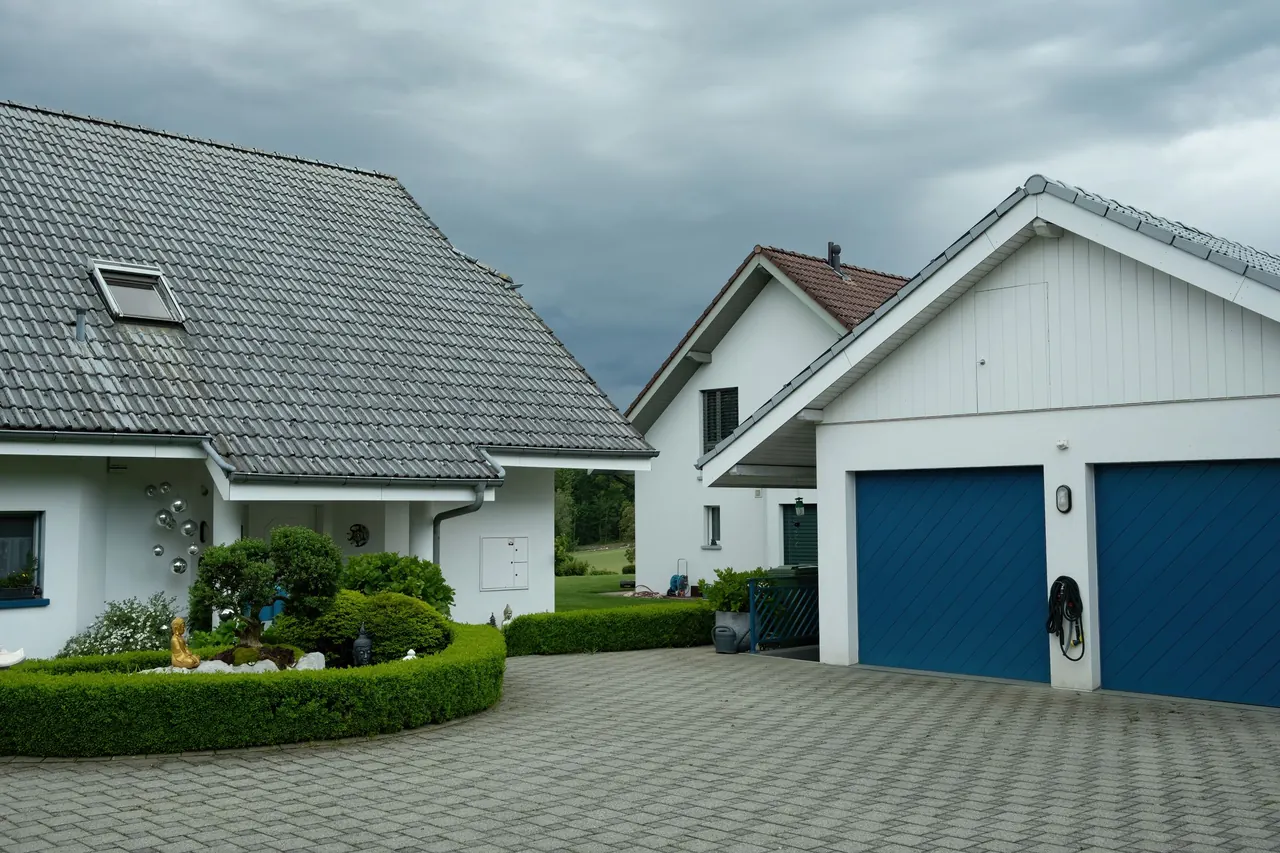
High Cedar Drive was built in 1985 on what were probably the long back gardens of Nos. 19 to 23 Copse Hill: eleven detached two-storey houses, most of them in white render with brick chimneys and detached double garages. Cedarland Terrace on the main road dates from around the same time, two houses went up behind Nos. 7 and 7a in 1991, and more were added down the lane in the 1980s and 1990s.
These houses have simpler rooflines than the Victorian ones. Their eaves tend to run in long, straight lengths without the gables, bays and turrets that break up the older fronts. On a straight eave, a run formed to length leaves out the union joints, and with them the seals that tend to perish first.
High Cedar Drive was left outside the conservation area, so owners there have a free choice of colour and finish. On Thurstan Road and the north side, Merton's Copse Hill design guide prefers cast iron or a lookalike on the front; our Copse Hill gutter installation page sets out that guidance in full.
Long runs at the back of the older houses
Seamless can also suit the back of a Victorian house on Thurstan Road or the north side. For those streets the Copse Hill design guide accepts plastic on rear and secondary walls, and describes powder-coated aluminium as looking very similar to cast iron, so an aluminium run at the back is a step up from plastic, as long as it is kept separate from any cast iron on the front. The listed villas on the south side are a different matter, covered below.
Detached garages are another good fit. A garage with a single straight eave needs one run and one outlet, which is about as simple as guttering gets.
A seamless run needs a sound board to fix to. If the fascias are tired or soft, our fascias and soffits service replaces them first so the brackets hold.
Thurstan Road fronts and the listed villas
There are places on Copse Hill where we would steer you towards a standard system instead:
- Thurstan Road fronts. The paired gables break each front into short lengths with many corners. Seamless removes joints from straight runs, not corners, so the benefit is small, and the council's guide prefers a traditional look on the street side.
- The listed villas. On the Grade II pairs at Nos. 15/17 and 19/21, No. 23 and Colbyfield, like-for-like is expected, front and back, and a change of material needs listed building consent.
- Under the biggest trees. If a falling branch badly damages a seamless run, the whole length usually needs replacing rather than one short section.
When it does suit, we measure the eaves precisely, check the fascias and plan where the downpipes go. Each run is then formed to the measured length, often on site, fixed at the right bracket spacing with a fall towards the outlet, and tested with water. On the 1980s houses that usually means taking down the old gutters, checking the boards they were fixed to, and fitting the new run at the right fall. How the runs are formed on site is explained on the seamless gutters service page.
Frequently asked questions
Would seamless suit the long eaves of the Holmhurst flats?
The 1976 block that replaced Holmhurst has monopitch roofs, which usually means long, straight eaves, so it is the kind of roofline seamless suits. A block of flats is a decision for the freeholder or managing agent, and we can measure up and quote to them.
Can a seamless run be formed on the narrow lane off Copse Hill?
The runs are often formed on site from a coil, which needs room to set up near the house. On the narrow lane we plan where that can happen before the day, so the lane is not blocked for longer than necessary.
Do seamless gutters suit the 1991 houses behind Nos. 7 and 7a?
It depends on the roofline. Those houses have rendered gables, so some eaves are short. Where there is a long straight run, seamless works well; on the gable ends a standard system may be simpler. We will measure and show you where the joints would fall either way.





