



 Google reviews

Where next door's roof meets yours on Thurstan Road
In a Thurstan Road cottage, a damp patch high on a bedroom wall, right against the party wall, usually has its cause on the roof. These houses went up in the early 1870s with slate roofs and projecting party wall parapets between each pair, so every roof stopped at a brick upstand of its own. Merton's character assessment records that the houses in the road have since been re-roofed in concrete pantiles and the parapets taken off.
Without the parapet, one roof now runs straight into the next across a joint the original builders never had to detail. Merton's Copse Hill design guide mentions problems at the abutments between different materials, and that is where repairs here tend to be needed: pantiles that have crept at the party line, mortar bedding that has washed out, and old flashings or soakers left over from the parapet days.
Because the joint is shared, a repair on one half only can send the water next door. We look at both sides of the line and, if your neighbour agrees, put the whole joint right in one visit. Typical work is resetting slipped pantiles, rebedding ridge and verge tiles, and remaking the valley where a front gable meets the main slope.
Bays, porches and mansards on the north side
Catherine Villas and Marguerite Villas have small bay roofs that run across the front doors as porches. A leak there usually shows as a stain round the front door frame, and a refitted lead flashing where the roof meets the wall is the usual cure.
Cedarland Terrace, built around 1985, has a slated mansard with dormers. The cheeks and aprons of a dormer are a frequent leak point on any mansard. In Cottenham Drive and High Cedar Drive, repairs are more often slipped tiles, ridge mortar and the flashing round brick chimneys. If the stack itself is at fault, our Copse Hill chimney repairs can be done on the same visit.
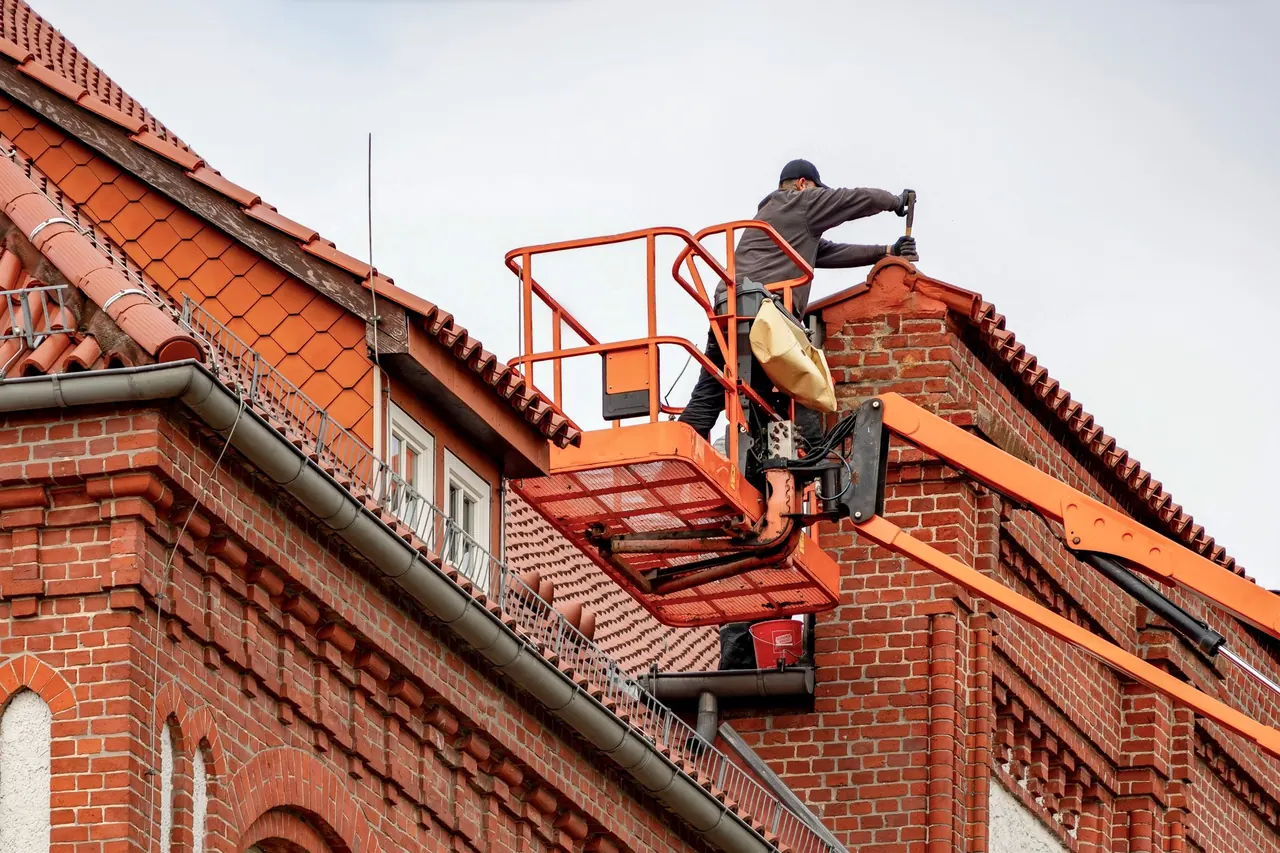
Slate and lead on the tall south-side villas
The south side of the road is a run of tall Victorian houses: the tile-hung gable at No. 3, the turret and bargeboard at Nos. 7 and 7a, and the corbelled eaves of the Grade II Italianate pairs at Nos. 15/17 and 19/21. The UK's prevailing wind comes from the west and south-west, so on roofs this tall the windward slopes take the most weather.
Repairs here are mostly slate and leadwork at height: a slate whose nail has rusted through and slid out, lead at a dormer or abutment that wind has lifted, ridge mortar that has cracked and washed out. On the listed houses even a small repair should match what is there, so we source matching slates rather than substituting something cheaper.
The stain inside is not always below the fault. On a steep three-storey roof, water can run along a batten for a metre before it drips. Where slopes are too high to see from a ladder, a roof inspection by drone gets close-up photos of each one before anyone climbs.
Coatings and cement fillets on the north side
For Thurstan Road, Catherine and Marguerite Villas and the rest of the Copse Hill conservation area, the design guide rules out two common shortcuts. It says bituminous, plastic or other waterproof coatings should not be applied to existing roofs, and it asks for lead flashings rather than sand and cement fillets. Both shortcuts trap water and make the next repair bigger, so we would not use them on any roof, inside the area or out.
If the pantiles themselves are worn out across the whole roof, a patch is no longer the answer, and our Copse Hill roof replacement page explains what the guide suggests at that point.
Frequently asked questions
Someone has offered to spray-coat my Thurstan Road roof. Is that a good idea?
We would advise against it. Merton's design guide says coatings should not be applied to existing roofs in the Copse Hill conservation area, and a coating hides the tiles, traps damp and makes later repairs harder and dearer.
Does a small repair to a listed villa on Copse Hill need consent?
A like-for-like repair in matching slate is normally treated as maintenance. Anything that changes materials or detail on a listed building needs listed building consent, so if we think a repair goes beyond like-for-like we tell you before any work is booked.
How do you reach a three-storey roof on Copse Hill for a small repair?
We find the fault first, so we know exactly where to go. Many small repairs can then be done from roof ladders with proper safety equipment. Higher or longer jobs need a tower or scaffold, and we tell you which before you agree to anything. Our guide to repair or full replacement helps if the quote raises that question.





