



 Google reviews

Broadmead Avenue's sweeping gables
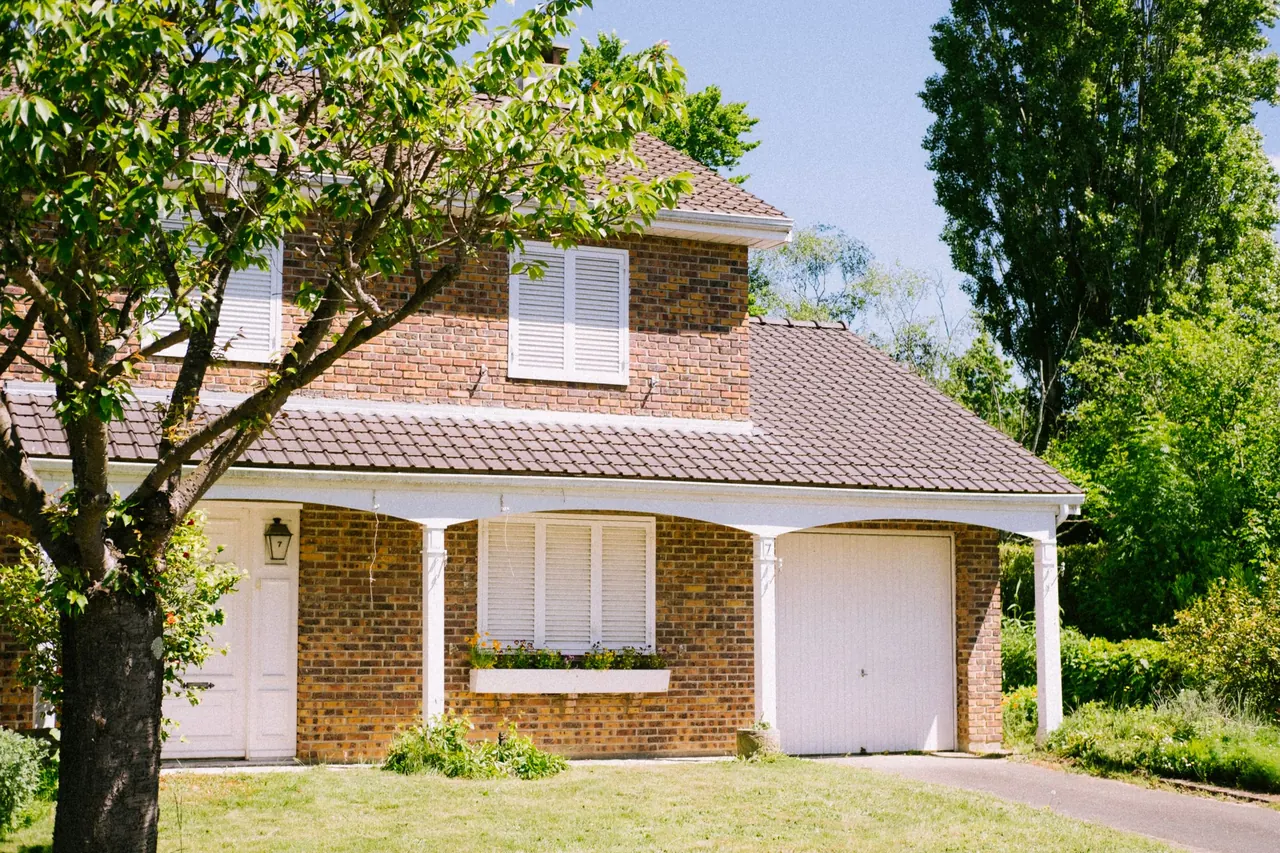
Broadmead Avenue is where the Forest Side estate leans furthest towards Arts and Crafts. Kingston's character study notes its tile-hung, low sweeping gables, where the roof line is carried down lower than on the plain hipped semis. Close by, Columbia Avenue's 1930s semis have Tudor detailing and swept gables, and Idmiston Road has half-timbered mock-Tudor semis.
On a gable like that, the bargeboards are not a thin trim. They run the full length of a long sloping edge, they sit in plain view from the pavement, and together with the tile hanging they set the character of the house. When they rot, it shows, and when they are replaced badly, it shows more.
The low sweep has a practical side too. The foot of the bargeboard and the end of the fascia sit lower than usual, where splashback, shade and leaf litter keep them damp, so that is often where the timber goes first.
Where a low sweep rots first
- paint lifting and timber soft to a screwdriver at the foot of the bargeboard, where it meets the gutter
- the gutter dropping away at the corner because its end bracket has nothing solid to hold
- gaps opening where the soffit meets the wall or the tile hanging
- joints in the bargeboard opening up along a long slope
- a dark stain on the brickwork or tile hanging below the eaves
On these houses, an overflowing gutter is often what starts the rot: water spills behind the gutter and soaks straight into the fascia. Our article on water leaking behind the gutter explains how that happens.
Keeping the Arts and Crafts and Tudor look
A short damaged length of board can sometimes be cut out and replaced on its own. Where the rot runs along most of a board, a full replacement is the better job. Capping, a thin uPVC cover over the old timber, only works if the timber underneath is completely sound, so we check before suggesting it.
Finish is the bigger decision on a front gable. White uPVC on a half-timbered Idmiston Road or Columbia Avenue gable can look stark next to black timbering, so black or a woodgrain foil often sits better. On Broadmead Avenue's tile-hung gables, a colour that matches the windows usually works. Bargeboards on a long sweep need a straight, continuous line, with joints kept to a minimum and set where they are least seen.
Where the soffits are still timber boarding, replacing them with ventilated soffit boards lets air move through the roof space, which helps keep the timbers dry in a roof of this age.
With the gutters, and next door
Fascias carry the gutter, so renewing one usually means taking down the other. If your gutters are old, it is worth pricing them together through new gutters in Old Malden. On a semi the roofline runs straight on to next door's, so we finish neatly at the boundary, and if your neighbour wants theirs done too, one set of access covers both.
Inside the Old Malden Conservation Area, around Church Road and Plough Green, swapping timber for uPVC on an older building changes its look, so check with Kingston Council first. Our Old Malden overview explains where the conservation area runs. For materials and colours in more depth, see the main fascias and soffits page.
Frequently asked questions
The bargeboards on my Broadmead Avenue gable run almost down to the porch. Can they be replaced without spoiling the sweep?
Yes. We follow the existing line of the gable and keep joints to as few as possible, set where they are least visible. The aim is a board that looks like it was always there.
Can new boards keep the black and white look of my half-timbered Idmiston Road semi?
Yes. Black or woodgrain uPVC fascias and bargeboards sit well against half-timbering, and we can match the colour of the existing timbering as closely as the range allows.
Are ventilated soffits worth it on a 1930s Columbia Avenue roof?
Usually. Many roofs of this age had no planned ventilation, and older roofs re-felted later can trap moisture. Ventilated soffits help air move through the roof space and keep the rafter ends dry.





