



 Google reviews

Malden Manor's flats, houses and downpipes
Malden Manor station opened in 1938, and much of the housing around it is post-war. Kingston's character study describes the Sheephouse Way area as mainly post-war council flats and houses set among generous landscaping, with a central core around the station and the parade on Manor Drive North. Four five-storey blocks stand at one end, many flats front Malden Road, and the houses back onto the railway behind wide landscaped verges. South of the line are the 1950s semis of Stroudes Close and the 1990s flats and houses of Percy Gardens.
On buildings like these, a blockage is as likely to sit in the pipework as in the gutter. Water leaves the roof, passes through an outlet, sometimes a hopper head, then down a long downpipe with swan-neck offsets at the top and into a shoe or gully at the bottom. Leaves from the landscaped grounds, moss off the roof and grit from old tiles can lodge at any of those points.
Where water stops on the way down
Outlets and swan-necks. The tight bend just below the gutter is the classic choke point. Leaf mush and moss pack into it, the gutter fills behind, and water spills over at the far end of the run.
Hopper heads on the blocks. Where several pipes or a flat roof drain into a hopper, a single plug of debris stops everything above it. On a five-storey block, an overflowing hopper can soak the wall of several flats at once.
Gullies and shoes at ground level. If the gully at the foot of the downpipe is full of leaves and silt, water backs up the pipe and bursts out at a joint. If the blockage is further down, in the underground drain, that is a job for a drainage company, and we tell you so.
Sags that hold debris. Where a bracket has failed or a fascia has moved, the gutter dips. Debris settles in the low point, and the blockage comes back however often it is cleared until the fall is reset.
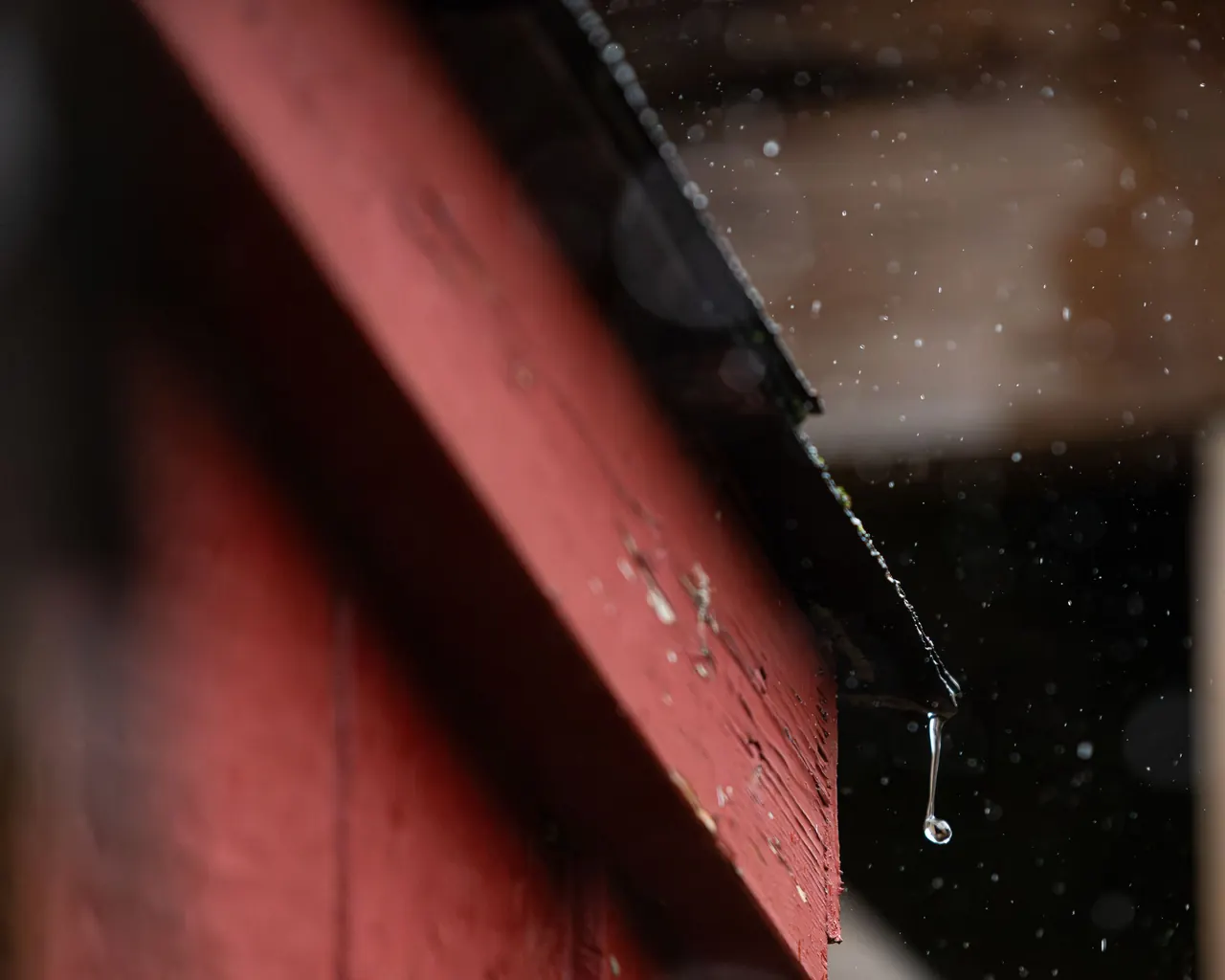
When water is coming indoors
A blocked gutter becomes urgent when water reaches the inside: a damp patch spreading at the top of a wall, water running down inside a window reveal, or a wet ceiling at the eaves. When you ring, say that water is getting in, because that moves the job from routine to urgent.
On the visit we clear the full length of the gutter and every outlet, rod or flush each downpipe through to the bottom, and run water through to prove it flows. Then we look for what the blockage has done, such as bent brackets, a split joint or a soaked fascia, and fix the cause, whether that is resetting the fall, replacing a cracked section or renewing a failed outlet. Which?'s survey of roofers' prices puts clearing all the gutters on the front and back of a house at £75 to £350 excluding VAT, before any repairs.
If the trouble is leaves building up through the year, a yearly gutter clean in Old Malden stops it getting this far. If the gutter is simply too small for the roof, a larger new gutter is the real fix. The main blocked gutter repair page covers causes and signs in more detail.
Shared buildings around the station
On the Sheephouse Way blocks and at Percy Gardens, gutters and downpipes are shared, so a blockage affects several households and the repair is arranged through the freeholder or managing agent. We can report to them directly, and on a tall block a drone flight shows the gutters and hoppers before anyone pays for access.
Frequently asked questions
Water is pouring out of the hopper on our Sheephouse Way block in heavy rain. Who sorts it out?
The freeholder or managing agent, since the hopper and downpipe are shared. Report it with photos and the dates it happened. We can inspect and clear it on their instruction.
The gully at the bottom of my downpipe in Stroudes Close overflows. Is that the gutter's fault?
Not usually. Clear the leaves and silt from the gully grid first. If it still backs up, the blockage is further down in the drain, which needs a drainage firm. If the gutter itself is overflowing too, that part we can deal with.
My downpipe in Percy Gardens disappears straight into the ground. Can you clear it below the surface?
We can clear the downpipe down to where it meets the drain connection. Anything beyond that is in the underground drain and is a job for a drainage specialist, which we will point out if that is where the problem lies.





