



 Google reviews

Open ground by Morden Cemetery and King George's
Morden Cemetery runs along Lower Morden Lane, the Merton and Sutton Joint Cemetery sits off Garth Road, and King George's Playing Fields stretch out from Tudor Drive. Houses that face or back onto this open ground tend to be more exposed to the prevailing south-westerly than houses in the middle of the estate, where rows of semis shelter one another. That is a general pattern rather than a measured one, but it is where storm damage tends to show first.
The London Gardens Trust notes that Morden Cemetery is well planted with mature trees, including the Lombardy poplars along its main drive. So the shelter is patchy rather than absent, and the trees bring their own risk in a storm: snapped limbs, and a weight of wet leaves in the gutters of the houses nearby.
If a gale has opened your roof or water is coming through a ceiling, ring 0330 133 4111. We answer at any hour.
What a gale finds on Lower Morden Lane and Tudor Drive
The shape of the house decides what the wind can get hold of.
- Gable verges on the Tudor-style fronts: the tiles along the edge of each front gable are exposed on one side, and a loose verge can peel back in strong wind along with the bargeboard.
- Hips on the Garth Road semis: a hipped roof has lines of mortar-bedded tiles down each corner. Where the mortar has cracked with age, a gust can lift them.
- Chimney pots: the stack on the party wall is the highest point of the house, and a pot sitting in cracked flaunching can start to lean.
- Dormer tops: wind can catch a loose edge trim on a flat dormer roof and peel the covering back, which lets rain straight into the loft room.
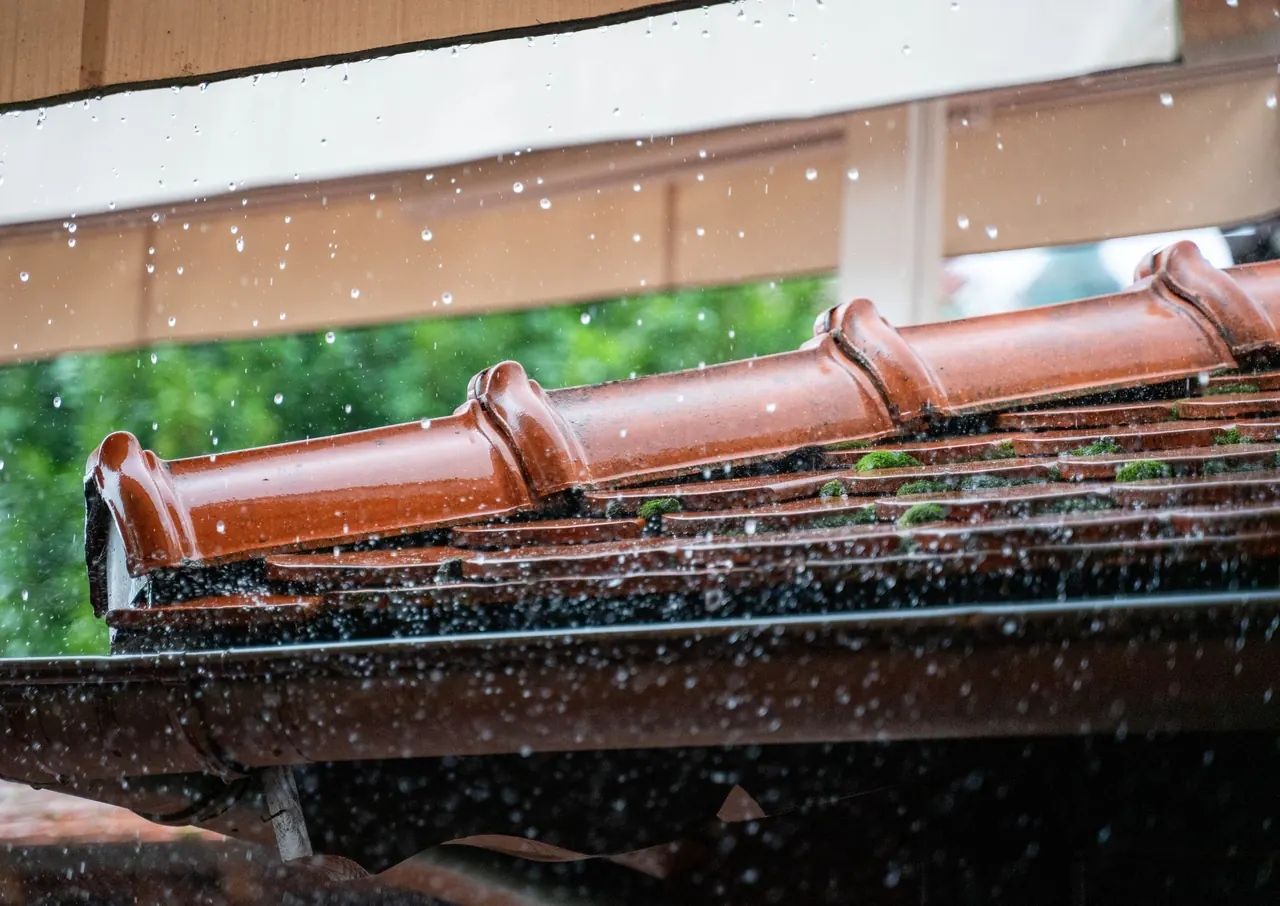
Sheeting a semi in the rain
On the phone we ask whether water is coming in, whether anything is hanging loose over a path or a neighbour's garden, and how to get to the back of the house. On site, Liam and the team stop the water first. That can mean refixing lifted tiles, sheeting an open section, sealing a split dormer covering, or taking down loose material before it falls.
Sometimes the permanent repair can be done on the same visit. In high wind or heavy rain the roof is made watertight and the proper work waits until it is safe to be up there. If it turns out to be a slower fault that has been building for a while, our Lower Morden roof repair page covers that side of things.
On a semi, storm damage often crosses the party line. If next door's half of the verge or stack is also loose, we will tell you so you can let them know.
Insurers and the morning after
Tell your insurer as soon as you can, take photos before and during the work, and keep any broken tiles in case they ask for them. Making the roof safe to prevent more damage is normally expected, so there is no need to hold back urgent work while you wait to hear from them.
Many storm failures start as an old fault, such as cracked mortar or a tired flashing, that the wind finally finds. If your house faces the cemetery or the playing fields, a look at the exposed slope before winter is worth more than it would be in the middle of the estate. Once the weather settles, our guide to spotting roof damage after a storm lists what to check from the garden, and the main emergency roof repair page explains what counts as an emergency.
Frequently asked questions
A branch from the cemetery trees has come down on our Lower Morden Lane roof. Should we try to move it?
No. Leave it where it is and keep everyone out from under it. A branch can be holding broken tiles in place, and pulling it off from a ladder is how people get hurt. If it has also brought down a cable, call the network operator first, then ring us so the roof under it can be made watertight once it is safe to reach.
Water is coming in under the flat-roofed dormer on our Tudor Drive loft. Can it be stopped in the rain?
Usually, yes, at least for now. A flat roof covering cannot be properly laid or bonded in the wet, but a lifted edge or split can be weighted, sealed or sheeted to stop the water until it is dry enough for a proper repair.
Our chimney pot on a Garth Road semi is leaning after the storm. Is it safe to stay in the front room?
Keep people and cars away from the area below the stack on both sides of the party wall, and stay out of any room where the ceiling is bulging. A leaning pot can be lifted off or secured once someone is on the roof, and the flaunching is then rebuilt when the weather allows.





