



 Google reviews

Ewell Downs plans: a fire in every room but one
When the council studied the original drawings for its Ewell Downs Road appraisal, it found a standard plan: three bays wide, dining room and living room either side of a central hall, three bedrooms above. Heating was by coal fire in each room apart from the third bedroom, which was left unheated. On a house like that, the stacks serve at least four fireplaces between them, so a stack on Ewell Downs Road or The Green can carry several pots.
Very few of those fires still burn coal. Some flues now serve a gas fire or a stove, and others have been dead for decades. Each one is still an opening in the top of the stack. An open pot on an unused flue lets rain straight down the chimney, and birds nest in it. A pot over a live flue needs to stay open and properly cowled. Sorting out which is which is the first part of any chimney job on these houses.
White stacks on Higher Green
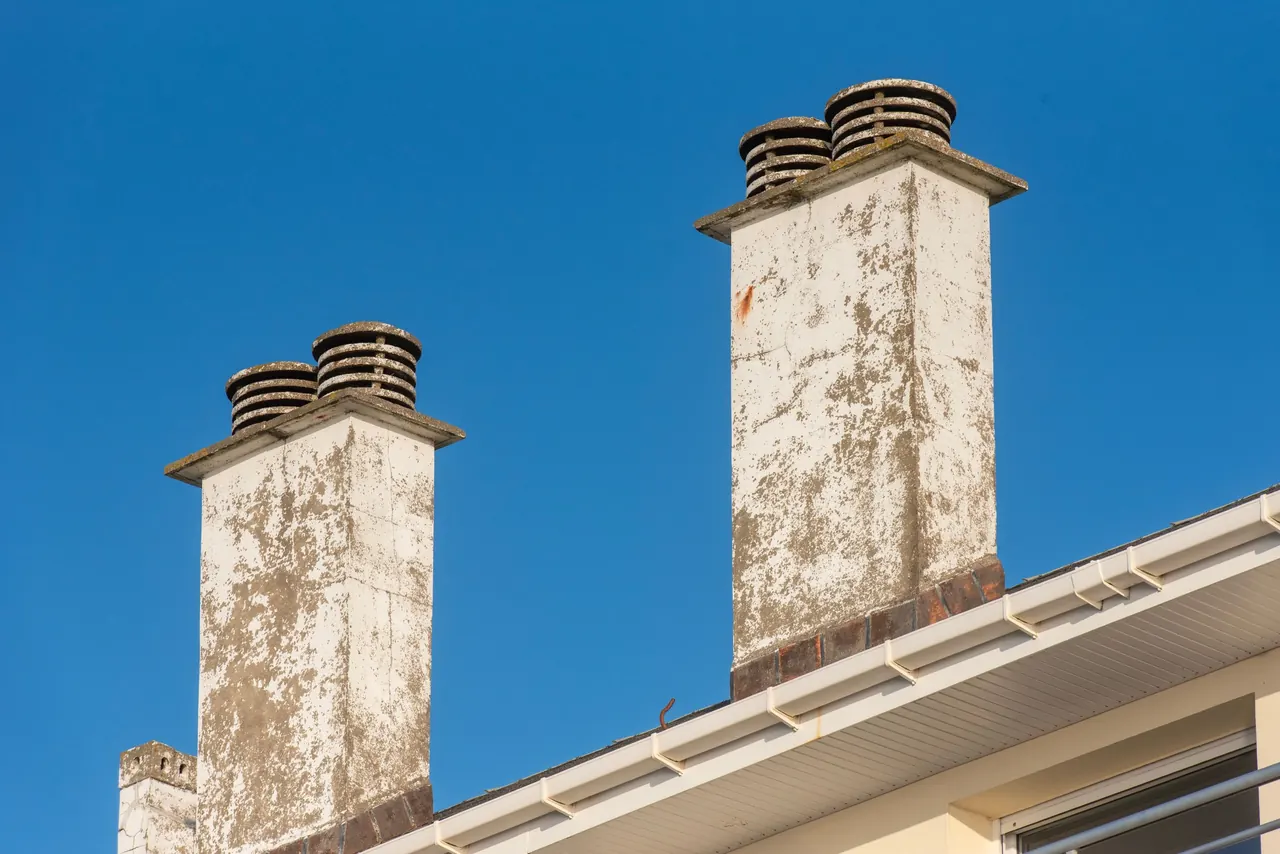
Round the corner, the Higher Green appraisal singles out the white chimney stacks standing against deep red tiled roofs as a notable feature when the houses are seen across the green. A white finish shows water trouble quickly. Brown staining below the flaunching, flaking at the base where the stack meets the tiles, or a damp band halfway up usually means water is getting into the brickwork from above or at the flashing.
Where water gets into a Harwood stack
- Flaunching. The mortar collar round the pots cracks after decades of frost. On a stack with several pots there is more of it, and a cracked collar lets water run down inside the stack and can leave a pot loose.
- Lead flashing. On a steep clay roof the flashing runs a long way down the sides of the stack. When the lead lifts or the mortar holding it into the joints crumbles, water tracks into the loft.
- Back gutters. The lead tray on the uphill side of the stack collects leaves from the street and garden trees, and overflows under the tiles when blocked.
- Pointing. Weathered joints, usually worst on the side facing the prevailing wind, let the brick soak up water.
Getting to a stack on a Harwood roof means crossing clay plain tiles that crack underfoot, so the first look is by drone, as on our Ewell roof inspection page, and access is planned to suit the stack. Any tiles disturbed round it go back in clay to match the roof. As a published guide, MyJobQuote's chimney leadwork cost guide also prices repointing a standard stack at £250 to £350, and a wide stack serving several fireplaces is a bigger job than that. The chimney repairs service page explains each repair.
Stacks under the Ewell Downs and Higher Green Directions
The Article 4(2) Directions on both estates list front extensions and porches, roof materials and rooflights on the front-facing slope, front windows and doors, hardstandings and front boundaries. Chimneys are not on that list, and repairs that keep a stack as it is, such as new flaunching, lead or pointing, do not change how it looks. The appraisals do treat the stacks as part of each area's character, though, so anything that would change a stack's height or appearance, or take it down, is worth raising with Epsom and Ewell Borough Council first. A cap or ventilated cowl on an unused flue keeps rain and birds out while air still moves, and sits low enough not to change the outline.
Frequently asked questions
The white finish on my Higher Green stack is flaking. Is that a roofing job?
The flaking itself is a symptom. It usually means water is getting into the stack through cracked flaunching, failed pointing or lifted flashing, and those are the repairs we carry out. Repainting the stack once it has dried out is decorating work, so it is worth leaving until the cause has been fixed.
How do I find out which of the pots on my Ewell Downs house are still in use?
Start with the fireplaces: any room with a working gas fire or stove has a live flue. From the roof we can see which pots are open, capped or cowled. If it is still unclear which flue serves which room, a chimney sweep can trace them before anything is capped.
Leaves from The Green keep filling the back gutter behind my stack. Can that be stopped?
Not completely while the beech and chestnut stand over the roof, but a back gutter with a proper fall and a sound lead lining sheds what lands in it much better than a flat, patched one. Clearing it each year once the trees are bare stops it overflowing under the tiles, and it is worth timing alongside a gutter clean in Ewell.





