



 Google reviews

Two leaf falls a year
Ewell's two Harwood estates were laid out round greens. The council's Higher Green appraisal lists copper beech, beech, horse chestnut and sycamore among the trees, and names beech as the usual hedge along front boundaries, particularly in Longdown Lane North. The Ewell Downs Road appraisal describes the same mix on the green at The Green, with mature beech along plot boundaries too.
That gives gutters here two loads a year rather than one:
- Autumn, from the big trees. Horse chestnut drops its large leaves and spiky conker cases from September. Sycamore sheds its winged seeds and leaves through the autumn. Beech and copper beech drop small, tough leaves late in the season along with their nut cases, the beech mast. Packed together in a gutter, beech leaves form a dense mat that holds water.
- Spring, from the hedges. Clipped beech hedges hold on to their dead brown leaves all winter and let them go in spring as the new leaves push through. On a house with a beech hedge near the eaves or the porch, the gutters fill again just when you thought they were clear.
So for houses close to the greens or with a beech hedge near the eaves, a clean in late autumn once the trees are bare and a second in late spring makes more sense than a single visit. Our guide on how often to clean your gutters goes into the timing.
Valleys behind the Harwood gables
A Harwood house sheds leaves onto more than its gutters. The steep front roofs are broken up by gables, porches and bays, each with a valley where two slopes meet. Leaves slide down the tiles and lodge in those valleys, and from the drive the gutter below can look clear while the valley above it is packed. When it rains, water backs up behind the leaves and finds its way under the tiles at the valley edge.
We clear the gutters and outlets below them and tell you if a valley above is packed or its lining looks worn. Clearing or relining a valley is roof work, and our Ewell roof repair team handles it.
Pine needles at the Higher Green corner
The Higher Green appraisal picks out the group of trees at the junction with Longdown Lane North, in particular a substantially sized pine. Pines shed needles mostly in late summer and autumn. The needles are fine enough to slip through many gutter guards, then mat together with silt into a fibrous plug at the outlet. Houses near that corner are worth checking at the outlets specifically.
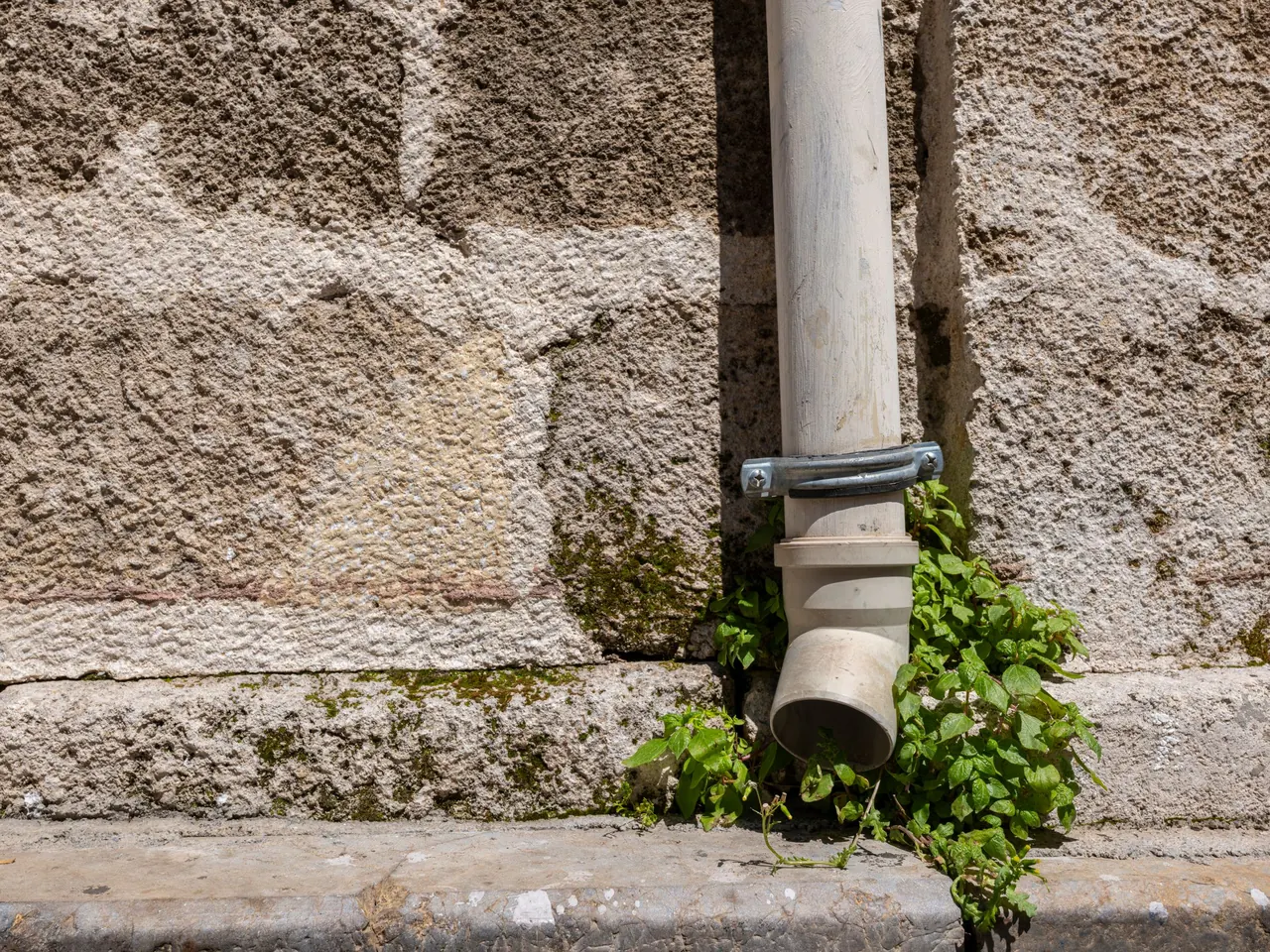
A clean is also a chance to spot the knock-on effects of last winter: a bracket bent by the weight of wet leaves, a joint that has started dripping, an outlet that keeps blocking. When a downpipe is choked further down than we can clear by hand, our blocked gutter repair service takes over.
On price, MyJobQuote's gutter cleaning guide gives £110 to £160 as the average for the South East. A house with several valleys and a catslide takes longer than a plain semi. What a full clean covers is set out on the gutter cleaning service page.
Frequently asked questions
My front hedge on Longdown Lane North is beech. Why do my gutters fill up in April?
Because clipped beech keeps last year's dead leaves through the winter and drops them in spring when the new growth starts. They blow straight into nearby gutters and valleys. A late spring clean deals with them.
Where do the leaves go after a clean on The Green?
We take them away. The verges and the green on these private roads are looked after by the residents' and road associations, so nothing from your gutters is left on them.
Is one clean a year enough for an East Ewell semi away from the greens?
Often, yes. A pair of semis on a street without big trees close by usually needs one clean, in late autumn once the leaves are down. Houses backing onto Nonsuch Park or Warren Farm, or with a tree over the roof, may need a second.





