



 Google reviews

Handmade or machine-made: matching a Higher Green tile
Higher Green was laid out from the late 1920s by Ernest Harwood round a small green off Longdown Lane North. The council's Higher Green conservation area appraisal describes the houses facing the green as substantial two-storey family homes with pitched roofs in handmade tiles. It also says that before 2000, when the area was designated, many lost those tiles to machine-made ones that lack the variety of the original.
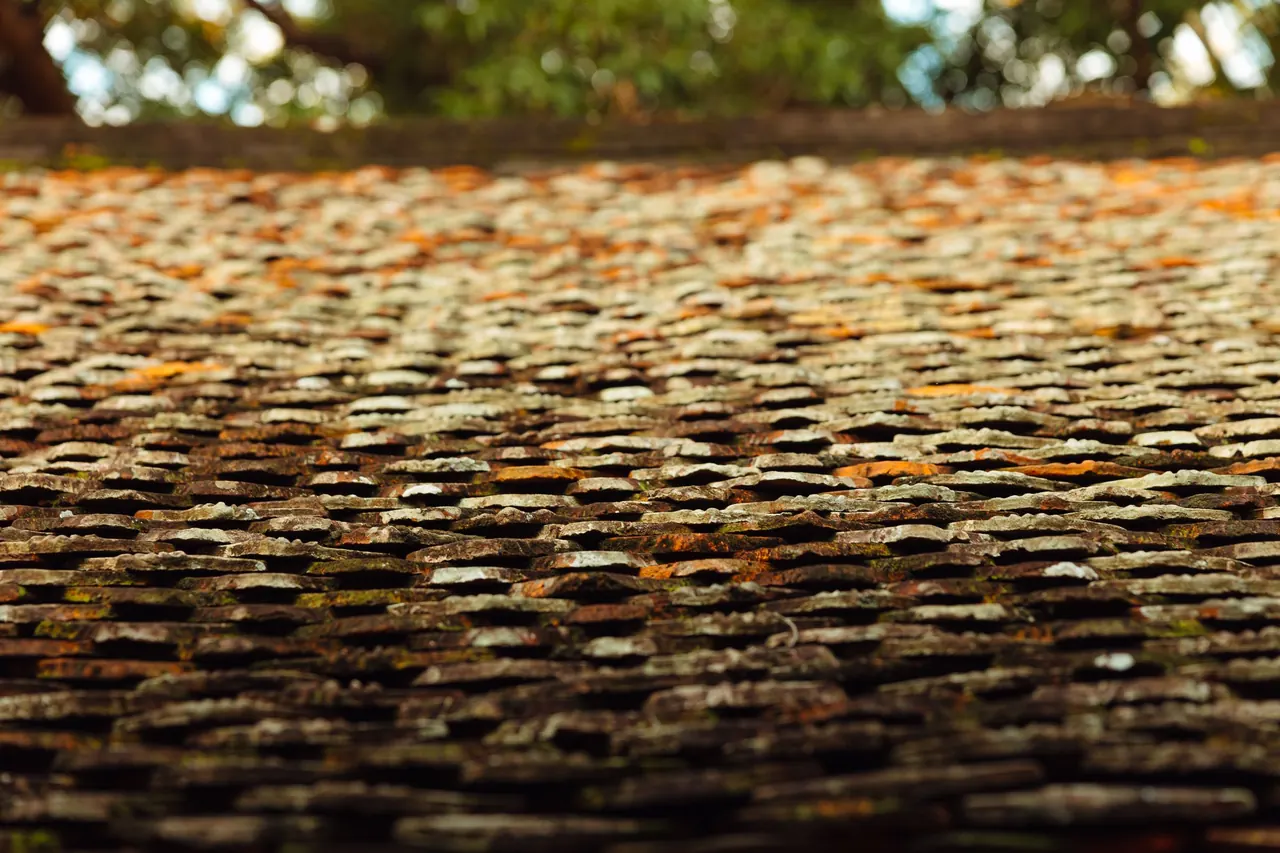
A handmade tile has a slight twist and an uneven surface, and the colour shifts from one tile to the next. A machine-made clay tile is flatter, more regular and more even in colour. Put one among the other and it shows, especially on the slopes facing the green, where the roofs are most visible. Before we replace anything, we work out which you have and find the closest match. For a handmade roof that is often a reclaimed tile. For a machine-made roof, a current tile of the same size and colour usually does the job. The same check applies on Ewell Downs Road and The Green, where the history of the tiles is much the same.
Catslide bays on Higher Green
Many Higher Green houses have a projecting front bay, and the appraisal notes that some carry the roof down to ground-floor level as a catslide. That brings three particular faults:
- The valley where the catslide meets the main roof. Water from two slopes runs into one channel. Leaves settle in it, and a split lining or cracked mortar along the cut tiles lets water into the bay ceiling.
- Tiles near the bottom of the slide. A catslide brings tiles down within reach of ladders, bins and garden work, so knocked and cracked tiles low on the slope are more common than on a main roof.
- The verge up the side of the bay. Mortar pointing at the verge weathers out, the edge tiles loosen, and wind can lift them.
Leaks round the white stacks usually come from the lead flashing or the back gutter, and our chimney repairs in Ewell page goes through those.
Longdown Lane North's mixed houses
Longdown Lane North is older than the estate. The appraisal describes it as a historic lane that linked local farms to Ewell via the Reigate Road. The western side keeps more of Harwood's originals. The eastern side has been filled in over the years with later houses, including some of the 1960s near the Reigate Road junction.
On the original houses, the faults are the ones above: slipped plain tiles where nails have rusted or nibs have broken, ridge mortar that has cracked and washed out, valleys behind gables. On the later houses, the covering may be a different tile altogether, with its own underlay and fixings, and the repair follows that roof.
Ridges, hips and stacks on the Cheam Road semis
North of the railway, East Ewell is mostly 1930s semi-detached housing. Between Cheam Road and Nonsuch Park, streets such as Castle Avenue and Fairfax Avenue mix semis with larger detached houses. Some of these roofs still carry their first covering. Others were re-covered decades ago, not always in the same kind of tile. Either way, the same few places tend to fail on a roof of this age:
- Ridge and hip tiles, where the mortar bed has cracked and washed out, so the tiles rock in the wind and eventually slide.
- The chimney stack, where lead flashing has lifted or its mortar joint has crumbled.
- Tiles above a front bay, where a small roof meets the main wall.
- The joint with a later dormer or extension, where new work was tied into the old slope.
If the battens behind slipping tiles are soft across a whole slope, we show you, because patching that roof would only buy a short time. As a published guide, Checkatrade puts replacing up to five hard-to-find tiles where scaffold is needed at around £500 on average.
Quotes are free and can often be given the same day you call. If water is already coming through a ceiling, go to our emergency roof repair in Ewell page instead. The full range of repairs is on our main roof repair page.
Frequently asked questions
Water comes in where my catslide bay meets the main roof on Higher Green. What usually fails there?
Most often the valley: a lining that has split, cut tiles that have slipped along it, or leaves holding water in the channel. The flashing where the bay meets the house wall is the next place to check. A close look at that junction normally settles which.
Is it worth repairing a Higher Green roof that was re-tiled in machine-made tiles?
Yes, if the tiles and battens are sound. Machine-made clay tiles are still easy to match, which makes small repairs straightforward. The Article 4(2) Direction on Higher Green means a change of material on the front-facing slope needs planning permission, so keeping the existing tile going is often the simplest route.
My East Ewell semi shares a ridge with next door. Can I have just my half repaired?
Yes. The ridge can be rebedded or refixed up to the party line. If the tiles on the neighbour's side are loose too, we point it out, because a loose ridge tile on their half can let water run across to yours.





